 Pin it
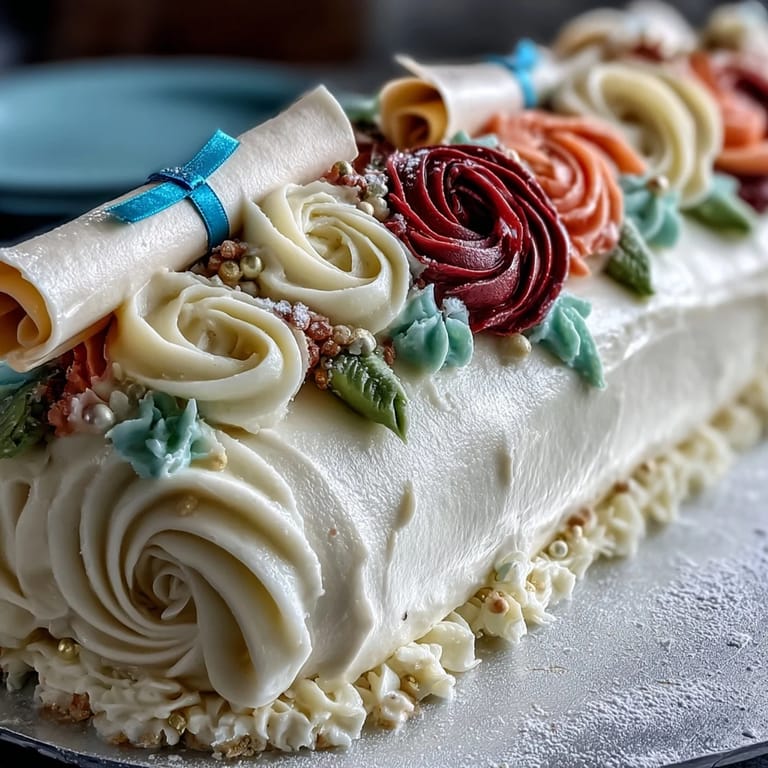
 The aroma of vanilla and butter filled the kitchen the morning I set out to make this graduation sheet cake, and even the dog seemed to perk up in anticipation. I’d never piped buttercream roses before, but the idea of transforming a simple sheet cake into a centerpiece for a graduation party was too tempting to resist. As I sifted powdered sugar and stared at the neat rows of eggs, I realized how much fun it can be to create celebration desserts with a personal twist. There's something rewarding about watching cake batter come together into a promise of happiness. Sometimes, it's the act of making memories while mixing and baking that makes a festive cake feel truly special.
One Saturday, I baked this sheet cake for my cousin’s graduation and the kitchen buzzed with chatter from visiting relatives. Someone spilled a bit of milk mid-mixing and we laughed, wiping it up as we debated whether pink or gold roses would match their school colors best. The diploma decoration was a surprise, crafted quickly with fondant and wrapped in a ribbon, and the youngest guests couldn't resist reaching for those shiny edible pearls. The cake’s role as centerpiece turned the living room sweetly festive—making moments stick in everyone’s memory, much like the frosting on our fingers. It became more than dessert: it was a celebration in itself.
Ingredients
- All-purpose flour: Sifting ensures a tender crumb and prevents lumps—don’t skip this step for a lighter cake.
- Granulated sugar: Creaming with butter makes everything fluffy; precise measurements are key for sweetness without being cloying.
- Unsalted butter: Softening helps it blend smoothly; use real butter for richer flavor and a silky texture in both cake and frosting.
- Whole milk: Room temperature milk keeps the batter from curdling and ensures even mixing—let it sit out while prepping.
- Eggs: Incorporate one at a time for extra volume and a springy cake; room temp eggs trap air for that lift.
- Vanilla extract: Adds warmth and depth; pure extract brings out the best in your batter and frosting.
- Baking powder: Whisk thoroughly into flour for even rise—uneven distribution leads to uneven cake layers.
- Salt: Enhances flavor; a little makes the sweet really shine.
- Powdered sugar: Sift it to prevent lumps in the buttercream—smooth frosting is easier for roses.
- Food coloring (gel): Gel gives vibrant hues without thinning the frosting; start with a drop and adjust for perfect colors.
- Fondant or white chocolate: Use for the diploma decoration—fondant is easier to roll, white chocolate is tastier.
- Edible pearls: Optional, but these add a touch of shimmer and elegance—scatter carefully for best effect.
Tired of Takeout? 🥡
Get 10 meals you can make faster than delivery arrives. Seriously.
One email. No spam. Unsubscribe anytime.
Instructions
- Prepare the Pan:
- The sound of parchment paper crinkling and the scent of butter greasing the pan is your first step—line and grease well for easy cake release.
- Cream Butter and Sugar:
- Beat the butter and sugar until light and fluffy, listening for the quiet hum of the mixer that means air is being incorporated.
- Add Eggs and Vanilla:
- Crack each egg in one at a time, letting the mixture turn creamy yellow; add vanilla and stir gently.
- Mix Dry Ingredients:
- Whisk flour, baking powder, and salt—be precise, as this helps the cake rise evenly and stay tender.
- Combine Wet and Dry:
- Add the dry flour mix to the butter mixture in three additions, alternating with milk; watch the batter smooth out and resist over-mixing.
- Bake the Cake:
- Pour batter into the pan, smoothing the top; bake until golden and a toothpick emerges clean, about 28–32 minutes.
- Cool the Cake:
- Let the cake rest in the pan for 10 minutes, then transfer to a cooling rack to chill completely—it’s vital for neat frosting later.
- Make Buttercream:
- Beat softened butter until creamy, gradually adding powdered sugar, vanilla, and milk; adjust texture as needed, aiming for fluffy peaks.
- Color and Prep Buttercream:
- Divide frosting into bowls, tinting colors for roses, leaves, and diploma—stir gently to avoid breaking the cream.
- Frost the Cake:
- Spread a smooth layer of white buttercream over the cooled cake; the offset spatula glides with satisfying ease.
- Pipe Roses and Leaves:
- With a piping bag, swirl roses in your chosen hues; add green leaves alongside, pausing to admire each blossom.
- Create the Diploma:
- Shape fondant or white chocolate into a scroll, wrap with colored fondant ribbon, and place it on the cake—little hands may help here.
- Add Accents:
- Scatter edible pearls and other touches, stepping back to survey the festive scene before serving.
 Pin it
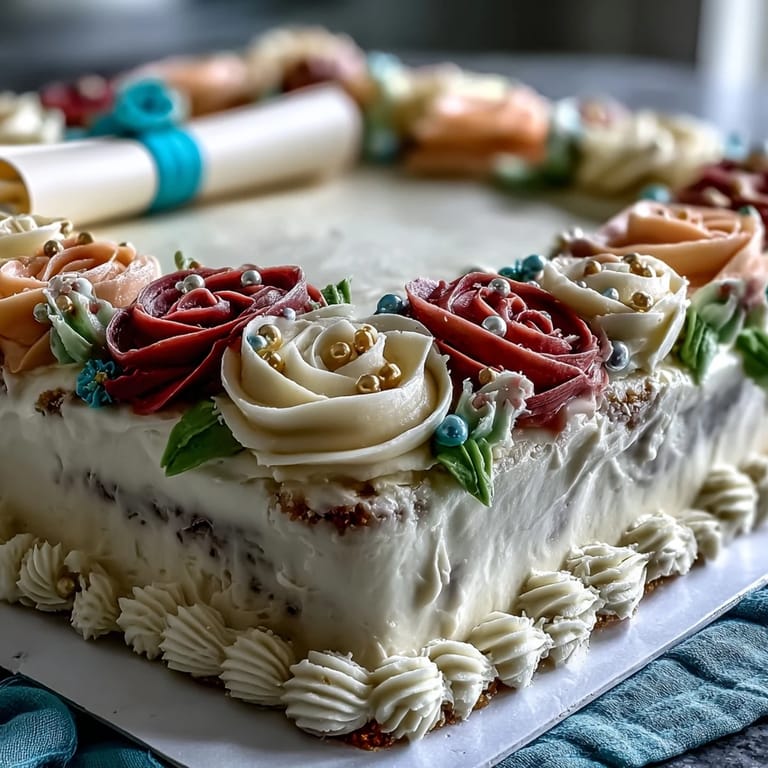
 At the graduation party, I caught my aunt quietly admiring the colorful roses while snapping photos, her hand lingering over the edible diploma just before the first slice. It made me smile—the cake was not only delicious but had captured everyone’s attention as a true centerpiece. That moment, when the crowd paused to appreciate the decoration, reminded me why making a dessert for others is always worth the effort.
Frosting Techniques That Make a Difference
Experimenting with different piping tips can turn simple buttercream into stunning roses or playful swirls. For leaves, I learned to use quick, confident wrist flicks to mimic the natural shape, and layering roses close together gives a lush bouquet effect. Keeping the buttercream a little cooler helps maintain sharp edges on each petal. If the frosting is too soft, pop it in the fridge for a few minutes before piping. Watching the colors blend and petals form is oddly soothing—and even a less-than-perfect flower ends up beautiful once surrounded by others.
Decorating for School Spirit
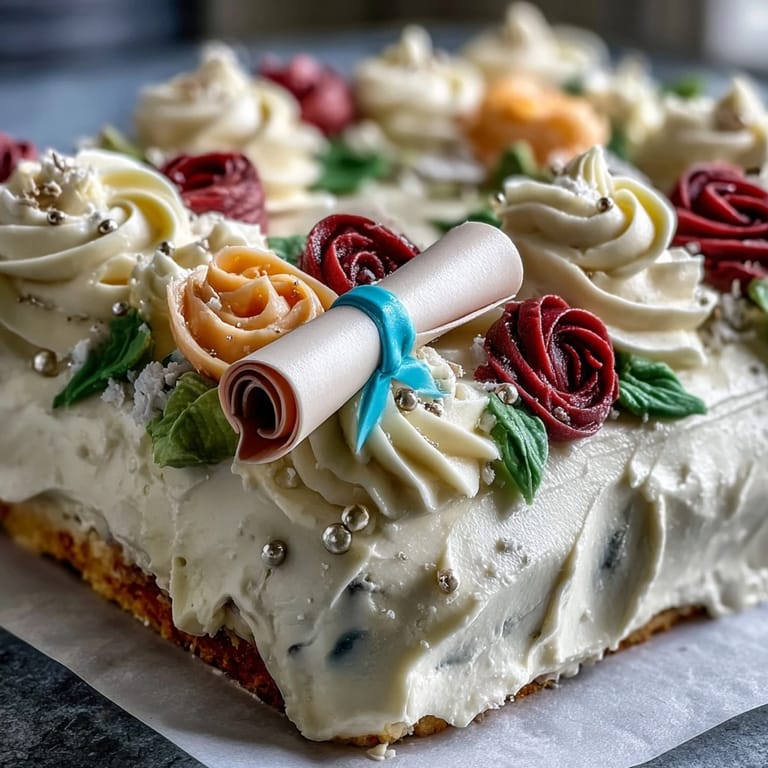
Nothing sparks excitement like customizing the cake with school colors. Mixing gel food coloring slowly allows you to reach the perfect hue without overdoing it—sometimes, just a dot is all you need for bold shades. Gold or silver pearls catch the light at parties, making the cake feel extra special. The diploma scroll in fondant or white chocolate is a playful nod to the occasion. And if a kid wants to add their touch, let them—sometimes their creativity makes the decor even more memorable.
Troubleshooting Cake Mishaps
If your cake sags or browns unevenly, double check oven rack placement and avoid opening the door until nearly done. When buttercream feels grainy, let it beat a little longer and sift powdered sugar again. Rushing cooling means tears in the crumb, so be patient! Every mishap is a chance to learn—and a reminder that imperfections are often what makes homemade desserts feel personal.
- Let cake cool fully before frosting.
- Piping mistakes disappear when clustered together.
- Decorate the cake and room at the same time for true celebration vibes.
 Pin it
 However you decorate it, this sheet cake brings everyone together for a milestone. Enjoy the process and remember: a little creativity turns dessert into an unforgettable centerpiece.
Recipe FAQs
- → How do I achieve vibrant buttercream colors for the decorations?
Use gel food coloring for bright hues without altering the texture. Mix colors into separate batches of buttercream until desired vibrancy is reached.
- → Can I personalize the cake for specific school colors?
Absolutely! Tint the buttercream and choose edible decorations in school colors for a memorable, custom touch.
- → What's the best method for piping buttercream roses?
Use a rose tip and pipe petals in layers. Practice on parchment before decorating the cake to perfect technique.
- → Can a chocolate version be made?
Yes. Substitute ¾ cup of flour with cocoa powder for a chocolate twist on the classic cake base.
- → Are there allergy concerns for this dessert?
This cake contains wheat, eggs, and dairy. Always check decoration ingredients and food coloring for allergens as well.
- → What is the best way to create an edible diploma?
Shape fondant or white chocolate into a scroll, then tie it with a colored fondant ribbon and place on the cake for a cute effect.