 Pin it
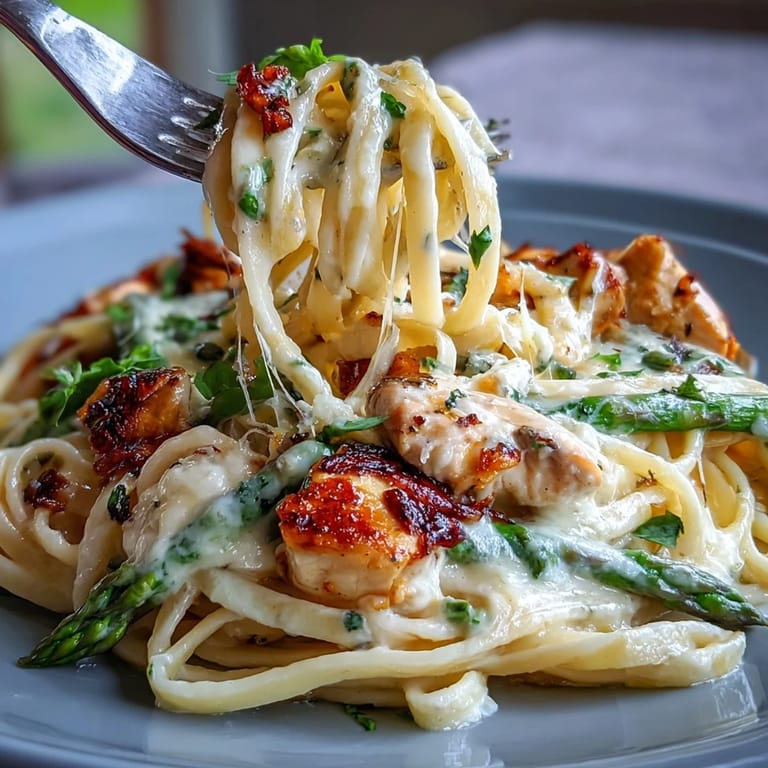
 There's something about the smell of Asiago crisping up in the oven that makes me pause whatever I'm doing and just breathe it in. This pasta came together one spring evening when I had chicken thawing on the counter, a bunch of asparagus that needed using, and a wedge of Asiago I'd picked up without a real plan. I thought: why not roast the asparagus with cheese and build something creamy around it? The result was so unexpectedly silky and bright that it's become the dish I make when I want to feel like I've actually cooked something worthy, even on a Tuesday night.
I made this for my sister who'd just moved into her first apartment with almost no kitchen confidence, and watching her face when she tasted it—realizing she could actually make something this good—was worth every step. She's made it probably a dozen times since, and now it's become her go-to when she wants to impress someone, which has become something of a running joke between us. There's real power in a recipe that feels attainable but tastes like you know what you're doing.
Ingredients
- Boneless, skinless chicken breasts: Cut into bite-sized pieces so they cook quickly and integrate seamlessly into the pasta without dominating it.
- Fresh asparagus: Roasting with cheese transforms it into something almost snack-like; trim the woody ends by bending until they snap naturally.
- Garlic and onion: The aromatic foundation that keeps the sauce from tasting one-dimensional; don't skip the mincing step, as it helps them melt into the cream.
- Linguine: The long strands catch the sauce beautifully, though pappardelle or fettuccine work just as well if that's what you have.
- Asiago cheese: Freshly grated makes all the difference because pre-shredded versions have anti-caking agents that prevent smooth melting.
- Heavy cream: Use the real thing here; it's what gives the sauce its silky backbone, though half-and-half works in a pinch for a lighter version.
- Olive oil and butter: Two fats working in harmony—one for roasting vegetables, one for building the sauce.
- Red pepper flakes and lemon zest: Optional but honestly essential if you want the dish to sing instead of just being pleasant.
Tired of Takeout? 🥡
Get 10 meals you can make faster than delivery arrives. Seriously.
One email. No spam. Unsubscribe anytime.
Instructions
- Get everything prepped and the oven heating:
- Turn your oven to 220°C (425°F) and line a baking sheet with parchment—this small step prevents the cheese from bonding to the pan. Having your chicken cut into pieces and your garlic minced before you start cooking makes the actual cooking process feel calm instead of frantic.
- Roast the asparagus until it's golden and crisp:
- Toss the asparagus with olive oil, salt, pepper, and half the Asiago, spread it out so pieces aren't crowded, and let it roast for 12–15 minutes until the cheese is blistered and the tips are tender. The cheese will crisp up as it cools, so don't panic if it looks a little loose when you pull it from the oven.
- Get the pasta water going and time everything:
- Fill a large pot with salted water and bring it to a rolling boil; you want it as salty as the sea so the pasta absorbs flavor, not just gets soft. Start the linguine and remember to reserve a cup of that starchy water before you drain—it's your secret weapon for adjusting the sauce consistency later.
- Cook the chicken until it's golden and cooked through:
- Season the pieces with salt and pepper, then sear them in a hot skillet with olive oil for about 5–6 minutes, stirring occasionally so they brown evenly without steaming. You're looking for golden edges and an internal temperature of about 75°C, but honestly, a small cut to check never hurt anyone.
- Build the sauce while the chicken rests:
- In the same skillet, melt butter and add the onion, letting it soften for a couple of minutes before adding the garlic—this prevents the garlic from burning and turning bitter. Once it's fragrant, pour in the cream and add the remaining Asiago, stirring gently as it melts into a luxurious sauce that coats the back of a spoon.
- Bring everything together and taste as you go:
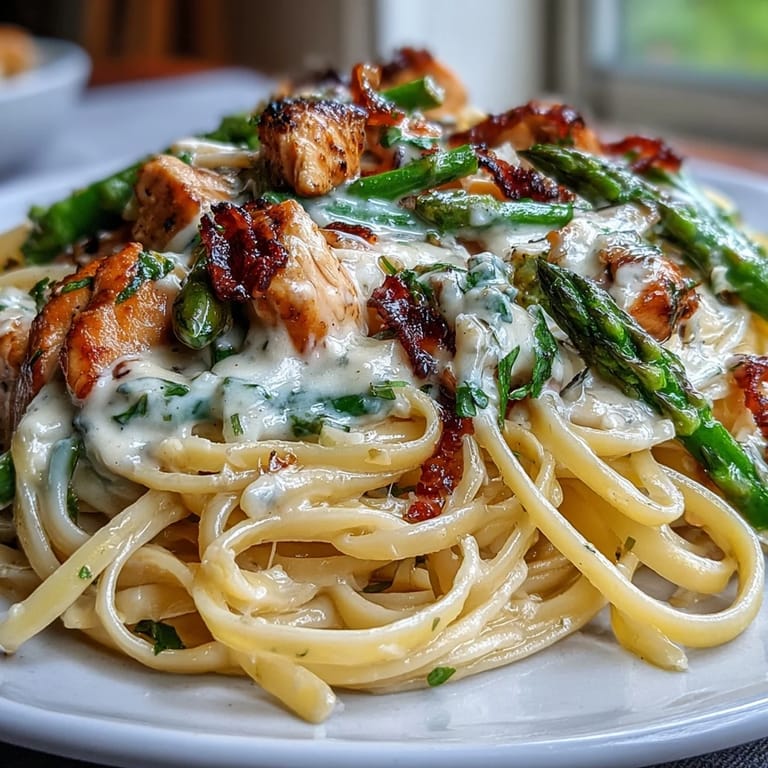
- Return the chicken to the skillet along with the drained pasta and chopped roasted asparagus, tossing everything together over gentle heat. If the sauce feels too thick, loosen it with a splash of pasta water until it flows but still clings to the linguine.
- Finish with brightness and serve immediately:
- Taste and adjust the seasoning with salt, pepper, and a little lemon zest or red pepper flakes if you want to wake it up. Serve right away while everything is still warm and the pasta hasn't begun to absorb all the sauce.
 Pin it
 There was an afternoon when I made this for a friend who was going through something difficult, and she sat at my kitchen counter just quietly eating while I did the dishes. She didn't say much, but she came back for seconds, and somehow that felt like everything. Food like this doesn't fix problems, but it does say, in its own way, that someone cares enough to cook something thoughtful for you.
Why Spring Vegetables Matter Here
Asparagus in spring feels like a small celebration—those thin green spears showing up at the market means winter is officially over. When you roast them with cheese, they become a completely different vegetable than raw, and that transformation is what keeps this dish from feeling heavy even though there's cream involved. The crispness cuts through the richness, which is why adding them at the very end, rather than cooking them in the sauce, makes such a difference.
The Cheese Question
I've made this with other cheeses out of necessity or curiosity—Gruyère is a beautiful substitute, though it tastes more formal—and while they work, Asiago has a specific personality that belongs here. It's nutty without being overwhelming, it melts smoothly, and it can get crispy on the asparagus without burning. The cheese isn't just a background player; it's the whole reason the dish exists.
Ways to Make It Your Own
The skeleton of this recipe is flexible enough that you can adapt it to what's in your kitchen or what you're craving. I've added peas and baby spinach on nights when I wanted more vegetables, swapped the chicken for shrimp when I was in a different mood, and even made a vegetarian version by roasting extra vegetables and skipping the meat entirely. The technique stays the same, which means once you've made it once, you can improvise without second-guessing yourself.
- A squeeze of fresh lemon juice or lemon zest at the end brightens everything and prevents it from tasting too creamy.
- Red pepper flakes add a gentle heat that keeps the dish from feeling one-note, especially if you're serving it to people who like a little spice.
- Pair it with a crisp white wine like Sauvignon Blanc or Pinot Grigio, which cuts through the cream and makes the whole meal feel balanced.
 Pin it
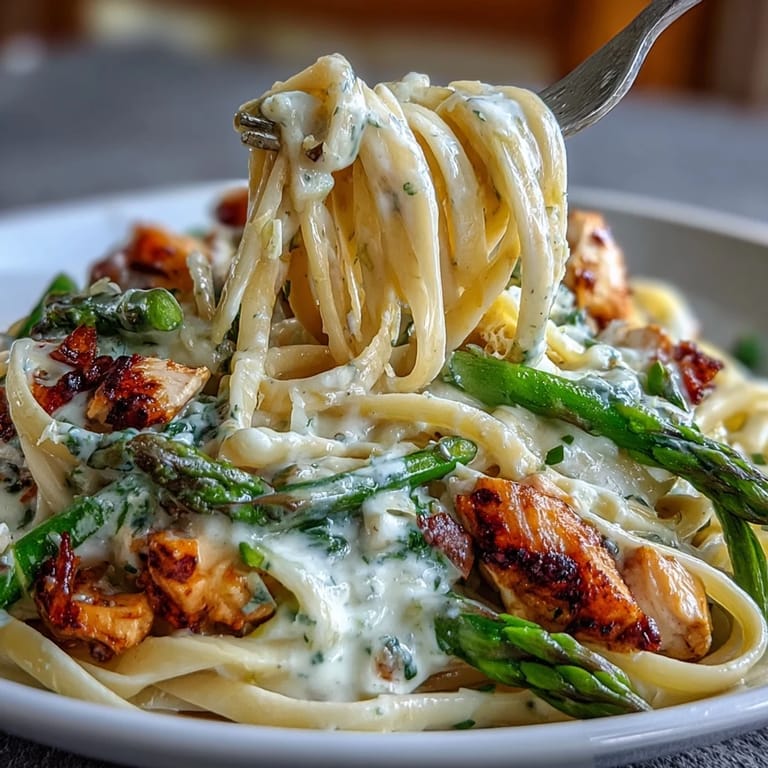
 This is the kind of dish that reminds you why you enjoy cooking in the first place—it's approachable enough that it builds confidence, but it tastes like you've put in real effort. Make it, tweak it, share it, and it becomes yours.
Recipe FAQs
- → Can I use a different type of cheese?
Yes, you can substitute Asiago with aged Parmesan, Pecorino Romano, or a blend of Italian hard cheeses. The flavor profile will shift slightly—Parmesan is saltier and nuttier, while Pecorino adds a sheep's milk sharpness.
- → What pasta shapes work best?
Linguine is ideal for clinging to the creamy sauce, but fettuccine, tagliatelle, or penne work well too. Short pasta like rigatoni or fusilli can also hold the sauce beautifully in their ridges.