 Pin it
 My grandmother kept a wooden spoon in her kitchen drawer marked only with the year 1987, the year she first attempted lutefisk after moving to a small Norwegian community in Minnesota. She'd laugh about how the kitchen smelled like the Atlantic Ocean for a week straight, and how my grandfather pretended to enjoy it while secretly feeding pieces to the dog. Decades later, I finally understood what she was reaching for with that dish—not just tradition, but a way of saying I belong here, even if it takes five days of soaking and a leap of faith.
The first time I made this for friends who'd never heard of lutefisk, I spent the morning paranoid they'd think I was playing a prank. By the time they tasted it with the warm sauce and crispy bread, there was this moment of quiet surprise—the kind where people look up from their plates and ask for seconds without being told it's Norwegian. That's when I realized lutefisk isn't really about honoring tradition; it's about discovering that something unfamiliar can become instantly comforting.
Ingredients
- 1 kg dried cod (lutefisk): This is the star, and buying quality matters more than you'd think—look for pale, evenly dried pieces without dark spots or strong ammonia smell.
- Cold water for soaking: The daily water changes aren't just ritual; they're what makes the fish tender and reduces that strong lye-treated smell that scared people away before you even tasted it.
- Coarse salt for curing: This step after soaking seals in the texture and adds a subtle depth you can't achieve any other way.
- Unsalted butter and flour: The foundation of a proper mustard sauce, and using unsalted butter means you control the salt completely.
- Whole milk: This cream base rounds out the sharp mustard notes and makes each bite feel luxurious.
- Dijon and whole-grain mustard: The combination of smooth and textured mustard adds complexity—using just one would taste flat and one-dimensional.
- Boiled potatoes and crispbread: These aren't sides; they're textural anchors that make every bite feel complete and allow the delicate fish to shine.
Tired of Takeout? 🥡
Get 10 meals you can make faster than delivery arrives. Seriously.
One email. No spam. Unsubscribe anytime.
Instructions
- Start your five-day journey:
- Rinse the dried cod under cold water until the water runs clearer, then submerge it fully in a large container. Every single day, drain it completely and replace the water—this isn't laziness prevention, it's the exact mechanism that transforms hard, brined fish into something tender and ready to cook. You'll notice the smell shifting from aggressively fishy to almost neutral by day four.
- Cure before cooking:
- After draining on the final day, sprinkle the fish with coarse salt and let it rest for 30 minutes in the refrigerator. This creates a thin crust that keeps moisture inside when heat hits it. Rinse the salt off gently and pat the fish completely dry with paper towels—the drier it is, the better it bakes.
- Bake low and slow:
- Preheat your oven to 200°C (390°F), arrange fish pieces in a baking dish, cover tightly with foil, and slide it in. After about 25–30 minutes, peek under the foil—the fish should be opaque and flake effortlessly with a fork. Undercooking leaves it rubbery; overcooking makes it fall apart into nothing.
- Build the sauce that changes everything:
- Melt butter over medium heat, whisk in flour for exactly one minute (any longer and it starts to brown and taste toasted), then gradually add milk while whisking constantly. The slow, steady whisking is what prevents lumps, and lumps are the one thing that will make you doubt this entire recipe. Once it thickens slightly, fold in both mustards, sugar, and seasoning, tasting as you go because every mustard brand has its own personality.
- Plate with intention:
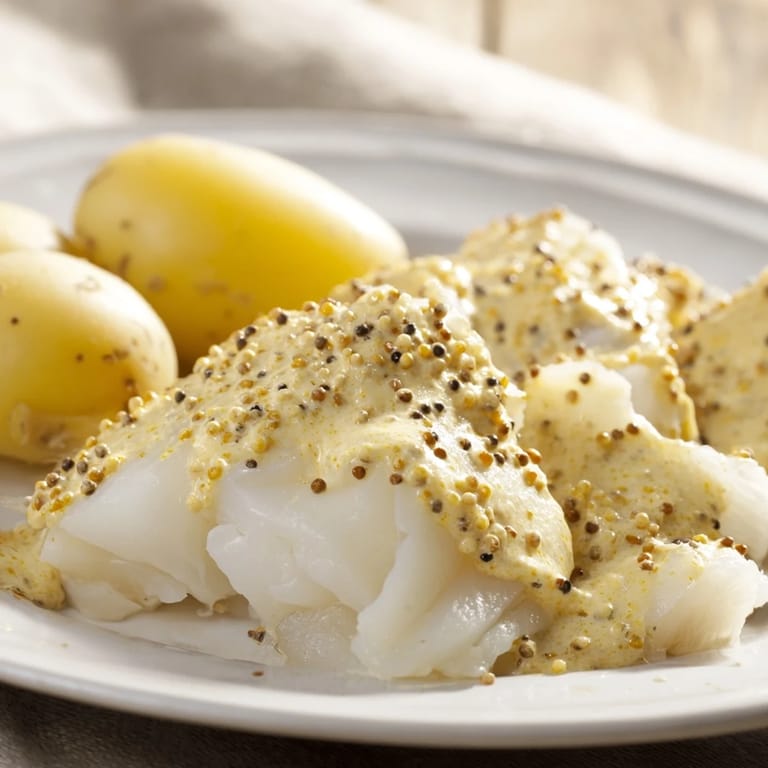
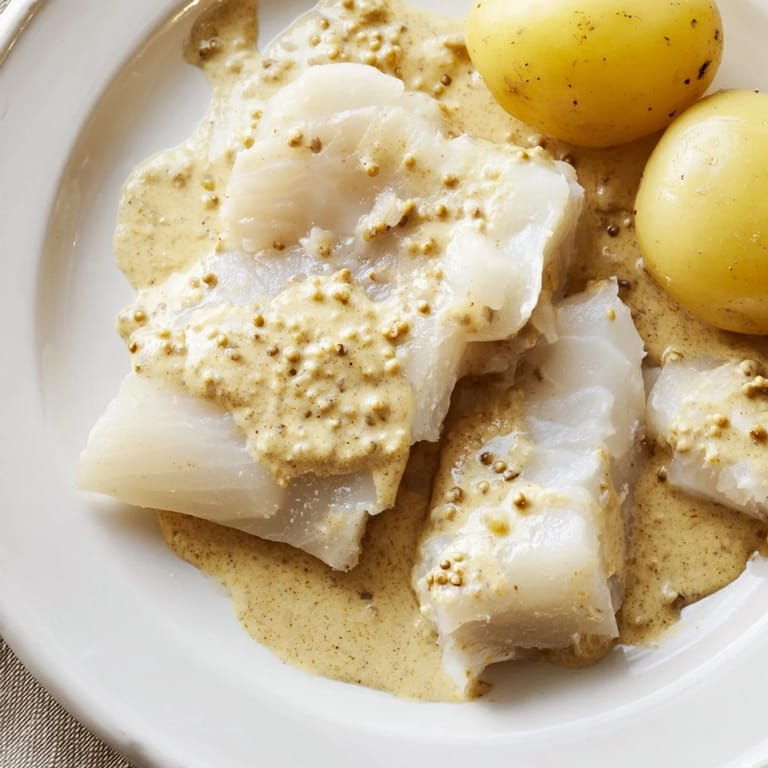
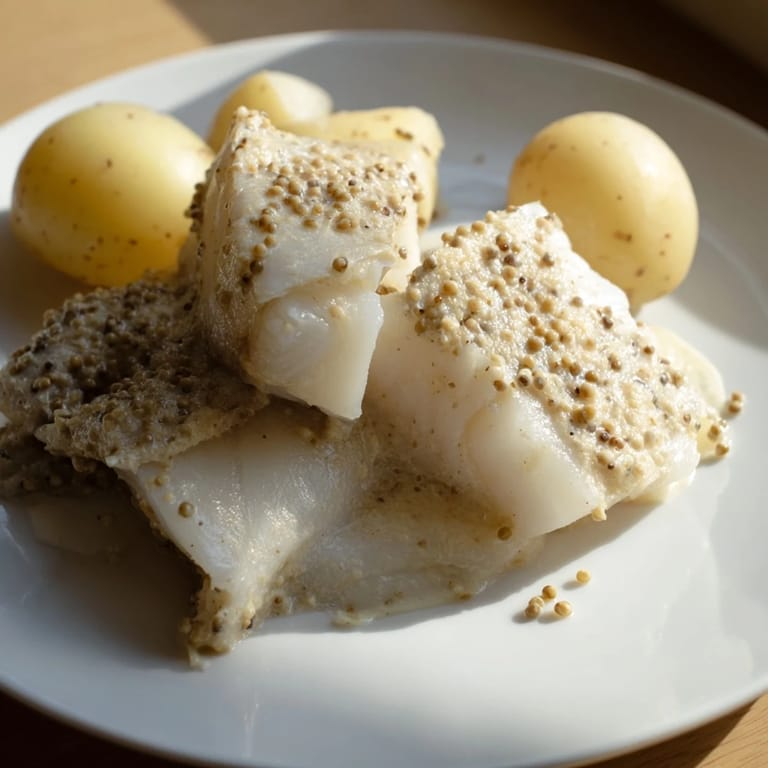
- Place hot lutefisk on a warm plate with boiled potatoes and a piece of crispbread. Spoon the sauce generously over the fish, letting it pool slightly on the plate, and if you're feeling it, scatter chopped parsley on top for a pop of green and a hint of freshness against the rich cream.
 Pin it
 There's a moment when you pull lutefisk from the oven and the kitchen fills with this gentle, oceanic warmth that smells nothing like the intimidating beginning. That's when you understand my grandmother's 1987 spoon—it wasn't about perfection or impressing anyone. It was about doing something that felt impossible and discovering it was possible all along.
The Five-Day Ritual
The soaking period is less a chore and more a meditation on patience, something we've largely forgotten in modern cooking. Each water change removes more of the strong ammonia smell that originally scared people away, transforming the fish from something that feels dangerous to something that feels safe. I've found that setting a phone reminder each morning makes it easier to stay consistent, and honestly, those five days of anticipation make the final meal taste better because you've earned it.
Why the Mustard Sauce Matters
This isn't a sauce that tries to mask the fish—it enhances it, adding richness and a sharp, tangy complexity that makes lutefisk taste less like an acquired taste and more like something you actually crave. The combination of Dijon's smooth spice and whole-grain mustard's grainy texture creates depth that a single mustard type can't achieve. Once you've tasted lutefisk with this sauce, you'll understand why it's become the traditional pairing—it's not tradition for tradition's sake, it's genius.
Serving and Sharing This Dish
Lutefisk deserves to be served warm, on warm plates, with people you actually want to eat with. The crispbread isn't decoration; it's a textural counterpoint that makes each bite more interesting. The potatoes are there because they absorb the sauce and provide comfort, and that combination of comfort plus adventure is why this dish has survived centuries and migration.
- Always warm your plates before plating; cold plates will cool the fish too quickly and change how it tastes.
- If you have guests unfamiliar with lutefisk, serve the sauce on the side at first so they can control how much they want.
- Leftover lutefisk reheats beautifully in a low oven covered with foil, though honestly, there's rarely any left.
 Pin it
 Making lutefisk is an act of culinary courage, and once you've done it, you've joined an invisible lineage of people who've sat down to unfamiliar food and discovered something beautiful. That's worth more than any traditional recipe ever promised.
Recipe FAQs
- → How long should the dried cod soak before cooking?
The dried cod requires soaking in cold water for 5 to 6 days, with daily water changes, to rehydrate properly and remove excess salt.
- → What is the best way to bake the fish?
Place the fish in a foil-lined baking dish, cover with foil, and bake at 200°C (390°F) for 25 to 30 minutes until opaque and flaky.
- → How is the mustard sauce prepared?
Start by melting butter, whisk in flour, then gradually add milk while stirring to avoid lumps. Simmer until thickened, then mix in Dijon and whole-grain mustards with sugar, salt, and pepper.
- → What side dishes complement this dish well?
Boiled potatoes and crispbread or flatbread are traditional accompaniments, enhancing the textures and flavors of the dish.
- → Can this dish be adapted for gluten-free diets?
Yes, substitute all-purpose flour with gluten-free flour in the mustard sauce to accommodate gluten-free preferences.
- → Are there common allergens to be aware of?
This dish contains fish, milk, mustard, and potentially gluten depending on flour choice. Check ingredients carefully if allergies are a concern.