 Pin it
 There's something magical about standing in front of an open freezer on a sweltering afternoon, knowing exactly what waits inside—creamy, tropical, and entirely plant-based. My friend Marco handed me a spoonful of his homemade mango coconut ice cream last summer, and I was immediately transported to a beach I'd never been to. The contrast of that silky frozen center against the shattering crunch of toasted oats changed how I thought about dairy-free desserts entirely. Now it's become my answer to "what's for dessert?" when the heat makes anything heavy feel impossible.
I made this for a potluck where someone mentioned being vegan almost apologetically, as if they were asking for something impossible. When they came back for thirds and asked for the recipe, everyone else suddenly realized what they'd been eating wasn't some restrictive health food but actually just delicious. That moment, watching someone's face light up when they realized there was no compromise here, made me understand why this dessert matters.
Ingredients
- Ripe mangoes (3 large, about 3 cups diced): This is where the whole dish lives, so pick ones that smell sweet at the stem and yield slightly to pressure—underripe mangoes will give you an icy, disappointing result that no amount of freezing time can fix.
- Full-fat coconut milk (1 can, 400 ml, well-shaken): Don't reach for the light version; that separation you see when you open the can is exactly what you want, and shaking it thoroughly keeps the texture smooth and luxurious.
- Maple syrup (2 tbsp): Pure maple works better than agave here because it adds a subtle depth that complements mango's brightness without competing with it.
- Pure vanilla extract (1 tsp): Cheap vanilla will taste thin and sharp, so invest in the real thing—it rounds out the tropical flavors like a quiet voice in the background.
- Rolled oats (1/2 cup, certified gluten-free if needed): Steel-cut oats stay too chunky when toasted; rolled oats soften into the right texture while still holding that golden crunch.
- Unsweetened shredded coconut (2 tbsp): The "unsweetened" part matters because you're adding maple syrup separately, and sweetened coconut becomes cloyingly sugary when it caramelizes.
- Coconut oil (1 tbsp): This carries the toasting flavors better than any other fat and adds a subtle coconut warmth without overwhelming the mango.
Tired of Takeout? 🥡
Get 10 meals you can make faster than delivery arrives. Seriously.
One email. No spam. Unsubscribe anytime.
Instructions
- Blend your tropical base:
- Drop your diced mango into the blender with the shaken coconut milk, maple syrup, vanilla, and that tiny pinch of salt that everyone always wonders about until they taste it and suddenly understand. Blend until it's completely smooth—any tiny fibrous bits will freeze into an unpleasant graininess, so take your time here.
- Freeze with intention:
- Pour the mixture into a shallow freezer-safe container and set a phone reminder to stir it every hour for the first four hours if you're doing this the traditional way. Each stir breaks up ice crystals and keeps the texture creamy rather than rock-solid; if you have an ice cream maker, follow its lead instead and you'll be done in 20 minutes.
- Toast your oat topping:
- Warm that coconut oil in a nonstick skillet over medium heat until it's shimmering, then add the oats and shredded coconut, stirring almost constantly. You're looking for that moment when everything turns golden and the smell shifts from raw grain to toasty and almost caramelized—around four to five minutes.
- Lock in the crunch:
- Drizzle your maple syrup over the toasted oats, dust with cinnamon and salt, and let it cook for just one to two more minutes so the sweetness caramelizes and the whole thing becomes delightfully crispy. Spread it on parchment paper to cool completely, or it'll clump together like granola.
- Assemble your bowl:
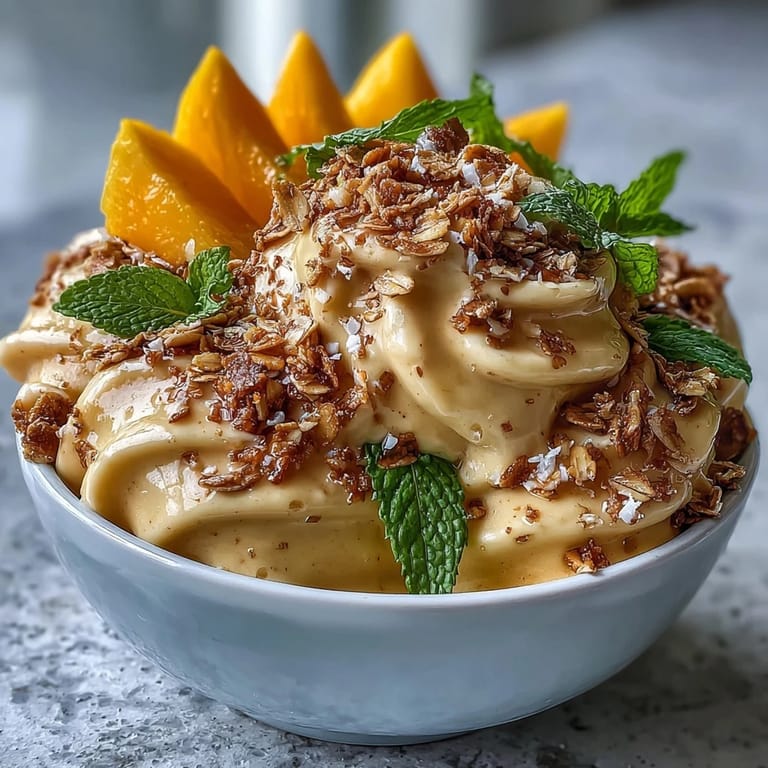
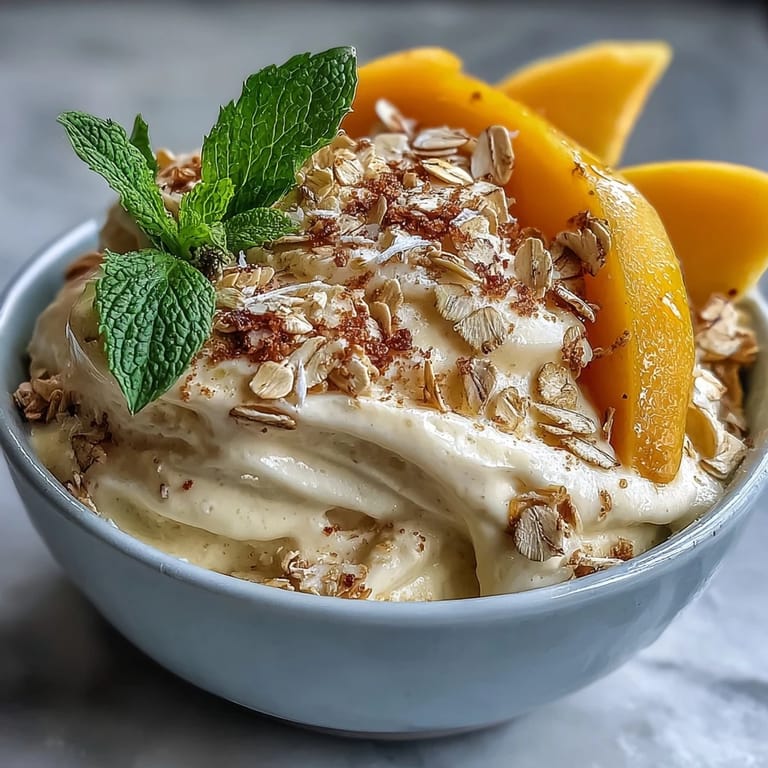
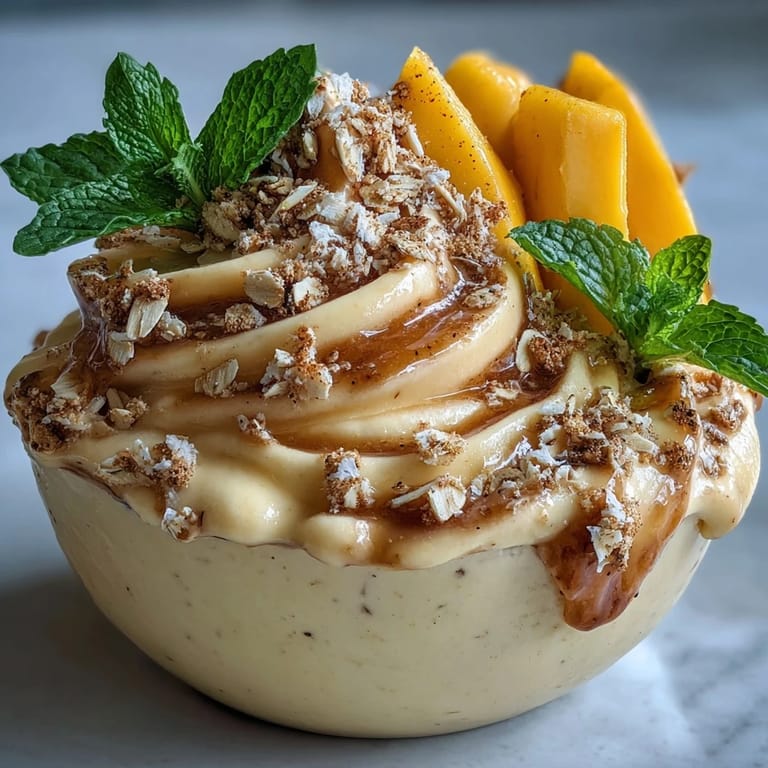
- Scoop your frozen mango creation into bowls, pile on that toasted oat mixture generously, arrange fresh mango slices on top, and scatter mint leaves if you want to feel fancy. Eat it immediately while the contrast between frozen and crunchy is still shocking and perfect.
 Pin it
 My neighbor watched me make this one afternoon and asked if it was the kind of dessert where you feel guilty afterward, or the kind where you just feel happy. I realized in that moment that the best foods aren't about indulgence or restraint—they're about the moment itself, and this one holds together perfectly in that space.
Why Mango and Coconut Are Actually Perfect Together
Tropical fruits don't just taste good together by accident; mango has this bright, almost floral sweetness while coconut brings richness and a subtle earthiness that prevents the whole thing from tasting like drinking juice. The vanilla and salt do the real invisible work here, sharpening the mango's presence and making the coconut cream taste less heavy. When they freeze together, you get this texture that's simultaneously light and luxurious, which is honestly harder to achieve than it sounds.
The Secret Behind Smooth Homemade Ice Cream
The stirring is everything, or the ice cream maker is everything, but one of them has to happen because frozen fruit naturally separates into icy shards if you leave it completely alone. Some people swear by blending the mixture before freezing, others insist on adding a tablespoon of cornstarch to prevent iciness—both approaches work, though I've found the regular stirring method gives you the most control and teaches you something about patience. That sound of your spoon scraping through the partially frozen mixture, the way the texture gradually changes from slushy to creamy, is somehow satisfying in a way that an ice cream maker, efficient as it is, can never quite replicate.
Making This Completely Foolproof
The most common mistake is using underripe mangoes because they're cheaper, but I promise you'll taste the difference in every spoonful. Another thing nobody mentions is how important it is to freeze your mango chunks ahead of time if you want extra creaminess—those frozen pieces blend into an even silkier base than room-temperature fruit. The oats are where people often rush, pulling them off the heat before they're truly golden because they're worried about burning them, but toasted oats should smell almost caramelized and look deeply golden to hold up texture-wise against the cold creamy base.
- Always taste your mango before committing to making this; if it tastes bland, even a beautiful frozen dessert can't save it.
- The coconut oil really does make a difference in the oat topping, so don't substitute it with vegetable oil unless you absolutely have to.
- Make extra oat topping because it disappears faster than you'd expect, and it keeps in an airtight container for a week.
 Pin it
 This dessert has become my proof that vegan cooking isn't about what you're removing; it's about what you're discovering instead. Every bowl is a tiny celebration of ripe fruit and the patience it takes to make something truly creamy without shortcuts.
Recipe FAQs
- → How do I achieve a creamy texture without dairy?
Using full-fat coconut milk provides rich creaminess that mimics dairy. Blending mangoes thoroughly and freezing with occasional stirring helps maintain a smooth texture.
- → Can I substitute the mango with other fruits?
Yes, stone fruits or berries can be used instead of mango for varied flavors while keeping a creamy frozen base.
- → What is the best way to toast the oats?
Toast rolled oats and shredded coconut in coconut oil over medium heat until golden and fragrant, stirring frequently to prevent burning.
- → Are there gluten-free options for the oats?
Use certified gluten-free rolled oats to keep the dish suitable for gluten-sensitive diets.
- → How should I store leftovers?
Keep any leftovers in an airtight freezer-safe container. Allow to soften slightly before serving for best texture.