 Pin it
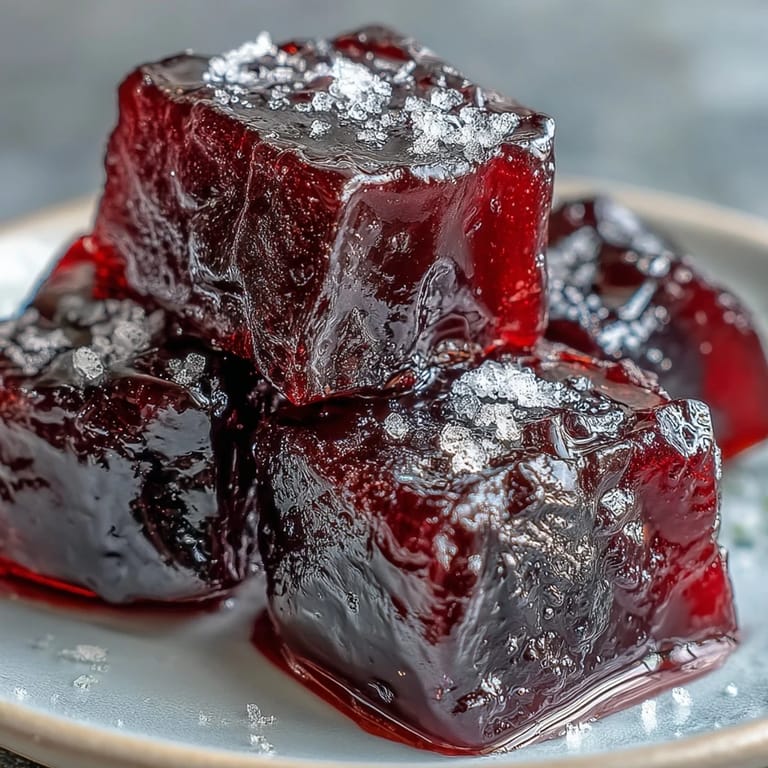
 My friend Marcus brought a tin of these candies back from a trip to Copenhagen, and I was immediately struck by how they tasted like walking through a Nordic winter—dark, complex, slightly herbal. The way the black currant brightness cut through the licorice warmth felt like a conversation between two flavors that shouldn't work but absolutely do. I spent an evening trying to reverse-engineer them in my kitchen, and after a few attempts, I finally nailed that perfect chewy texture with the right balance of tart and aromatic.
I made a double batch for a dinner party last autumn when the conversation had grown quiet and a little stale, and something about passing around a handmade candy tin seemed to reset the whole evening. People were suddenly leaning forward, debating the licorice notes, comparing them to candies from their own childhoods, and somehow we ended up talking for another three hours. That's when I realized these little squares were doing more than sitting on a plate—they were opening doors.
Ingredients
- Black currant purée: This is your base flavor and it needs to be deep and unapologetic—fresh berries blended smooth work best, but frozen ones thawed work just fine and honestly are easier to keep on hand.
- Lemon juice: A tablespoon might seem small, but it brightens the whole candy and keeps the currant from feeling one-note.
- Granulated sugar and corn syrup: The corn syrup is key here because it prevents crystallization and gives you that proper chewy texture instead of something grainy.
- Powdered gelatin: This is what makes the candy actually chewy rather than hard—bloom it properly and your whole batch will thank you.
- Licorice extract: Start conservative with this because it's potent and easily overpowering, but don't shy away from a second taste and adjustment before it sets.
- Salt: Just a whisper to balance and deepen all the other flavors.
- Confectioners sugar and cornstarch coating: These prevent the candies from sticking together and honestly make them feel more professional and gift-ready.
Tired of Takeout? 🥡
Get 10 meals you can make faster than delivery arrives. Seriously.
One email. No spam. Unsubscribe anytime.
Instructions
- Set up your stage:
- Line your pan with parchment paper and give it a light grease—you want the candy to release cleanly later without tearing. Have all your ingredients measured out before you start because once the syrup is cooking, there's no pausing.
- Bloom the gelatin:
- Sprinkle it over cold water and let it sit for exactly ten minutes until it looks like wet sand. This hydration step is non-negotiable because dry gelatin clumps and ruins everything.
- Warm the purée gently:
- Your black currant base just needs to be warm enough to receive the hot syrup later, not hot itself—this preserves some of that fresh, bright flavor.
- Cook the syrup to temperature:
- This is where focus matters—your thermometer should clip securely to the pan and you should watch it rise to exactly 250°F without stirring once you've dissolved the sugar. Stir before boiling, never after, or you'll end up with crystal chaos.
- Combine syrup and gelatin:
- Remove from heat and whisk in the bloomed gelatin immediately until it completely dissolves into the syrup. You'll feel the texture change under the whisk.
- Marry the mixtures:
- Pour this hot syrup-gelatin into your warm currant purée and whisk like you mean it until you have one smooth, glossy mixture with no streaks. This is your moment to get the color and texture right.
- Season and taste:
- Stir in the licorice extract and salt, then taste a tiny amount on a cool spoon before it sets. If you want more licorice punch, now is the only time to add it.
- Pour and set:
- Work quickly here—pour into your prepared pan and spread evenly with a spatula, knowing it'll be thick and want to hold its shape. Leave it at room temperature for one to two hours until completely set and no longer tacky on top.
- Cut and coat:
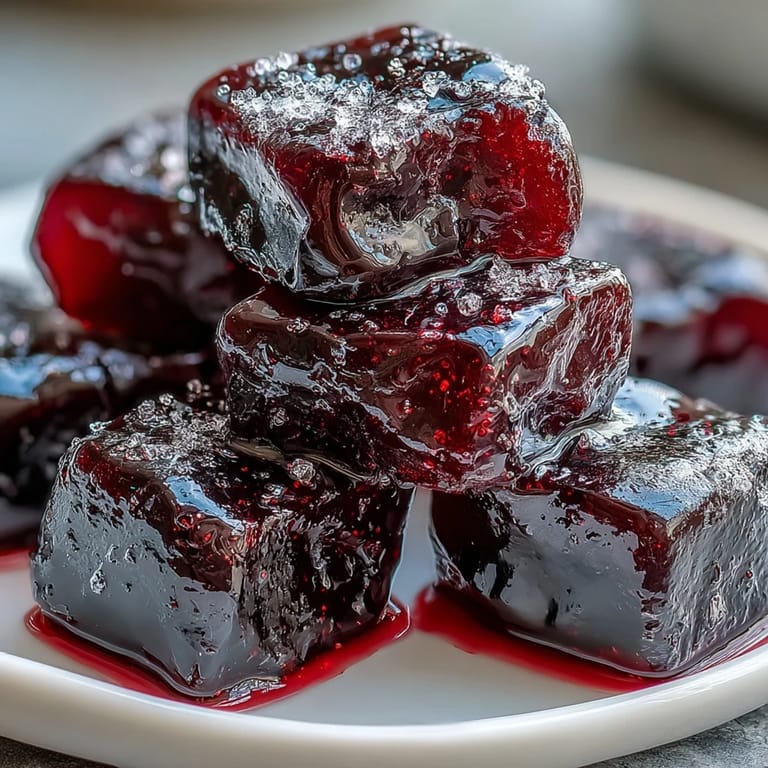
- Mix your confectioners sugar and cornstarch, dust your cutting board, turn out the whole slab, and cut into one-inch squares with a sharp knife (wiping it between cuts helps). Toss each piece in the coating to prevent sticking.
 Pin it
 There was one afternoon when my nephew came home from school grumpy about something, and I had a tin of these cooling on the counter. I let him sneak one while I pretended not to notice, and watching his face change as the flavors hit—that moment of surprise and intrigue—reminded me why I love making things that complicate people's expectations in delicious ways.
The Black Currant and Licorice Love Story
These two flavors come from completely different parts of the flavor map, yet they meet here in perfect harmony. Black currant is bright, slightly tart, with subtle berry complexity, while licorice brings earthiness and a warm aromatic quality that tastes a little bit like a whispered secret. Together they create something nostalgic but contemporary, like old European candy shops reimagined for modern palates. The gelatin base holds them in perfect suspension, soft and yielding against your teeth, neither too hard nor too wimpy.
Variations Worth Exploring
Once you master the base formula, this candy is endlessly adaptable. I've swapped the black currant for black raspberry when currants weren't available, and the result was brighter and slightly less austere—beautiful in a different way. You could absolutely try blackberry purée for something richer, or even venture toward cherry with a hint of anise for a completely different mood. Some adventurous cooks I know have added a tiny pinch of ground licorice root along with the extract for extra depth, and they swear by it.
Storage, Gifting, and the Joy of Handmade Candy
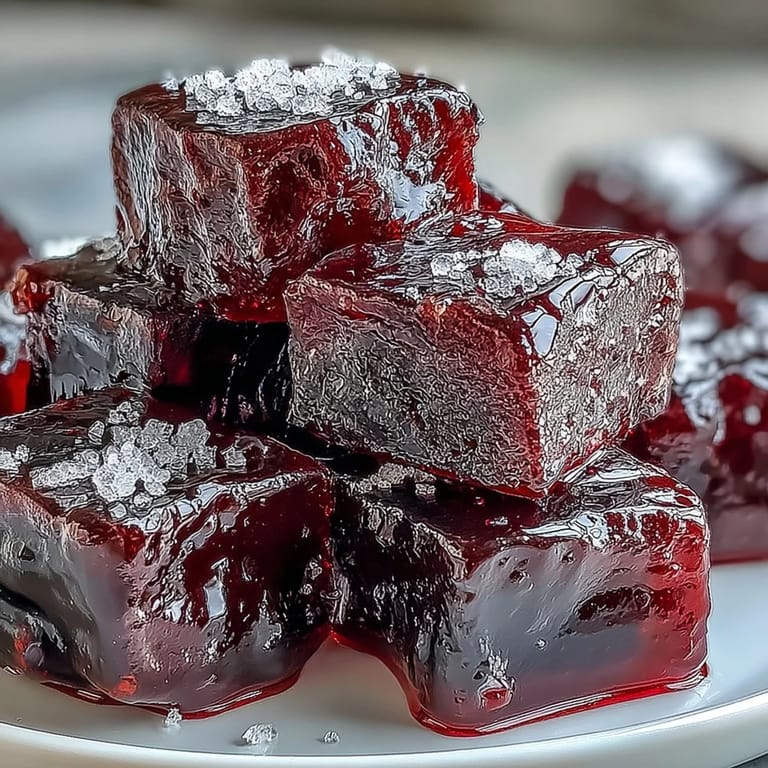
In an airtight container, these keep beautifully for up to a week, which honestly is long enough if you're planning to gift them—they never seem to last much longer anyway. Layered in a pretty tin with parchment between the pieces, they become something that says you spent time and care, which you did. The coating prevents sticking and also makes them feel more intentional, more like actual confectionery rather than something homemade and rustic.
- Keep them in a cool spot away from humidity, because moisture is the enemy of any candy.
- If you're gifting them, layer with parchment paper so flavors don't bleed together.
- Let them set fully before storing, or you'll end up with a stuck mass instead of individual pieces.
 Pin it
 These candies have become my go-to when I want to make something that feels special without being complicated. They're proof that sometimes the most memorable things come from respecting good ingredients and taking your time.
Recipe FAQs
- → What gives the candy its chewy texture?
Powdered gelatin blooms and dissolves into the syrup mixture, creating the chewy consistency once cooled and set.
- → Can I substitute the black currant purée with another fruit?
Yes, black raspberry or blackberry purée can be used for a similar fruity tartness with a slight flavor variation.
- → How can I enhance the licorice flavor?
Adding finely ground licorice root powder deepens the licorice aroma and taste within the candy.
- → Why is sugar and cornstarch used after cooling?
Mixing confectioners sugar with cornstarch and coating the candies prevents sticking and helps maintain individual pieces.
- → Is a candy thermometer necessary for this process?
Using a candy thermometer ensures the sugar syrup reaches the correct temperature for optimal texture and firmness.
- → How long can these candies be stored?
Store them in an airtight container at room temperature for up to one week to keep freshness and texture intact.