 Pin it
 There's something about the smell of butter and onions hitting a hot pan that instantly transports me back to my grandmother's kitchen on ordinary weeknights. She'd make this creamy chicken and noodle dish without much fanfare, just a quiet confidence that came from knowing exactly what would comfort us. I've tried to chase that same feeling ever since, and I think I've finally figured out her secret: it wasn't fancy ingredients or technique, but the way she let everything simmer together until the flavors stopped being separate and became one.
I made this for a dinner party once when I was still figuring out my footing as a cook, convinced everything would fall apart. Instead, my friend went back for thirds and asked for the recipe before even finishing her plate. That moment taught me that home cooking doesn't need to be complicated to be impressive—sometimes the most memorable meals are the ones that taste like someone genuinely cared about feeding you.
Ingredients
- Chicken breasts or thighs: Use thighs if you want more forgiving, flavorful meat that won't dry out as easily—they stay tender even if you're a few minutes off on timing.
- Butter and olive oil: The combination gives you a better sear on the chicken than butter alone, and the mixture tastes richer than oil by itself.
- Yellow onion, carrots, and celery: This is your flavor foundation, and taking time to chop them evenly means they'll cook at the same rate.
- All-purpose flour: This is what thickens your sauce into something silky and coats each noodle beautifully.
- Chicken broth, milk, and heavy cream: The three-part dairy system prevents the sauce from being too heavy or too thin—each brings something essential.
- Dijon mustard and thyme: These two are what separate a good dish from one that tastes like it came from a can; they add depth without announcing themselves.
- Wide egg noodles: Their curves hold sauce better than thin noodles, and they have a tender, rich flavor that complements the creamy base.
- Frozen peas: They brighten the dish with color and a pop of sweetness, and they don't need advance thawing.
Tired of Takeout? 🥡
Get 10 meals you can make faster than delivery arrives. Seriously.
One email. No spam. Unsubscribe anytime.
Instructions
- Season and sear the chicken:
- Pat your chicken pieces dry before they hit the pan—this is what gets you that golden-brown crust instead of steam. The browning takes about 5 to 6 minutes, and you'll know it's ready when the edges turn opaque and the kitchen fills with a savory aroma.
- Build your vegetable base:
- Once the chicken is set aside, add your onions, carrots, and celery to the same pot. Let them soften for 4 to 5 minutes, stirring occasionally so they caramelize instead of just steam. When you add the garlic in the final minute, you'll smell the shift—that's when you know you're on the right track.
- Make the roux:
- Sprinkle the flour over your vegetables and stir for a minute or two until everything looks like wet sand. This step cooks off the raw flour taste and starts to thicken your sauce from the inside out.
- Create the creamy sauce:
- Pour in your broth, milk, and cream slowly while whisking constantly—this prevents lumps and keeps everything smooth. The sauce should smell savory and rich by the time you add the mustard, thyme, and paprika.
- Let it all come together:
- Simmer for 5 minutes, stirring often, until the sauce coats the back of a spoon. Meanwhile, get your noodles going in a separate pot so they're ready when you need them.
- Finish and serve:
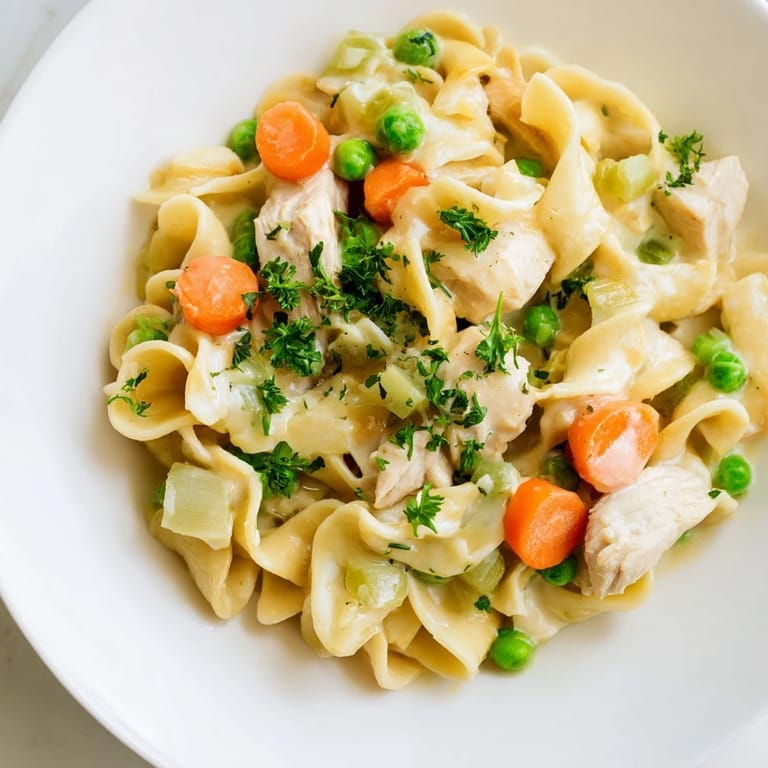
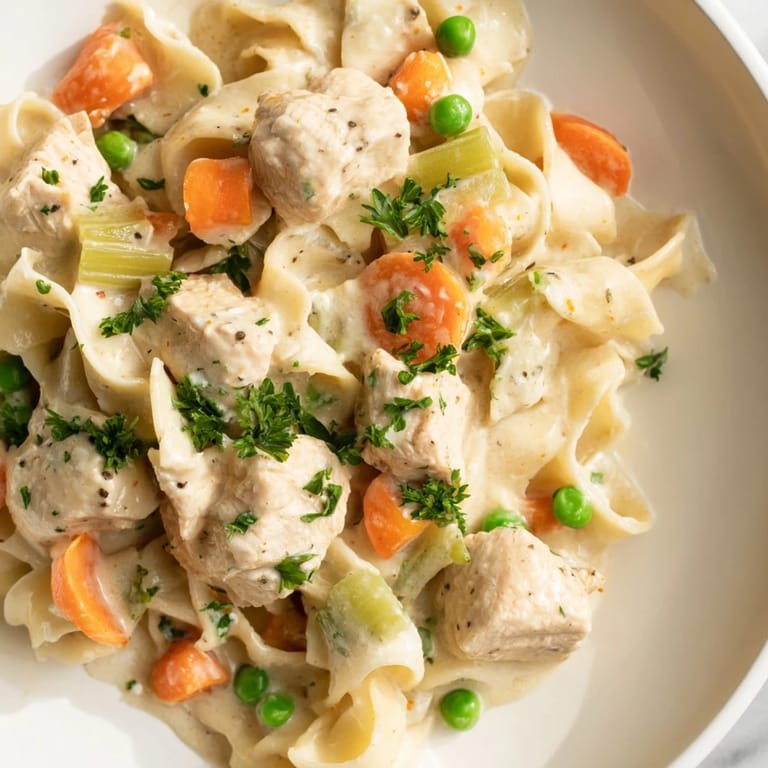
- Return your chicken to the sauce with the peas, let them warm through for a couple of minutes, then toss in the cooked noodles. Everything should be silky and evenly coated, ready to serve straight from the pot.
 Pin it
 There was a winter evening when I made this for someone going through a hard time, and they told me later that the meal was exactly what they needed, not because it was elaborate, but because it tasted like someone understood what comfort meant. Cooking this dish now reminds me that the most nourishing thing you can serve isn't always about ingredients—it's about intention.
Making It Your Own
This recipe is sturdy enough to handle small changes without falling apart. If you have white wine in the kitchen, splash a quarter cup in when you're sautéing the vegetables—it adds a subtle brightness that doesn't announce itself but makes the whole dish taste rounder. A few sliced mushrooms sautéed alongside the onions bring an earthy note that some people swear is the missing piece they never knew they needed. Some nights I use rotisserie chicken straight from the store, shredded right before it goes into the sauce, which lets me spend my energy on other parts of the meal.
Timing and Temperature
From start to finish, this dish comes together in about 45 minutes, though most of that time is hands-off simmering. The secret to not feeling rushed is getting all your chopping done before you turn on the heat—mise en place might sound fancy, but it just means having everything ready so you're not scrambling mid-recipe. Keep your heat at medium once you're building the sauce; too high and you'll risk the cream curdling or the bottom scorching, and too low means you'll be waiting forever for thickness to develop.
Serving and Storage
This dish is best eaten fresh, while the noodles still have some tender resistance to them and the sauce is at its creamiest. A simple green salad on the side cuts through the richness and makes the meal feel complete without adding much effort. Leftovers keep for three days in the refrigerator, though the noodles will absorb more sauce and soften; if you're storing it, keep the noodles and sauce together so they stay cohesive.
- Reheat gently in a low oven or on the stovetop with a splash of milk to loosen the sauce back to silky.
- Frozen peas can be swapped for corn or fresh spinach stirred in at the very end if that's what you have.
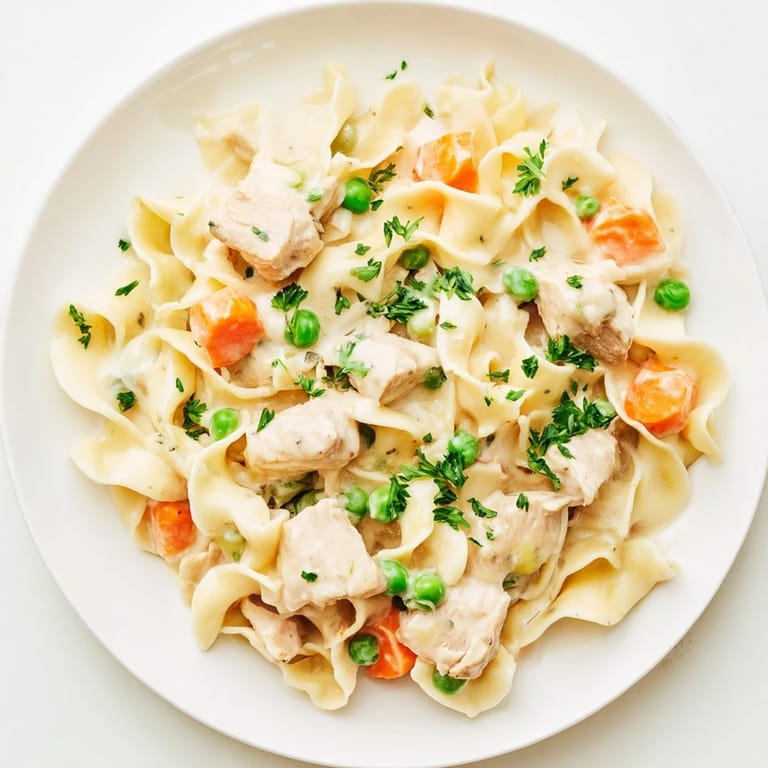
- A sprinkle of fresh parsley or a crack of black pepper right before serving lifts the whole dish and makes it feel like you put thought into finishing it.
 Pin it
 This creamy chicken and noodle dish has fed more people in my kitchen than almost any other recipe, and that's not because it's fancy—it's because it's honest. It reminds you why comfort food exists.
Recipe FAQs
- → What type of chicken works best?
Boneless, skinless chicken breasts or thighs cut into bite-sized pieces work well to ensure even cooking and tender bites.
- → Can I use a different noodle?
Wide egg noodles are recommended for their ability to hold the creamy sauce, but pappardelle or fettuccine can be good substitutes.
- → How do I thicken the sauce?
Flour is used as a roux base to thicken the sauce, combined with chicken broth, milk, and cream for a smooth consistency.
- → Are there any vegetable additions suggested?
Carrots, celery, and onion provide natural sweetness and texture; adding mushrooms can bring an earthy flavor.
- → Can this be prepared ahead?
The sauce and chicken can be cooked ahead and refrigerated; reheat gently and add freshly cooked noodles before serving.
- → What herbs enhance the dish?
Dried thyme and parsley are used in the sauce, with fresh parsley sprinkled on top for a fresh, bright finish.