 Pin it
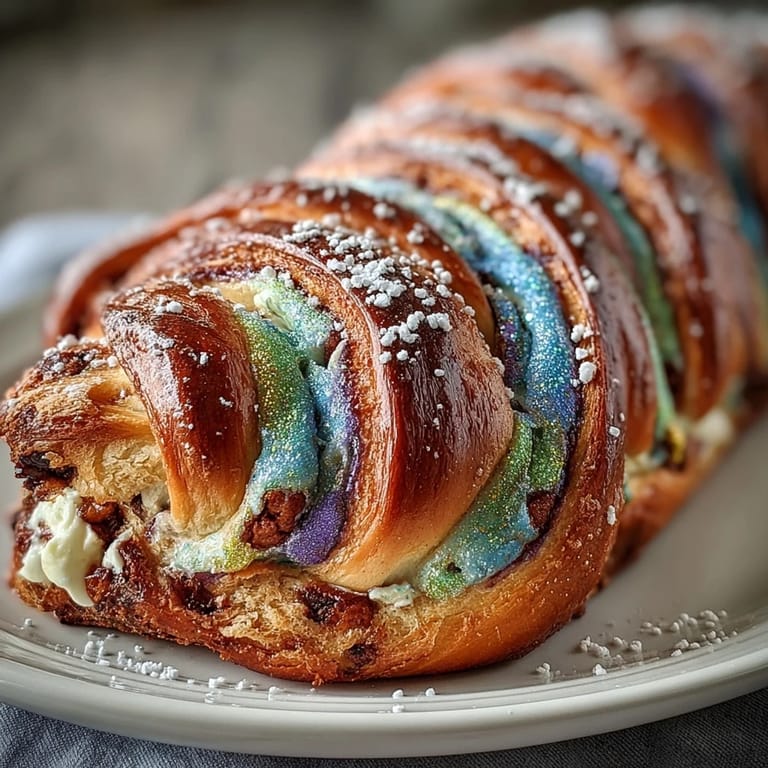
 My kitchen filled with the smell of yeast and butter the first time someone handed me a slice of King Cake at a Mardi Gras party—tangy lemon cream cheese wrapped in golden braided dough, finished with those jewel-toned sugars that made it look almost too festive to eat. I spent the whole evening asking questions instead of enjoying the party, which is very me. Three weeks later, I'd made it four times, each batch teaching me something new about how dough stretches, how lemon plays against sweetness, and why celebrating matters enough to fill your kitchen with this much joy.
I made this for my sister's book club last spring, and what started as me nervously sliding it onto the table became this whole moment where everyone went quiet for a beat, then started breaking off pieces before I'd even finished the introduction. That's when I realized bread that looks this good does half the work of hospitality for you.
Ingredients
- All-purpose flour (4 cups): This is your structure—too little and the braid collapses, too much and it gets tough and dense instead of tender.
- Active dry yeast (2 1/4 tsp): Room temperature liquids matter here; cold milk will slow fermentation and you'll wait forever wondering if something went wrong.
- Whole milk and warm water: Together they create the right moisture balance; milk adds richness, water prevents it from becoming too heavy.
- Eggs (room temperature): Cold eggs seize the butter and make your dough shaggy—let them sit out while you're measuring other things.
- Unsalted butter (melted): Melting it first means it distributes evenly instead of creating little pockets of grease.
- Cream cheese (softened): This is non-negotiable; hard cream cheese lumps and won't spread properly, which ruins the filling's texture.
- Fresh lemon juice and zest: Zest adds complexity that juice alone can't deliver; don't skip it thinking the juice is enough.
- Colored sanding sugar: Regular granulated sugar melts into the glaze; sanding sugar stays crispy and jewel-like, which is the whole point.
Tired of Takeout? 🥡
Get 10 meals you can make faster than delivery arrives. Seriously.
One email. No spam. Unsubscribe anytime.
Instructions
- Wake up your yeast:
- Warm water, milk, and yeast sit together for five minutes until it looks foamy and smells alive—this tiny moment tells you everything's ready to go. If it stays flat and silent, your yeast is dead and it's time to start over with a fresh packet.
- Build the dough base:
- Sugar, eggs, butter, and salt go into that foamy mixture, and you stir until it looks shaggy and loose. Add flour gradually so you can feel when it stops being sticky and becomes something you can actually touch.
- Knead with intention:
- Eight to ten minutes of kneading on a floured surface transforms loose dough into something smooth and elastic that springs back when you poke it. Your hands will know when it's right—it'll feel alive under your palms.
- First rise:
- A greased bowl, a cover, a warm spot—ninety minutes in a kitchen where the oven's off and the afternoon light comes through the window. You'll come back and find it doubled, which never stops being a small magic.
- Make the filling while dough rises:
- Softened cream cheese beats until smooth, then sugar, lemon juice, zest, and egg yolk get folded in—it should taste bright and a little tart, not cloyingly sweet. A quick taste tells you if it needs more lemon or if you're ready to go.
- Shape the dough:
- Punch down the risen dough like you mean it, then roll it into a 10 by 18-inch rectangle on a lightly floured surface. It should stretch easily; if it fights back, let it rest for five minutes and it'll relax.
- Fill and braid:
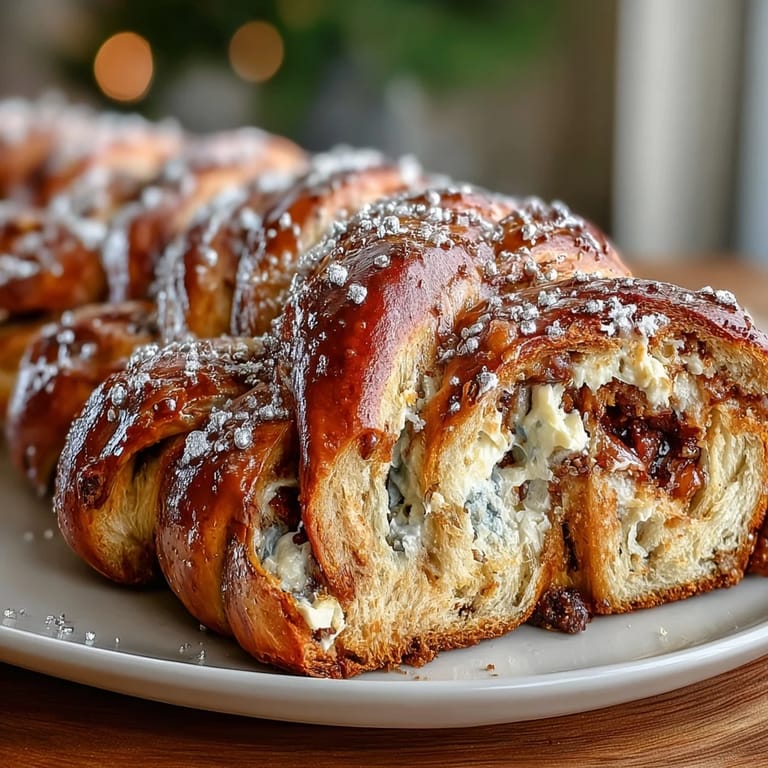
- Lemon filling spreads down the center third lengthwise, then you cut diagonal strips about an inch wide on both sides, leaving the ends intact. Fold strips over alternating sides to create a braid that looks woven—take your time, there's no rush, and if one strip tears it honestly doesn't matter.
- Second rise:
- Transfer to parchment paper, cover loosely, and let it rise for forty-five minutes until it's puffy and soft-looking. Your nose will tell you it's ready—the smell intensifies as it's finishing.
- Bake until golden:
- Brush with egg wash first so it gets shiny, then into a 350°F oven for 28 to 32 minutes until the top is deep golden and the kitchen smells like a celebration. A toothpick inserted into the thickest part should come out clean.
- Finish with glaze and sugar:
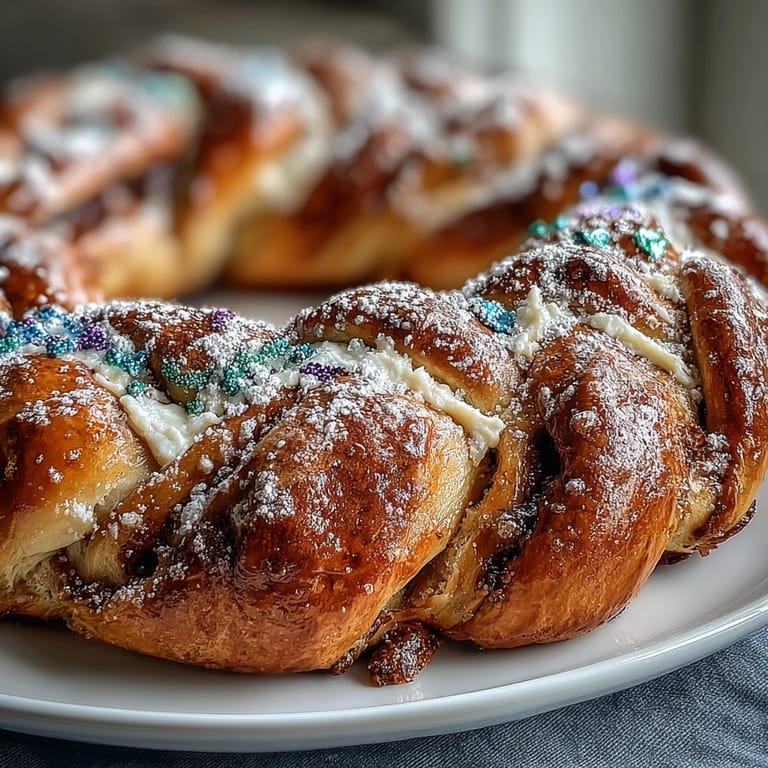
- Once cooled, whisk powdered sugar with lemon juice or milk until it's thick enough to drizzle but not so thick it won't flow. Immediately sprinkle colored sugars in stripes—they stick to the wet glaze and stay brilliant and crisp.
 Pin it
 There's a tradition of hiding something inside—a small plastic baby, an almond—and the person who gets it is crowned the lucky one for the day. My nephew bit down on the baby last year and started screaming, which taught me to announce it before anyone takes their first bite, but the excitement before that moment was worth every second of his dramatic reaction.
The Science of Sweet Dough
Sweet dough behaves differently than regular bread dough because sugar and fat both slow yeast fermentation slightly—they're competing for the yeast's attention, which sounds chaotic but actually creates a more tender crumb. The eggs add structure and richness, the butter adds flavor, and together they're fighting to make something soft instead of chewy. Understanding this means you stop worrying and just trust the timing on the rise; it's slower than plain bread, which is exactly what you want.
Lemon as a Balancing Act
The first time I made this, I used bottled lemon juice and wondered why it tasted flat and one-dimensional despite being lemony—fresh juice has brightness that concentrate doesn't capture. The zest is doing something different from the juice; it's adding a subtle, almost floral complexity that makes people pause and try to figure out what they're tasting. When you pair them together in the filling, one's providing acidity and the other's adding depth, and somehow they make the sweetness feel elegant instead of heavy.
Timing, Patience, and the Unexpected
The longest part of this recipe isn't the baking—it's the two rises, and they can't be rushed without losing something essential. I once tried to speed things up with a warm oven and ended up with dough that rose too fast, lost structure, and collapsed slightly during baking. Now I just start this early enough that time isn't a factor, and somehow that shift in perspective makes the whole process feel less stressful and more like I'm building something with intention.
- If your kitchen is cold, the microwave with just the light on creates a perfect warm spot for rising.
- The braid doesn't have to be perfect—rustic-looking brains honestly look more homemade and charming.
- You can make the dough the night before, refrigerate it, and braid it in the morning for fresher-baked results.
 Pin it
 This bread transforms a regular day into something worth celebrating, which might be its best quality. Make it when you want to remind someone they matter, or just when you want your kitchen to smell like a festival.
Recipe FAQs
- → How do I achieve a tender, flaky dough for the braid?
Use lukewarm milk and water to activate the yeast and knead the dough until smooth and elastic. Allow sufficient rising time for a light texture.
- → What enhances the lemon cream cheese filling’s flavor?
Fresh lemon juice and zest combined with softened cream cheese and sugar create a balanced tangy and sweet filling.
- → How should the braid be assembled for an even filling distribution?
Roll the dough into a rectangle, spread the filling lengthwise down the center third, then cut diagonal strips on both sides and fold over alternately to form the braid.
- → What’s the best way to get a shiny golden crust?
Brush the braid with an egg wash just before baking to enhance color and shine during cooking.
- → Can I prepare this in advance for a celebration?
Yes, prepare the dough and filling ahead, chill if needed, then complete shaping and baking on the event day for freshness.