 Pin it
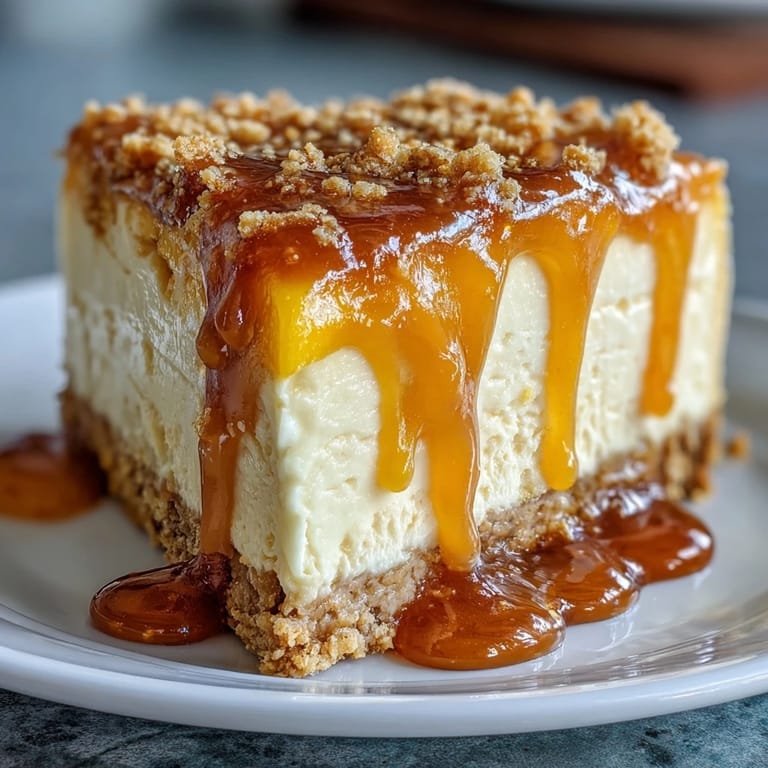
 My friend brought home a wooden crate of mangoes from the farmer's market one sweltering afternoon, and I found myself staring at them, wondering what to do with the glorious pile before they softened too much. That evening, I decided to make something that would capture their bright, honeyed essence without letting them disappear into jam. A mango cheesecake emerged from that impulse, and it's become the dessert I reach for whenever I want to feel like I'm giving people something genuinely special, something that tastes like summer on a plate.
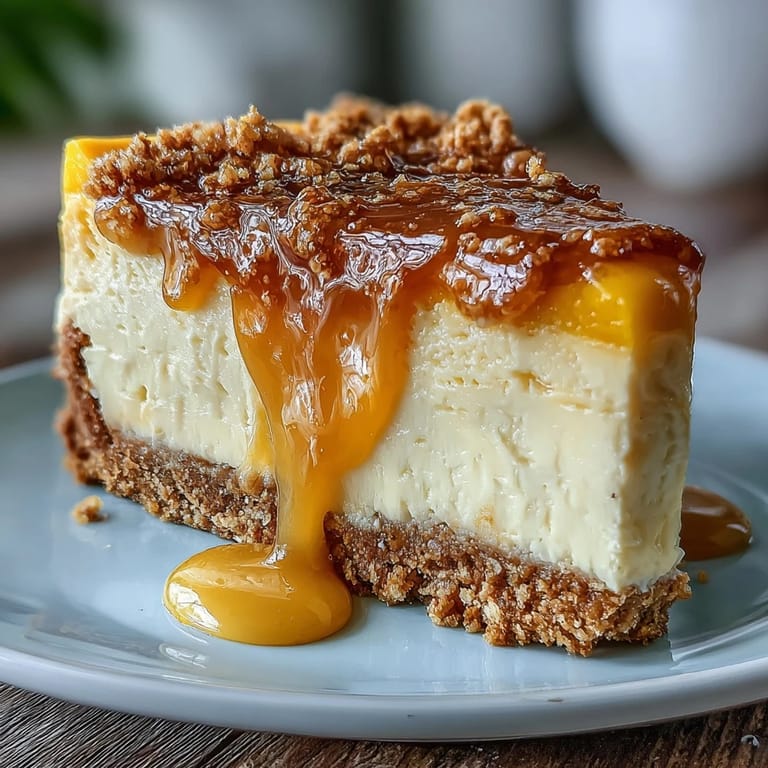
I made this for my sister's birthday dinner last June, and I'll never forget how her eyes lit up when she saw that glossy amber coulis draped across the top. She took one bite and immediately asked for the recipe, which is how I knew it had passed the ultimate test. The kitchen smelled incredible while it baked, and somehow that aroma became part of the memory itself.
Ingredients
- Digestive biscuits (200 g): These create a sturdy, slightly sweet foundation that won't crumble when you slice into the cheesecake; if you can't find them, graham crackers work in a pinch, though the flavor will shift slightly.
- Unsalted butter (80 g), melted: Butter is your binding agent here, and melting it first ensures the crumbs toast evenly and hold together beautifully.
- Full-fat cream cheese (500 g), softened: Room temperature is non-negotiable; cold cream cheese creates lumps that no amount of beating will fix, so plan ahead.
- Granulated sugar (150 g): This sweetens the filling without adding texture, though you'll taste a difference if you use anything coarser.
- Mango puree from fresh ripe mangoes (200 g for filling, 100 g for swirl): Ripe Alphonso or Ataulfo mangoes are your secret weapon because they're naturally sweet and have that silky texture that blends into pure gold.
- Sour cream (150 ml): This adds tang and creaminess, preventing the cheesecake from being one-dimensional sweet.
- Large eggs (3): These bind everything together and create that custard-like texture, so they must be at room temperature.
- Vanilla extract (1 tsp): A small amount awakens all the other flavors without announcing itself loudly.
- Lemon juice (1 tbsp in filling, 1 tsp in coulis): Lemon cuts through richness and makes the mango taste even more vibrant and alive.
- All-purpose flour (2 tbsp): This stabilizes the filling and prevents cracks from forming as the cheesecake cools.
- Powdered sugar (1 tbsp optional for swirl, 2 tbsp for coulis): Use powdered sugar for the coulis because it dissolves instantly and keeps the texture silky smooth.
Tired of Takeout? 🥡
Get 10 meals you can make faster than delivery arrives. Seriously.
One email. No spam. Unsubscribe anytime.
Instructions
- Set up your stage:
- Preheat your oven to 160°C and line a 23 cm springform pan with parchment paper on the bottom. This might seem fussy, but it prevents the base from sticking and makes unmolding infinitely easier.
- Build the base:
- Crush the digestive biscuits until they resemble damp sand (a food processor does this in seconds, but a rolling pin and some elbow grease works too). Mix them with melted butter until the texture reminds you of wet brown sugar, then press it firmly into the pan base, using the bottom of a measuring cup to create an even, compact layer. Chill this while you work on the filling so it sets slightly and won't shift when the heavy batter lands on top.
- Create the creamy filling:
- In a large mixing bowl, beat the softened cream cheese and sugar together for about 2-3 minutes until the mixture is completely smooth and there are no cream cheese lumps visible. Add the sour cream, then incorporate the eggs one at a time, beating gently after each addition and scraping down the sides of the bowl with a rubber spatula to catch any stray bits.
- Add the final flavors:
- Stir in the vanilla extract, lemon juice, and flour until just combined, being careful not to overmix because that introduces air bubbles that can cause cracks during baking. Gently fold in 200 g of mango puree with a few broad strokes, leaving some swirls of mango visible rather than fully blending it in.
- Layer and swirl:
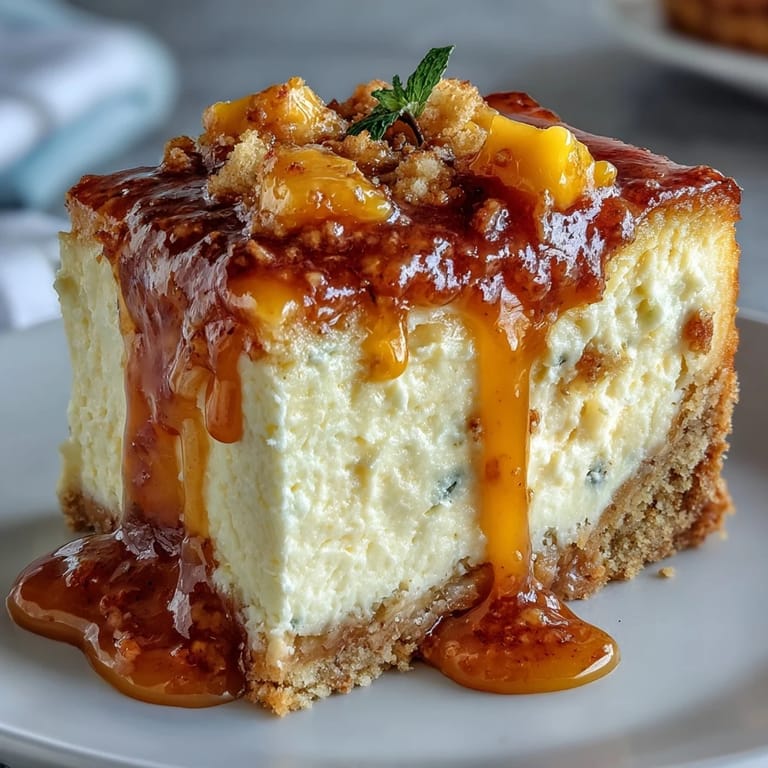
- Pour the filling over your chilled biscuit base and smooth the top gently. Take your remaining 100 g mango puree, mix it with powdered sugar if using, and drop spoonfuls across the surface of the batter. Using a skewer or thin knife, drag it through the puree and batter in a figure-eight pattern to create those gorgeous marbled stripes that everyone will admire.
- Water bath magic:
- Place your springform pan inside a larger roasting pan and pour hot water into the larger pan until it reaches about halfway up the sides of the cheesecake pan. This gentle, humid heat environment prevents the top from drying out and helps the cheesecake bake evenly from edge to center.
- Bake with patience:
- Bake for 55-60 minutes; you're looking for the edges to be set and slightly pulled back from the pan sides, while the very center still has a slight wobble when you gently shake the pan. This wobble is your friend because it means the carryover heat will finish cooking the center perfectly.
- Cool slowly:
- Turn off the oven and leave the door ajar for about 1 hour, allowing the cheesecake to cool gradually so the temperature shock doesn't cause deep cracks. Then remove it fully and let it come to room temperature before transferring to the refrigerator for at least 4 hours, preferably overnight, so the texture firms up and flavors meld together.
- Make the coulis:
- While the cheesecake chills, blend 150 g mango puree with powdered sugar and lemon juice until completely smooth. If you want it silky-smooth (which I do), strain it through a fine mesh sieve and chill it until you're ready to serve.
- The grand finale:
- Just before serving, spread or artfully drizzle the chilled mango coulis over the top of your cheesecake. Use a sharp, hot knife (dip it in hot water and wipe it clean between slices) to cut clean slices that let those beautiful layers show.
 Pin it
 My mom took one bite at a dinner party and told me it tasted like I'd captured something precious, and I realized that food really does become more meaningful when it carries the story of time spent making it. That's what happens with this cheesecake: it transforms from ingredients into a moment people remember.
Finding Perfect Mangoes
The mango you choose determines whether this cheesecake sings or just plays a decent tune. Alphonso mangoes have this almost perfumed sweetness and buttery texture that makes puree taste like liquid gold, while Ataulfo mangoes are smaller but ridiculously concentrated in flavor. A mango is ripe when it yields slightly to gentle pressure and smells fragrant at the stem end, not when it's rock-hard or mushy. If you're buying them days in advance, pick ones that are just starting to soften so they'll be perfect by the time you're ready to puree them.
Making Mango Puree from Scratch
Peel your mangoes by slicing thin strips of skin with a vegetable peeler or knife, working around the large flat pit in the center. Scoop the soft flesh into a food processor or blender and puree until completely smooth, stopping to scrape down the sides as needed. If you end up with any fibrous strands, you can strain the puree through a fine mesh sieve, though I usually skip this step unless the mango variety is particularly stringy. Measure out what you need and freeze any extra in ice cube trays for future desserts.
Storage and Serving Wisdom
This cheesecake keeps beautifully in the refrigerator for up to 5 days covered loosely with plastic wrap, and it even freezes well for up to 3 months if you want to make it ahead for a special occasion. Let it thaw overnight in the fridge before serving, and avoid freezing the coulis separately because its texture changes; instead, add the coulis fresh just before you serve. A glass of late-harvest Riesling or Moscato pairs absolutely beautifully because the wine's sweetness echoes the mango while its acidity cleanses your palate between bites.
- Always use room temperature ingredients for the smoothest, most uniform texture.
- The cheesecake continues to set in the fridge even after 4 hours, so overnight chilling genuinely does improve the final result.
- A hot knife makes clean slices that showcase those gorgeous layers without dragging the filling around.
 Pin it
 Every time I make this cheesecake, it feels like a small gift I'm giving to the people gathered around my table. There's something about a homemade dessert that carries so much more meaning than anything store-bought ever could.
Recipe FAQs
- → What type of mangoes work best for this dessert?
Ripe, sweet mango varieties like Alphonso or Ataulfo bring the best natural flavor and vibrant color.
- → How do I achieve the swirled mango effect?
Gently fold fresh mango puree into the creamy filling and add dollops on top, swirling them with a skewer before baking.
- → Why is a water bath used during baking?
The water bath ensures even cooking and prevents cracks, resulting in a smooth and creamy texture.
- → Can I prepare this dessert in advance?
Yes, chilling it overnight allows the flavors to meld and the texture to set perfectly.
- → What are good pairings for this dessert?
Pair it with sweet wines like late-harvest Riesling or Moscato to complement the tropical mango flavors.
- → Are there gluten-free options for the base?
Use gluten-free biscuits instead of digestive ones to accommodate gluten sensitivity.