 Pin it
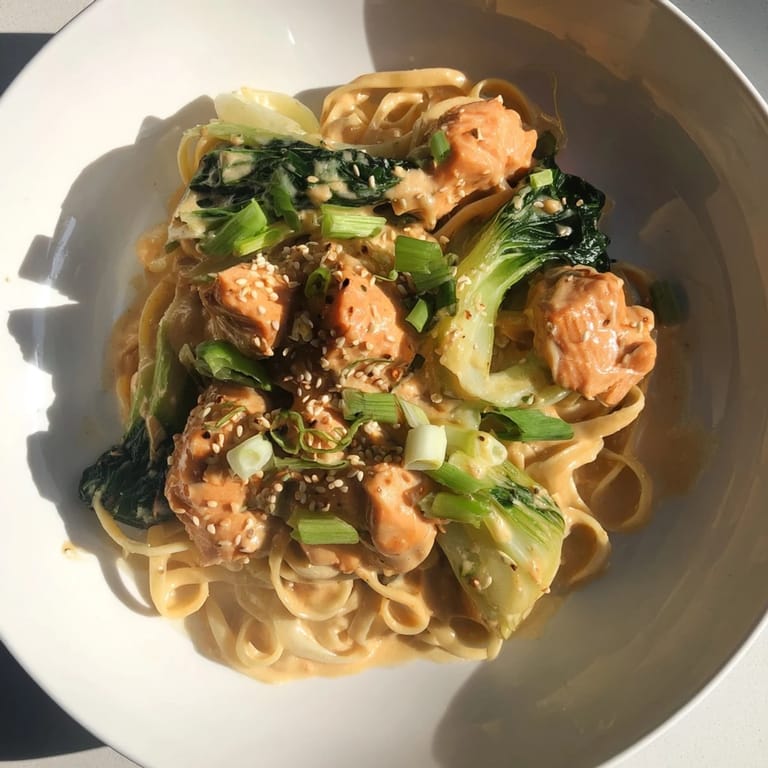
 The first time I made miso butter pasta, I wasn't trying to invent fusion cuisine—I was just staring at a piece of salmon and a jar of white miso on my counter, wondering if they'd get along. Turns out they became best friends. There's something about that fermented umami hitting creamy butter that feels both unexpected and obvious at once. Now, whenever I'm in the mood for something that tastes fancy but doesn't require hours of work, this is what lands in my pan.
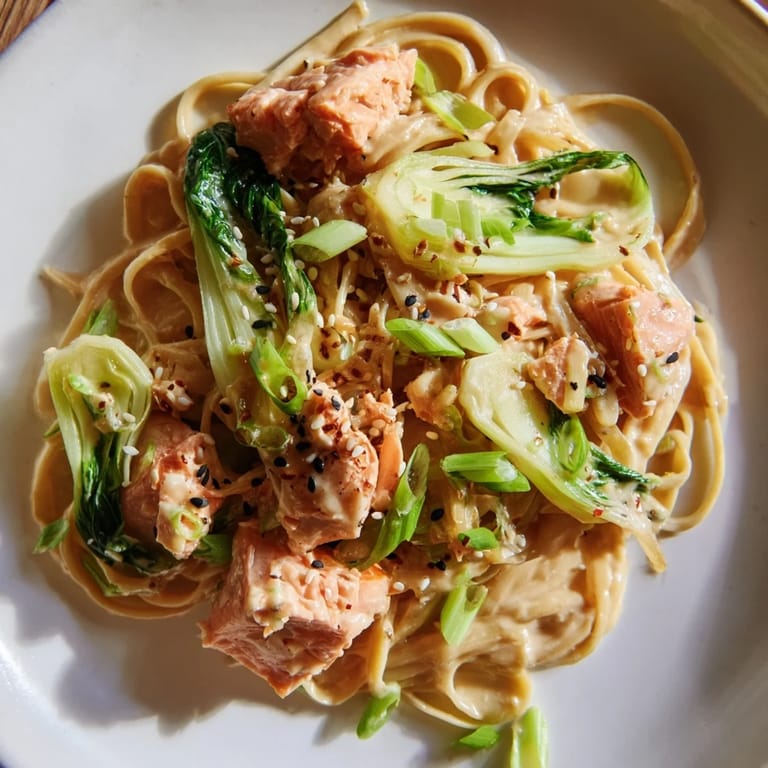
I remember making this for my partner on a quiet Tuesday night after a long day at work. They took one bite, closed their eyes, and just said "where did you learn this?" The bok choy was still slightly crisp, the sauce was silky without being heavy, and the salmon broke apart on the fork like it was butter itself. That's when I realized this dish had become my secret weapon for turning around a rough day.
Ingredients
- Salmon fillets (400g, cut into bite-sized pieces): Use skinless so the sauce coats every piece, and cut them roughly the same size so they cook evenly—no dry edges, no raw centers.
- Linguine or spaghetti (300g): The thin strands catch and hold the miso butter sauce beautifully; skip thick pasta here.
- Baby bok choy (2 heads, chopped): Those tender leaves will and you want them just wilted, not mushy—they add a fresh green note that keeps the dish from feeling too heavy.
- Garlic (2 cloves, minced): Mince it fine so it disappears into the sauce and doesn't overpower the delicate salmon.
- Scallions (2, sliced): Save these for the end—they're your brightness and crunch when everything else is rich and soft.
- Unsalted butter (60g): Two tablespoons goes into the pan first, one tablespoon at the end; the gradual approach keeps the sauce from breaking and gives you that silky texture.
- White miso paste (2 tbsp): This is the whole heart of the dish—it's what makes people ask what secret ingredient you're hiding.
- Soy sauce (2 tbsp): Just enough to underscore the umami without making it taste explicitly Japanese; it's the quiet supporting actor.
- Mirin (2 tbsp): A hint of sweetness that rounds out the fermented saltiness of the miso and soy.
- Heavy cream (100ml): This tames the intensity of the miso and makes the sauce cling to each strand of pasta instead of pooling at the bottom.
- Sesame oil (1 tsp): A tiny amount goes in at the beginning for toasted flavor, not so much that it dominates.
- Black pepper (½ tsp): Freshly ground, added at the very end so the flavor stays bright and sharp.
- Toasted sesame seeds (1 tbsp, optional): These add a nutty crunch that makes every bite more interesting.
- Lemon wedges (optional): A squeeze of acid at the table wakes up the whole dish and cuts through the richness.
Tired of Takeout? 🥡
Get 10 meals you can make faster than delivery arrives. Seriously.
One email. No spam. Unsubscribe anytime.
Instructions
- Get the pasta started:
- Fill a large pot with water, salt it generously, and bring it to a rolling boil—the water should taste like the sea. Drop in the linguine and cook according to the package directions, but start checking at a minute before it says it's done; you want it tender but with just a tiny bit of resistance when you bite it.
- Cook the aromatics:
- While the pasta water heats, warm a large skillet over medium heat and add a tablespoon of butter with the sesame oil. Once it stops foaming, add the garlic and listen for that sizzle—that's your signal that it's fragrant and ready for the next step.
- Sear the salmon gently:
- Lay the salmon pieces in the pan and resist the urge to move them for about two minutes—they'll develop a soft, almost custard-like exterior. Flip each piece and give it another minute or two, then slide it onto a clean plate; the pieces won't be fully cooked, and that's perfect because they'll finish in the sauce.
- Build the miso butter sauce:
- Add the remaining butter to the same skillet, and once it's melted and foaming, whisk in the miso paste until there are no lumps—it should look like a smooth paste at first. Pour in the soy sauce and mirin, stirring until everything combines into a dark, fragrant base.
- Cream and vegetable layer:
- Pour the heavy cream slowly while stirring so it doesn't seize up, then crack in the black pepper. Add the bok choy and let it cook for a minute or two, stirring occasionally, until the leaves begin to wilt but the stems still have a little snap to them.
- Bring it together:
- Return the salmon to the skillet and roll it gently through the sauce, coating each piece. Reserve about half a cup of pasta water before you drain your pasta, then add the drained pasta to the pan and toss everything together, adding a splash of pasta water if the sauce looks too thick—it should be silky and cling to the pasta without pooling.
- Finish and serve:
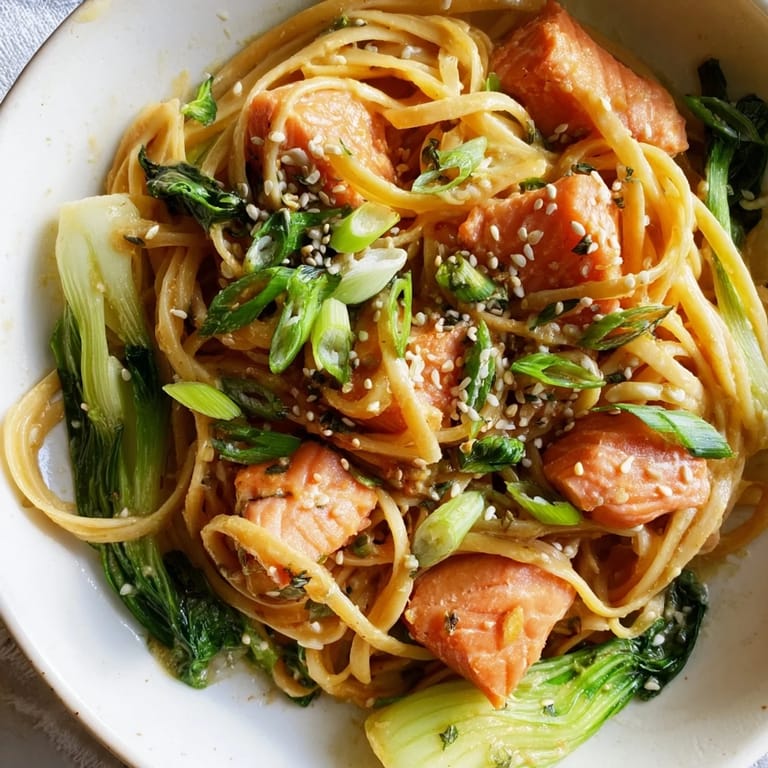
- Taste it and add more salt or pepper if it needs it, then divide into bowls. Top each serving with sliced scallions, a scatter of toasted sesame seeds, and a lemon wedge on the side, squeezing just a touch of juice over the top right at the table.
 Pin it
 I made this dish three times in the span of two weeks because someone actually asked me for the recipe, and that felt like an unofficial seal of approval. There's a moment when the pasta and sauce come together in the pan, right before you serve it, where you can feel the dish click—everything stops being individual ingredients and becomes one silky, luxurious thing. That's the moment I understood why people bother learning to cook at all.
Why This Sauce Works
Miso paste sounds like an intimidating ingredient to put in a cream sauce, but it's actually the secret to making something taste expensive and complicated without any real fuss. The fermented depth of the miso is balanced by the sweetness of mirin and the saltiness of soy sauce—it's a three-part harmony that tastes like you've been simmering stock for hours when really you just whisked three ingredients together. The cream comes in last, not first, which keeps the sauce from tasting one-dimensional or heavy. By that point, the base is already so flavorful that the cream just softens the edges instead of diluting everything.
The Salmon Technique
Most recipes tell you to fully cook the salmon first, which always feels safe. But cooking it just halfway through and then finishing it in the sauce is actually what keeps it from drying out—the gentle heat and the liquid environment mean it stays unbelievably tender, almost butter-soft. The first time I tried this method, I was convinced I was going to end up with raw fish, but when I tasted it, the texture was better than anything I'd made before. Now it's non-negotiable.
Pasta Water and the Silky Sauce
Pasta water sounds boring, but it's actually starchy and it's your secret weapon for making the sauce cling to the pasta instead of just sliding off. When you add it gradually and taste as you go, you can create a sauce that's silky and luxurious without being a heavy cream soup. The amount you need depends on how thick your sauce already is, so don't measure it out beforehand—just grab some in a measuring cup and add it bit by bit until the texture feels right.
- If the sauce ever looks too thick, a splash of pasta water is your fix and works instantly.
- If you accidentally make it too thin, just cook it down a bit longer while you're tossing everything together.
- The starch in the water also helps the sauce stick to the bok choy and salmon pieces, not just the pasta.
 Pin it
 This dish has become the thing I make when I want to feel like I know what I'm doing in the kitchen, and somehow, it always delivers. It tastes like a restaurant meal and a home-cooked dinner at the same time, which might be the highest compliment I can give.
Recipe FAQs
- → How do I prevent salmon from overcooking?
Cook salmon gently over medium heat for 2-3 minutes per side until just opaque. Avoid high heat to keep it tender and moist.
- → Can I substitute bok choy with other greens?
Yes, spinach or baby kale work well as alternatives and wilt quickly in the miso butter sauce.
- → What pasta types pair best with this sauce?
Long strands like linguine or spaghetti best hold the creamy miso butter sauce for balanced bites.
- → How do I adjust the sauce thickness?
Add reserved pasta water gradually to the skillet when tossing to achieve a silky, smooth consistency.
- → Can I make this dish gluten-free?
Use gluten-free pasta and substitute tamari for soy sauce to keep the flavors intact without gluten.
- → What garnishes complement this dish?
Fresh scallions, toasted sesame seeds, and lemon wedges brighten the flavors and add texture contrast.