 Pin it
 There's a particular afternoon I can't quite shake—standing in a farmer's market with a basket of the most impossibly fragrant passionfruit, their wrinkled skin promising something electric inside. My grandmother had mentioned, almost casually, that she used to make a tart with them decades ago, and I became obsessed with recreating it. That first attempt was messy and imperfect, but when I cracked into the curd and tasted that bright, tangy punch balanced against buttery pastry and clouds of meringue, I understood why she'd kept the recipe close.
I made this for my partner's birthday last summer, and I remember the nervous energy in the kitchen—worrying about whether the meringue would brown evenly, if the curd would set in time. When I finally pulled it from the fridge and sliced into it, the whole thing held together with this satisfying cleanness, and watching their face when they tasted it made every anxious moment worth it. It became the dessert I'm now somehow known for, which is funny because I wasn't even sure I could pull it off.
Ingredients
- All-purpose flour (1 1/4 cups): The foundation of your tart shell—I learned the hard way that measuring by weight gives you better consistency than spooning it loosely into a cup.
- Granulated sugar (1/4 cup for pastry, 1/2 cup for curd, 3/4 cup for meringue): Each amount serves a different purpose, so don't be tempted to combine them.
- Salt (1/2 tsp for pastry, pinch for curd): These tiny amounts brighten flavors without tasting salty, especially important in the tart shell where it brings out the butter.
- Unsalted butter (1/2 cup for pastry, 1/4 cup for curd): Cold butter for the shell is non-negotiable—cut it into cubes and keep it in the freezer until the last second so your pastry stays flaky.
- Egg yolk (1 large for pastry): This binds the dough while keeping it tender; the egg white would make it tough.
- Ice water (2–3 tbsp): Add just enough so the dough barely holds together—too much and you lose that delicate texture.
- Passionfruit pulp (1/2 cup): Fresh or frozen works equally well, but strain out the seeds before cooking unless you want them in your curd (I've done both, and either is valid).
- Eggs (2 large) and egg yolks (2 large for curd): These create the silky richness; room temperature eggs whisk more smoothly than cold ones.
- Lemon juice (1 tbsp): This subtle addition keeps the passionfruit flavor from becoming cloying and adds a whisper of brightness.
- Egg whites (3 large for meringue): Room temperature is actually important here—they whip to greater volume when they're not cold.
- Cream of tartar (1/4 tsp): This stabilizes the meringue and helps it brown beautifully without breaking down.
- Vanilla extract (1/2 tsp): A small amount rounds out the meringue's flavor without overpowering the passionfruit.
Tired of Takeout? 🥡
Get 10 meals you can make faster than delivery arrives. Seriously.
One email. No spam. Unsubscribe anytime.
Instructions
- Set your oven and prepare your workspace:
- Preheat to 350°F (175°C) and grease your 9-inch tart pan with the removable bottom. Having everything ready before you start mixing keeps the process smooth and prevents your butter from warming up.
- Mix the pastry dough:
- Combine flour, sugar, and salt in a bowl, then work in cold butter with your fingertips until it resembles coarse breadcrumbs—this usually takes about 3 to 4 minutes. Add the egg yolk and ice water a tablespoon at a time, stirring gently until the dough barely comes together; it should look shaggy and cool to the touch.
- Chill and press into the pan:
- Press the dough evenly into your tart pan, letting it creep up the sides naturally rather than forcing it. Chill for at least 15 minutes while you gather your next set of ingredients.
- Blind bake the shell:
- Line the chilled shell with parchment paper and fill with pie weights or dried beans to prevent puffing. Bake for 15 minutes, then carefully remove the weights and parchment and bake another 8 to 10 minutes until the pastry is pale golden and smells toasty—you want it cooked through but not deeply browned.
- Cook the passionfruit curd:
- In a saucepan, whisk together passionfruit pulp, sugar, eggs, egg yolks, lemon juice, and salt. Set the pan over medium-low heat and whisk constantly—this is key to preventing scrambled eggs—until the mixture thickens and coats the back of a spoon, usually about 8 minutes. Remove from heat and whisk in butter until the curd is completely smooth and glossy.
- Assemble the tart base:
- Pour the still-warm curd into the cooled pastry shell and smooth the top with a spatula. Refrigerate for at least 1 hour so the curd sets firmly and you get clean slices when serving.
- Whip the meringue topping:
- In a spotlessly clean bowl, beat room-temperature egg whites with cream of tartar until they hold soft peaks, then gradually add sugar while continuing to beat until the meringue is stiff and glossy. Add vanilla and beat just until combined—don't overbeat or it becomes grainy.
- Brown and chill:
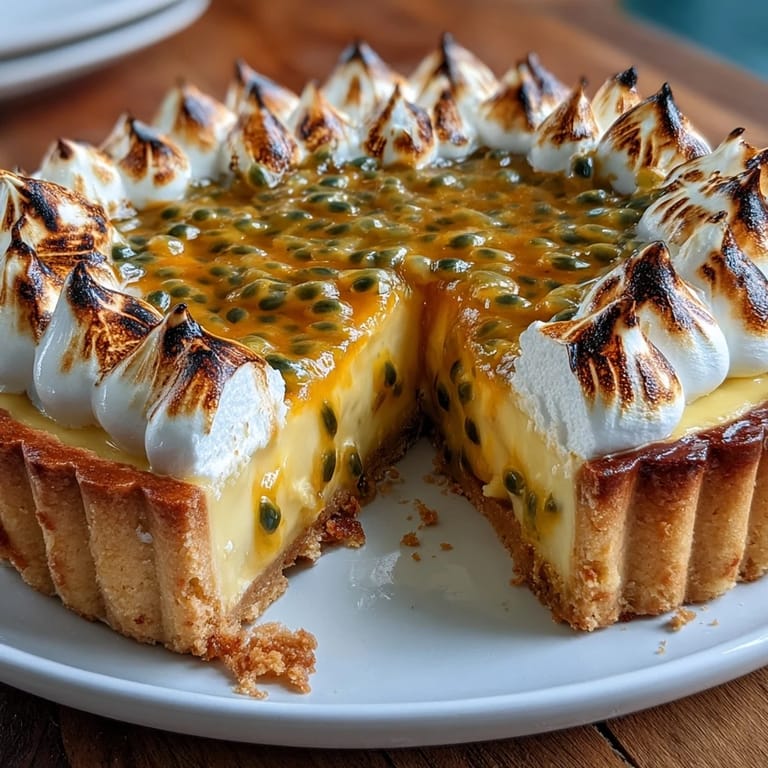
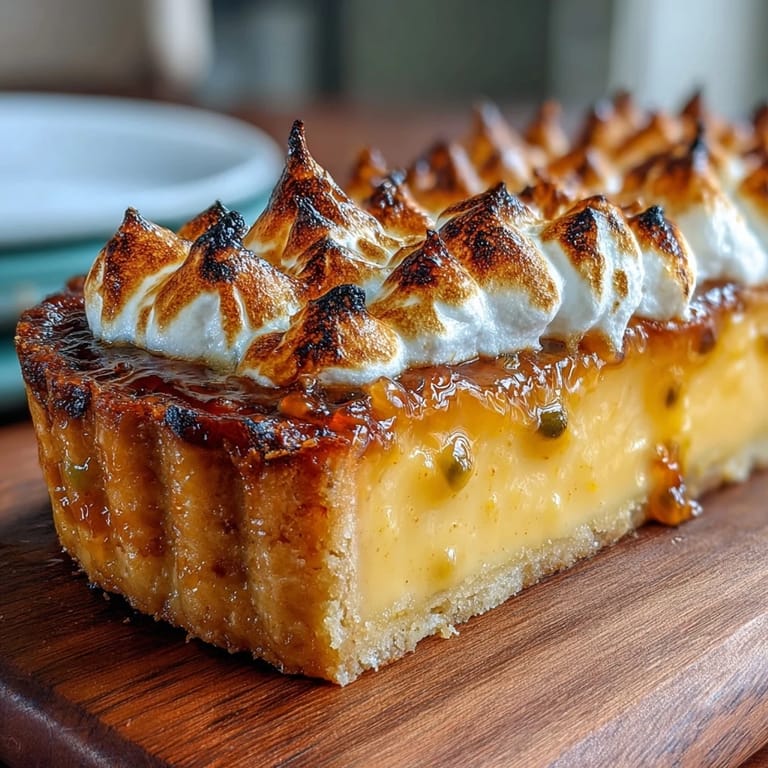
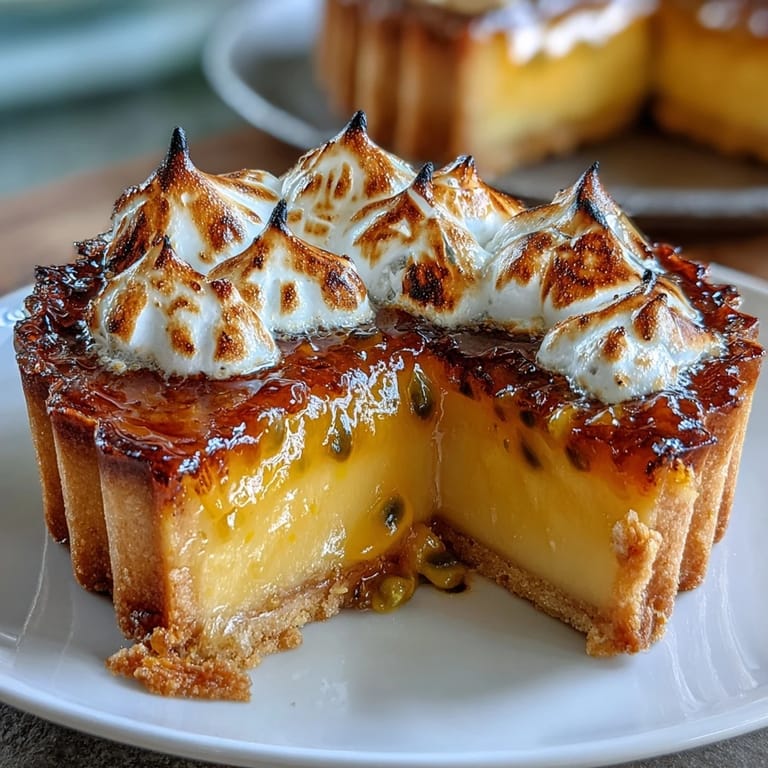
- Spoon or pipe the meringue onto the chilled tart in decorative swirls, then use a kitchen torch to brown it lightly, moving constantly so it colors evenly, or run it briefly under a hot broiler (watching intently so it doesn't burn). Refrigerate for 30 minutes before slicing so everything sets properly and you get those gorgeous clean cross-sections.
 Pin it
 I served this at a dinner party where one guest was recently divorced and mentioned she hadn't baked anything in years because her ex 'didn't appreciate it.' Watching her take that first bite, then asking for the recipe so she could make it in her new kitchen, was when I realized this dessert had become more than just something beautiful to eat—it was a small permission slip for someone to remember what brought them joy.
Why Texture Matters in Every Layer
Each component of this tart lives in its own texture universe, and respecting those boundaries is what separates a forgettable dessert from one people actually remember. The pastry should shatter when your fork hits it, the curd should be thick enough to hold but still spoon smoothly, and the meringue needs that tender-crispy contrast where it's soft inside but has a delicate crust on top. Getting there means understanding what you're actually cooking and why each step matters.
The Science of Passionfruit in Desserts
Passionfruit is wonderfully forgiving because its intense flavor means you don't need much of it to make an impact, plus that natural acidity keeps rich elements from becoming heavy. The seeds are optional—some people strain them completely for a silky curd, while others leave them for texture and visual interest. I've noticed that frozen passionfruit actually concentrates the flavor a bit, so if you're using it instead of fresh, you might reduce the amount slightly (though honestly, I rarely bother).
Making This Your Own
This recipe is a solid foundation, but I've learned it's also forgiving enough to play with. You could swap the passionfruit for other curd flavors—lemon or raspberry work beautifully—and the meringue browns just the same way regardless. The real invitation here is to make it, taste it, learn what you like, and then adjust it next time because your preferences are just as valid as whatever you find in a cookbook.
- Shortcut option: Buy store-made tart dough if pastry-making feels intimidating; the homemade curd and meringue are where your effort really shows.
- Garnish fearlessly: Fresh passionfruit seeds, edible flowers, or even a light dusting of powdered sugar all look stunning.
- Plan ahead: Make the curd days in advance and assemble the tart the morning of serving for maximum freshness and your own peace of mind.
 Pin it
 This tart has become my answer to 'what should I make for something special,' and I hope it becomes yours too. The first time you nail it, you'll understand why people fall in love with baking.
Recipe FAQs
- → How do I ensure a crisp pastry shell?
Use cold butter and handle the dough minimally to keep it flaky. Chill before baking and use pie weights for even baking.
- → What is the best way to thicken passionfruit curd?
Cook the curd gently over medium-low heat, whisking constantly until it coats the back of a spoon, then remove from heat and stir in butter for smoothness.
- → How do I achieve stiff, glossy meringue peaks?
Whip egg whites with cream of tartar until soft peaks form, then gradually add sugar while continuing to whip until stiff, shiny peaks appear.
- → Can I use frozen passionfruit pulp?
Yes, thawed frozen passionfruit pulp works well, just be sure to strain out the seeds before using.
- → What is the purpose of browning the meringue topping?
Browning adds a delicate toasted flavor and an attractive golden color, enhancing both taste and presentation.