 Pin it
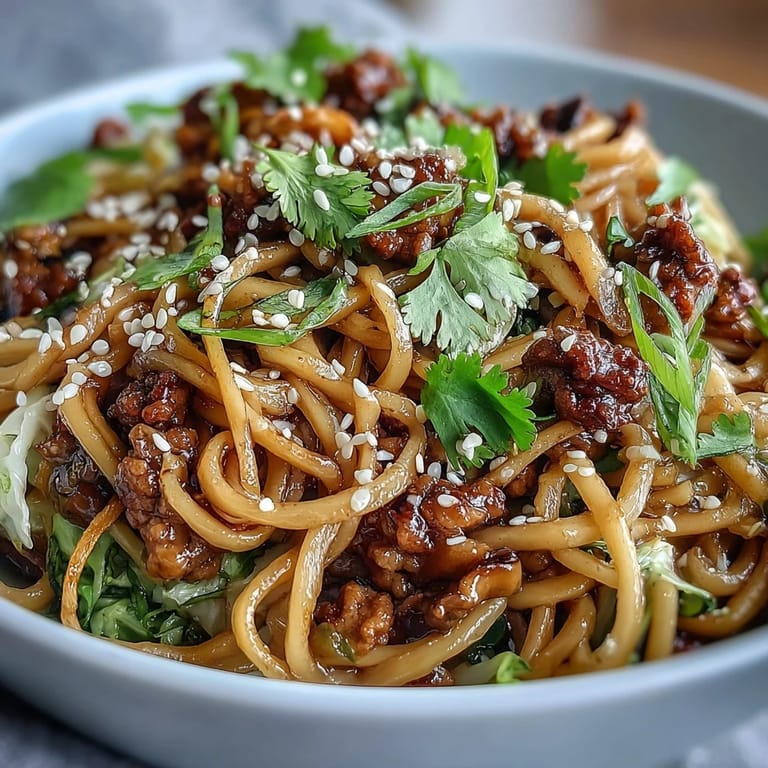
 My neighbor once brought over a plate of her homemade potstickers, and I stood in the kitchen eating them straight from the steamer, dipping each one into that glossy, tangy sauce. The next week, I craved that flavor but didn't have the patience to fold dumplings. So I dumped everything into a skillet with noodles instead. It turned out better than I expected—crispy pork, soft noodles, and all that salty-sweet-spicy sauce clinging to every bite.
I made this for my sister after she had her second baby, and she texted me later that night asking for the recipe. She said it tasted like takeout but felt like a hug. I've been making it ever since for anyone who needs comfort in a bowl. It's become my go-to for nights when I want something that feels special but doesn't require much fuss.
Ingredients
- Rice noodles: They soak up the sauce beautifully and stay tender without getting mushy, plus they cook in just a few minutes.
- Ground pork: It browns into crispy, flavorful bits that taste just like the filling in dumplings, especially when seasoned with sesame oil and white pepper.
- Soy sauce: The backbone of the seasoning, bringing deep umami to both the meat and the sauce.
- Toasted sesame oil: A little goes a long way, adding that nutty, toasted aroma that makes everything smell like a dumpling house.
- Cornstarch: Mixed into the meat, it helps create a slightly sticky texture that mimics dumpling filling.
- White pepper: It has a sharper, more floral heat than black pepper and is classic in Chinese dumpling recipes.
- Garlic and ginger: The aromatics that wake up the whole dish, filling your kitchen with that unmistakable stir-fry scent.
- Green onions: Use the whites for cooking and the greens for garnish, they add sharpness and freshness.
- Shredded cabbage: It wilts down into sweet, tender ribbons that balance the richness of the pork.
- Carrots: Add a pop of color and a slight sweetness that complements the salty sauce.
- Shiitake mushrooms: They bring an earthy depth and a meaty texture that makes the bowl feel heartier.
- Rice vinegar: Brightens the sauce and cuts through the richness with a gentle tang.
- Oyster sauce: Adds a silky, savory sweetness that makes the sauce cling to the noodles.
- Chili-garlic sauce: Brings the heat and a little funk, you can dial it up or down depending on your mood.
- Brown sugar: Balances the salty and spicy elements with just a hint of caramel sweetness.
- Chicken broth: Thins the sauce just enough to coat everything without being too thick or dry.
- Cilantro: Fresh, bright, and a little polarizing, but it really does finish the bowl with a burst of green.
- Toasted sesame seeds: A final sprinkle that adds crunch and a toasted, nutty finish.
Tired of Takeout? 🥡
Get 10 meals you can make faster than delivery arrives. Seriously.
One email. No spam. Unsubscribe anytime.
Instructions
- Prepare the noodles:
- Boil the noodles until they're just tender, then drain and rinse them quickly under cold water to stop the cooking. Toss them with a tiny bit of oil so they don't clump into a brick while you cook everything else.
- Season the meat:
- Whisk together the soy sauce, sesame oil, cornstarch, white pepper, sugar, and salt, then pour it over the ground pork and mix gently until it feels sticky and cohesive. If you're using napa cabbage, fold it in now for extra moisture and flavor.
- Make the sauce:
- Combine soy sauce, rice vinegar, oyster sauce, chili-garlic sauce, sesame oil, brown sugar, and broth in a bowl and whisk until the sugar dissolves. Taste it and adjust the heat or sweetness to your liking.
- Prepare the vegetables:
- Shred the cabbage and carrots, slice the mushrooms and green onions, and chop the cilantro. Having everything ready before you start cooking makes the stir-fry go smoothly and fast.
- Brown the meat:
- Heat oil in a large skillet or wok over medium-high heat, then add the seasoned pork in an even layer and let it sit undisturbed for a few minutes to get crispy and golden. Break it up and cook until it's browned all over, then drain off any excess fat.
- Add aromatics:
- Push the meat to one side of the pan, add a bit more oil to the empty space, and toss in the garlic, ginger, and white parts of the green onions. Stir them for about a minute until they smell incredible, then mix them into the pork.
- Cook vegetables:
- Add the mushrooms first and let them soften, then toss in the cabbage and carrots and stir-fry until the cabbage wilts but still has a little crunch. If the pan looks dry, splash in a little water to keep everything moving.
- Combine with sauce:
- Pour the prepared sauce over the meat and vegetables, toss everything together, and let it simmer for a minute or two until the sauce thickens slightly and coats everything evenly.
- Add noodles:
- Add the cooked noodles to the skillet and toss gently but thoroughly to combine, adding a splash of water or broth if it looks too dry. Toss in the bean sprouts at the very end if you're using them.
- Finish and serve:
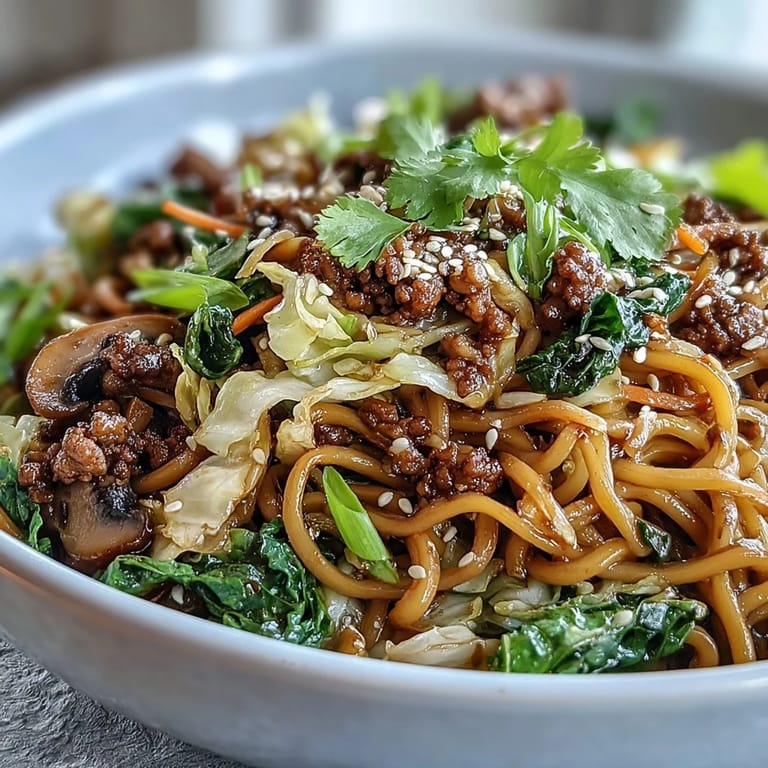
- Taste and adjust the seasoning with more soy sauce, chili-garlic sauce, or a squeeze of lime, then stir in half the green onion tops and turn off the heat. Divide the noodles between bowls and garnish with the remaining green onions, cilantro, and sesame seeds.
 Pin it
 The first time I made this for a group of friends, someone said it tasted like the best parts of a dumpling and a noodle stir-fry had a baby. We sat around the table with our bowls, adding extra chili-garlic sauce and lime, and everyone went back for seconds. It's the kind of dish that makes people lean back in their chairs and sigh happily, and that's when I knew it was a keeper.
Choosing Your Noodles
Rice noodles are my first choice because they stay soft and slippery and soak up the sauce like a dream. If you want something chewier, lo mein or even ramen noodles work beautifully. I've also used soba noodles when I was out of rice noodles, and they added a nutty flavor that was surprisingly good. Whatever you choose, just make sure to rinse them after cooking so they don't stick together in a clump.
Swapping the Protein
Ground chicken or turkey are lighter options that still brown up nicely and soak in all the seasoning. I've also made this with crumbled tofu for a vegetarian version, pressing it first and seasoning it the same way as the pork. If you're feeling fancy, ground beef works too, though it has a stronger flavor that can compete with the ginger and garlic. The key is to get a good sear on whatever protein you use so it has those crispy, flavorful edges.
Making It Your Own
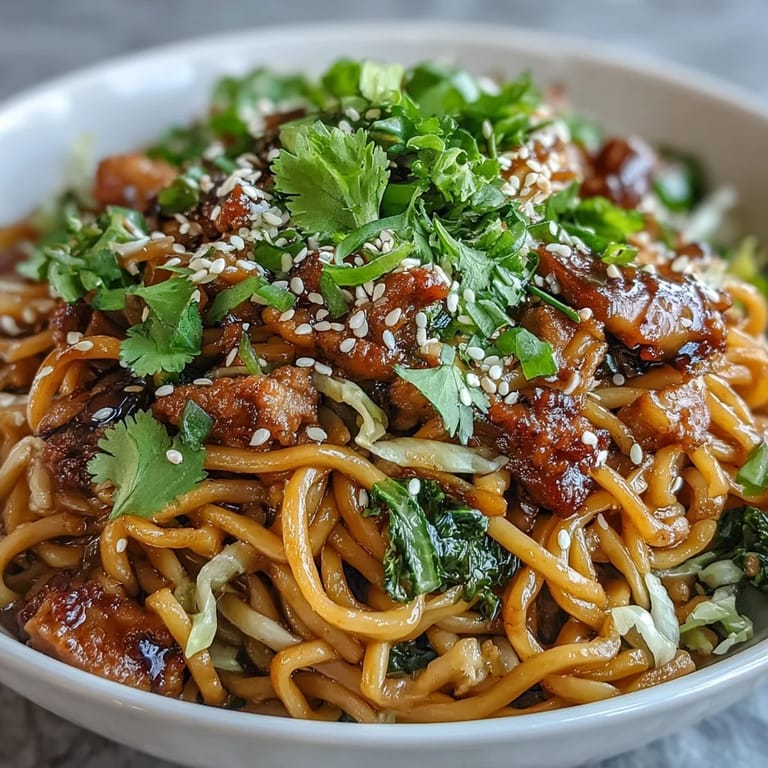
This recipe is flexible enough to handle whatever vegetables you have on hand. I've added snap peas, baby bok choy, and even thinly sliced bell peppers when I had them in the fridge. If you want it spicier, double the chili-garlic sauce or add some fresh sliced chilies when you cook the aromatics. For extra richness, top each bowl with a soft-boiled or fried egg, the runny yolk mixes into the sauce and makes everything even more luscious.
- Add a handful of chopped peanuts or cashews for crunch.
- Stir in a spoonful of peanut butter or tahini to the sauce for a creamier, nuttier flavor.
- Squeeze fresh lime over the top just before eating, it brightens everything up.
 Pin it
 This bowl has become one of those recipes I make when I need something that feels like a treat but doesn't require much effort. I hope it becomes one of your favorites too.
Recipe FAQs
- → Can I make these noodle bowls gluten-free?
Yes, use gluten-free tamari instead of regular soy sauce, rice noodles instead of wheat noodles, and ensure your oyster sauce is certified gluten-free. Many brands offer gluten-free alternatives that work perfectly in this sauce.
- → What other proteins work well in this dish?
Ground chicken, turkey, or beef all work beautifully with the same seasoning blend. For a vegetarian version, use crumbled tofu or plant-based ground meat, and add extra vegetables like bok choy or bell peppers for substance.
- → Can I prepare the components ahead of time?
You can shred vegetables, mix the sauce, and season the meat up to a day in advance. Store everything separately in the refrigerator. The dish comes together quickly when you're ready to eat, making it perfect for meal prep.
- → How do I store and reheat leftovers?
Store cooled bowls in airtight containers in the refrigerator for up to 3 days. Reheat in the microwave or on the stovetop, adding a splash of water or broth to loosen the noodles and sauce as they warm through.
- → What vegetables can I substitute?
Swap green cabbage for napa cabbage, baby bok choy, or sliced kale. Bell peppers, snap peas, or shredded broccoli stems also work well. Bean sprouts add nice crunch but can be omitted if needed.