 Pin it
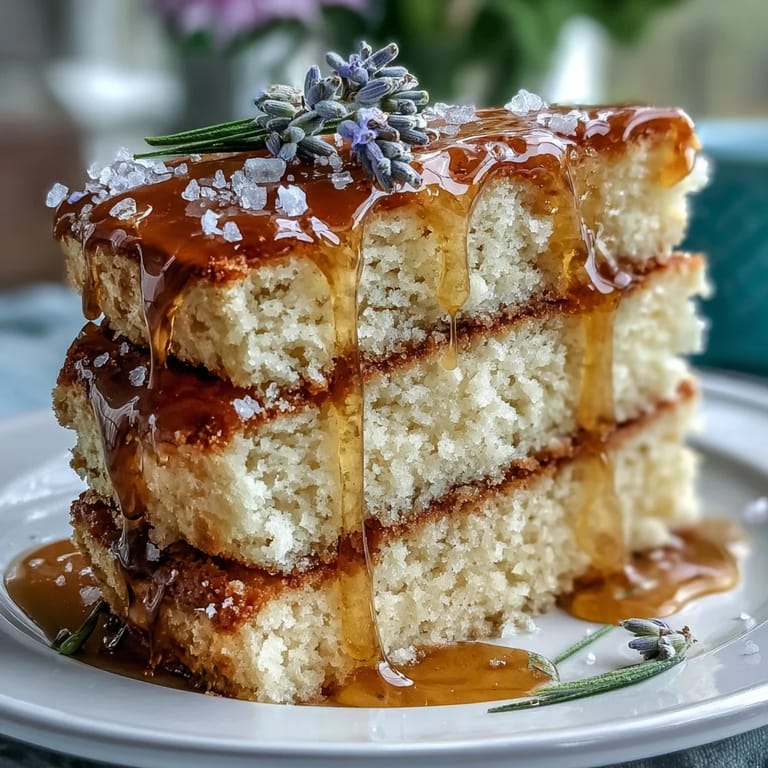
 There was this moment at my neighbor's garden party when someone handed me a slice of lavender cake, and I realized I'd been missing something essential in my baking life. The delicate floral notes didn't overpower—they whispered underneath the buttery crumb, while a drizzle of salted honey caught the afternoon light. I went home that evening determined to recreate it, and after a few attempts, I finally understood: the magic wasn't in doing anything complicated, but in respecting each ingredient's quiet contribution.
I brought this cake to a small gathering last spring, and my friend Sarah kept returning to the kitchen asking if I'd share the recipe—which meant everything because she's never asked before. Watching her close her eyes after each bite, the way people naturally slowed down to taste it properly, made me understand why some bakers become obsessed with getting just one thing right. That afternoon felt less like serving dessert and more like sharing something I'd spent time thinking about.
Ingredients
- All-purpose flour (1 1/2 cups): This is your structure, the invisible framework that holds everything together without announcing itself.
- Baking powder (1 1/2 tsp): Don't skip measuring this carefully—too much makes the cake taste metallic and collapse as it cools.
- Fine sea salt (1/2 tsp): This amplifies the other flavors, making the honey and lavender taste more like themselves.
- Dried culinary lavender buds (1 tbsp): Source these from specialty shops or reputable online vendors, never decorative lavender from a craft store.
- Unsalted butter (1/2 cup): Room temperature is non-negotiable here; cold butter won't cream properly, and your cake will be dense instead of tender.
- Granulated sugar (3/4 cup): This sweetens the cake while also helping incorporate air when creamed with the butter.
- Eggs (2 large): Room temperature eggs blend smoothly into the batter without creating lumps or cooling everything down.
- Honey (1/3 cup in the cake): This adds moisture and a subtle sweetness that granulated sugar can't replicate alone.
- Pure vanilla extract (1 tsp): Quality matters here; the real stuff adds warmth that extract bottles can't capture.
- Whole milk (2/3 cup): Room temperature milk prevents shocking the batter and keeps everything emulsified.
- Honey for drizzle (1/3 cup): Use something you actually enjoy tasting, not the cheapest bottle you find.
- Unsalted butter for drizzle (1 tbsp): This mellows the honey and creates a silky texture when combined.
- Flaky sea salt (1/2 tsp): Maldon or similar flakes dissolve slightly while staying visible, catching your tongue with a pleasant brightness.
Tired of Takeout? 🥡
Get 10 meals you can make faster than delivery arrives. Seriously.
One email. No spam. Unsubscribe anytime.
Instructions
- Set up your station:
- Preheat the oven to 350°F and prep your 8-inch pan with a light grease and flour, then line the bottom with parchment so the cake releases cleanly. This ten-minute heads-up matters more than you'd think, especially if your oven runs hot or cool.
- Combine the dry ingredients:
- Whisk together the flour, baking powder, salt, and lavender buds in a small bowl, making sure everything is evenly distributed so you don't hit a pocket of pure salt in one bite. I like to use a fork to gently break apart any lavender clumps so they distribute throughout the flour.
- Cream the butter and sugar:
- Beat the softened butter and sugar together for about three minutes—you'll know it's ready when the mixture looks pale, almost cloud-like, and noticeably lighter than when you started. This step isn't just for show; incorporating air now creates the tender crumb everyone loves.
- Incorporate the eggs one by one:
- Add each egg individually and beat well after each addition, scraping down the bowl's sides so everything is truly combined. If your mixture looks curdled, don't panic—this happens sometimes, and the final batter will still be fine once you add the dry ingredients.
- Add honey and vanilla:
- Stir in the honey and vanilla extract, noticing how the mixture becomes even silkier and more luxurious. These additions are where the cake starts to taste like something special instead of just vanilla.
- Alternate the dry and wet ingredients:
- Add half the dry mixture, then half the milk, then the remaining dry mixture, and finally the remaining milk, stirring just until combined after each addition. The key is restraint here—overmixing develops gluten and makes the cake tough, so stop as soon as you don't see dry streaks.
- Pour and smooth:
- Transfer the batter to your prepared pan and use a spatula to gently smooth the top, making sure the corners are filled evenly. A slightly domed top is natural and beautiful; you're not aiming for a perfectly flat surface.
- Bake with patience:
- Slide the pan into the oven and bake for 28 to 32 minutes, checking with a toothpick around the 28-minute mark—it should come out clean or with just a few crumbs clinging to it. If it still looks wet, give it another minute or two and check again.
- Cool gradually:
- Let the cake rest in the pan for ten minutes so the structure sets, then turn it out onto a wire rack to cool completely—rushing this step is tempting but a mistake. A warm cake is fragile and prone to crumbling when you try to drizzle it.
- Make the salted honey drizzle:
- Combine the honey and butter in a small saucepan over low heat, stirring just until they're melted and combined into something glossy. Once you remove it from the heat, stir in the flaky sea salt and let it cool for a minute or two so it's manageable but still pourable.
- Drizzle and set:
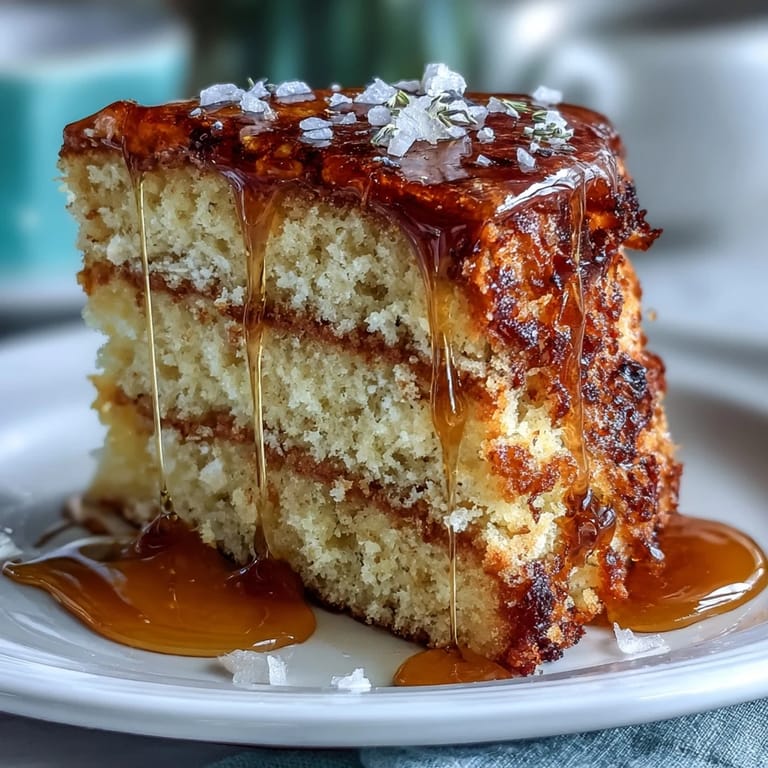
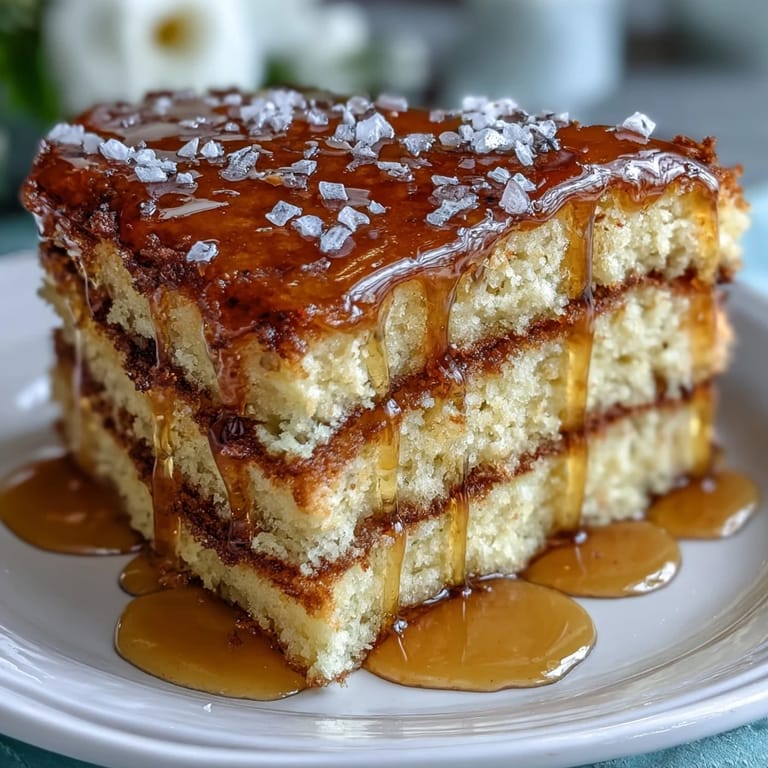
- Pour the drizzle over the cooled cake in whatever pattern feels right to you—neat lines, casual waves, or a simple pool in the center all work. Let it sit for about ten minutes so it firms up slightly before slicing.
 Pin it
 My daughter once insisted on helping frost a cake, and while this particular recipe doesn't have frosting, drizzling the honey together became our tiny ritual. She'd watch the golden stream fall across the pale cake and whisper that it looked like magic, and honestly, I've never disagreed with her assessment.
The Lavender Question
People always ask whether you can taste the lavender, and the answer is yes—but not like you're eating a bar of soap. Culinary lavender tastes floral and slightly herbaceous, with a sweetness underneath that complements honey perfectly. If you're nervous about it, you can start with a teaspoon instead of a tablespoon and increase next time; I've learned that building your confidence with a new ingredient matters.
Storage and Keeping
This cake actually improves slightly on the second day as the flavors settle and the crumb becomes more tender, making it ideal for planning ahead. Keep it covered at room temperature for up to three days, or wrap it well and refrigerate if your kitchen is particularly warm or you're holding it longer.
Serving Suggestions and Variations
Serve this cake with Earl Grey tea or a chilled Moscato for an afternoon that feels intentional and unhurried. You can garnish with whole lavender buds or edible flowers if you're feeling a bit fanciful, which honestly makes people feel like they've stepped into something special.
- If you prefer a stronger lavender flavor, gently crush the buds with a mortar and pestle before mixing into the flour.
- For a decorative touch, scatter a few extra lavender buds on top of the honey drizzle before it sets completely.
- This recipe adapts beautifully to a loaf pan if you prefer a different shape—just adjust the baking time by a few minutes and check earlier.
 Pin it
 There's something about baking a cake that makes you present in a way that other cooking doesn't demand, and this particular cake rewards that attention. Once you've made it once, you'll understand why it deserves a permanent spot in your rotation.
Recipe FAQs
- → How is the lavender incorporated into the cake?
Dried culinary lavender buds are mixed into the dry ingredients, infusing the cake with a subtle floral aroma and taste.
- → What is the purpose of the salted honey drizzle?
The salted honey drizzle adds a luscious sweetness with a touch of saltiness that balances and highlights the floral notes of the cake.
- → Can I intensify the lavender flavor?
Gently crushing the lavender buds before adding them helps release more flavor and aroma in the cake.
- → What baking tools are needed?
A round cake pan, mixing bowls, hand or stand mixer, small saucepan for the drizzle, wire rack, and a whisk are required.
- → Is this suitable for vegetarians?
Yes, the cake uses no meat products and is suitable for a vegetarian diet.
- → How should the cake be served?
Allow the salted honey drizzle to set for 10 minutes, then serve the cake for spring gatherings or afternoon tea.