 Pin it
 The first time I made this soup was during that weird week in March when winter kept threatening to return but the daffodils were already pushing through. I had chicken that needed using and a CSA box full of vegetables I didn't want to waste. Something about simmering vegetables in broth felt like the most appropriate way to welcome spring, even if the weather hadn't gotten the memo yet.
Last spring my sister came over feeling under the weather and I made a double batch. She sat at my counter while I prepped the vegetables, complaining about work while I diced carrots. Three bowls later she looked at me and said this was exactly what she needed, which I took as the highest compliment possible.
Ingredients
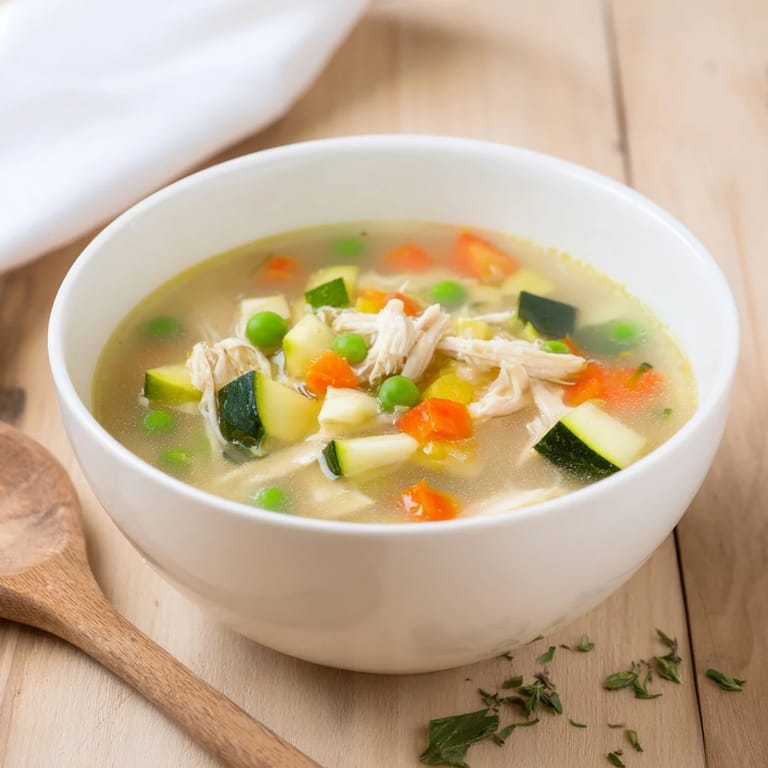
- Chicken breasts: Boneless and skinless keeps it lean, but you could use thighs if you want more richness
- Carrots: Slice them about 1/4 inch thick so they cook through but still have some bite
- Zucchini: Don't cut these too small or they'll disappear into the broth
- Fresh or frozen peas: Fresh peas make it feel more like spring but frozen work perfectly fine
- Yellow onion: Finely chopped so they melt into the soup base
- Celery: Essential for that classic soup flavor profile
- Garlic: Minced fresh adds more depth than powder ever could
- Chicken broth: Low sodium lets you control the seasoning, homemade is best but store bought works
- Bay leaf: Don't skip this, it adds that subtle background flavor
- Dried thyme: Fresh thyme is great but dried works perfectly for long simmering
- Fresh parsley: Adds brightness and color at the end
- Salt and pepper: Taste as you go, broth brands vary wildly in sodium
- Lemon juice: Optional but it makes all the flavors pop
Tired of Takeout? 🥡
Get 10 meals you can make faster than delivery arrives. Seriously.
One email. No spam. Unsubscribe anytime.
Instructions
- Build the flavor foundation:
- Heat a drizzle of olive oil in your large pot over medium heat and add the onion, celery, and carrots. Let them soften and become fragrant for 4 to 5 minutes, stirring occasionally so nothing browns.
- Wake up the garlic:
- Stir in the minced garlic and cook for just 1 minute until it becomes fragrant. You want it soft but not brown or bitter.
- Start the broth:
- Pour in the chicken broth, add the bay leaf and thyme, and bring everything to a gentle boil. The kitchen should start smelling amazing about now.
- Cook the chicken:
- Add the whole chicken breasts, reduce heat to low, cover, and simmer for 15 to 18 minutes. The chicken should be cooked through but still moist.
- Shred the chicken:
- Remove the chicken to a plate and use two forks to shred it into bite sized pieces. It should be tender and pull apart easily.
- Add the spring vegetables:
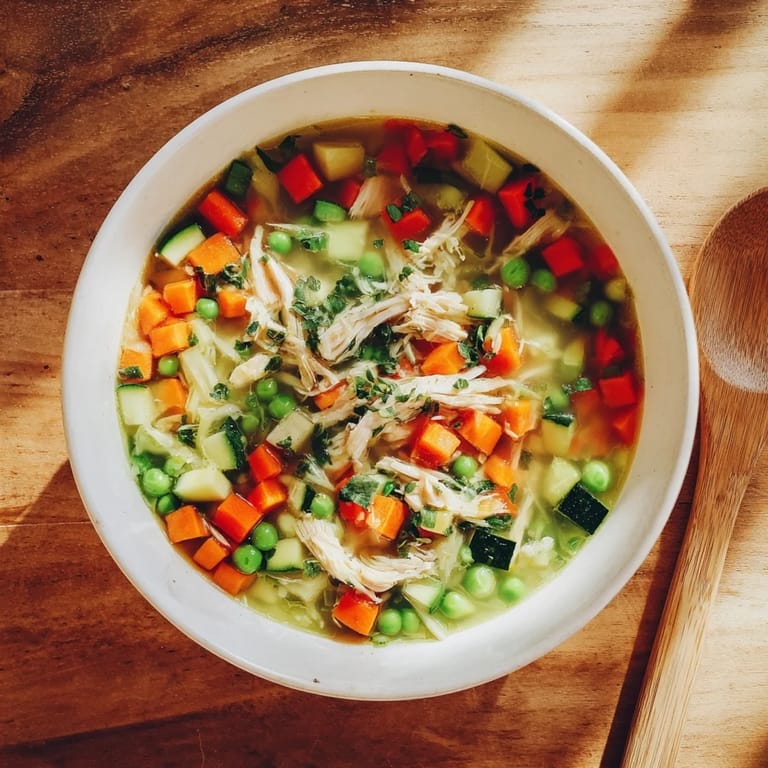
- Drop the zucchini and peas into the simmering broth. Cook for 5 to 7 minutes until the vegetables are just tender but still bright.
- Bring it all together:
- Return the shredded chicken to the pot. Stir in the parsley, lemon juice if using, and season generously with salt and pepper.
- Finish and serve:
- Remove and discard the bay leaf. Ladle into bowls, garnish with extra parsley, and serve while steaming hot.
 Pin it
 My neighbor texted me at 9pm one Tuesday night asking what I was making because the smell had drifted through our shared wall. I sent her over a container and she now requests this soup every time she sees me at the mailbox. It has become our neighborhood comfort food.
Making It Hearty
Sometimes soup alone doesn't feel like quite enough for dinner. I've learned to add a handful of small pasta shapes or cooked rice during the last few minutes of simmering. Ditalini or orzo work beautifully but any small shape will do. The pasta absorbs some of the broth, making the soup thicker and more substantial. Just keep in mind that pasta will continue softening in leftovers, so slightly undercook it if you're planning to store some.
Vegetable Swaps
One of the best things about this recipe is how forgiving it is with substitutions. I've made it with asparagus instead of zucchini when that's what I had on hand. Green beans work well too, especially if you cut them into shorter pieces. The key is adding harder vegetables earlier and delicate ones later so everything finishes cooking at the same time. Fresh corn kernels in summer are amazing, and diced potatoes turn it into more of a chowder. Trust what looks good at the market.
Serving Suggestions
A good soup deserves good accompaniments. I almost always serve this with crusty bread for soaking up the broth. A simple green salad with vinaigrette cuts through the richness nicely. For wine, a crisp white like Sauvignon Blanc or even a light rosé pairs beautifully without overpowering the delicate flavors. Sometimes I'll rub garlic on warm bread slices for extra flavor. On really cold days, a grilled cheese sandwich alongside feels like perfection.
- Warm your bowls before serving to keep the soup hot longer
- Set out extra lemon wedges so everyone can adjust brightness to taste
- A final grind of fresh pepper at the table makes all the difference
 Pin it
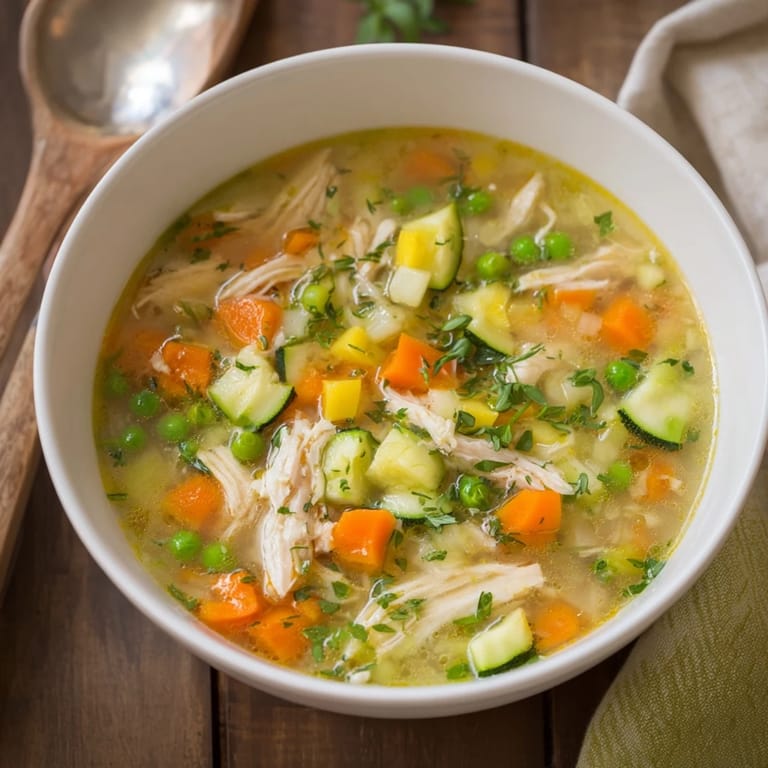
 This soup has become my go-to whenever someone needs comfort, whether it's sickness, stress, or just a long week. There is something deeply restorative about a bowl of homemade soup that no restaurant can quite replicate.
Recipe FAQs
- → Can I use frozen vegetables instead of fresh?
Absolutely. Frozen carrots, zucchini, and peas work beautifully in this soup and require no additional prep. Add them during the same cooking window as fresh vegetables, though you may reduce cooking time slightly since they're already partially softened.
- → How do I ensure the chicken is tender and moist?
Don't overcook the chicken breasts. Simmer gently for 15-18 minutes until just cooked through—the residual heat will continue cooking after removal. Shred immediately while warm for the most tender texture.
- → What can I substitute for the spring vegetables?
Feel free to swap in asparagus, green beans, spinach, or even diced bell peppers. The beauty of this soup is its flexibility—use whatever fresh vegetables you have on hand. Adjust cooking times based on vegetable tenderness.
- → Can I make this ahead and store it?
Yes, this soup stores beautifully. Keep it refrigerated in an airtight container for up to 3-4 days. Reheat gently on the stovetop, adding a splash of broth if the consistency thickens. You can also freeze for up to 2 months.
- → How do I make this heartier?
Add cooked pasta, rice, or barley in the final step. Small pasta shapes like ditalini or orzo work particularly well. Alternatively, add a handful of cooked lentils for extra protein and fiber.
- → Is this soup suitable for dietary restrictions?
Yes. This soup is naturally gluten-free and dairy-free. Always verify your chicken broth is certified gluten-free if needed. It's also paleo-friendly without added grains and lower in calories for lighter eating preferences.