 Pin it
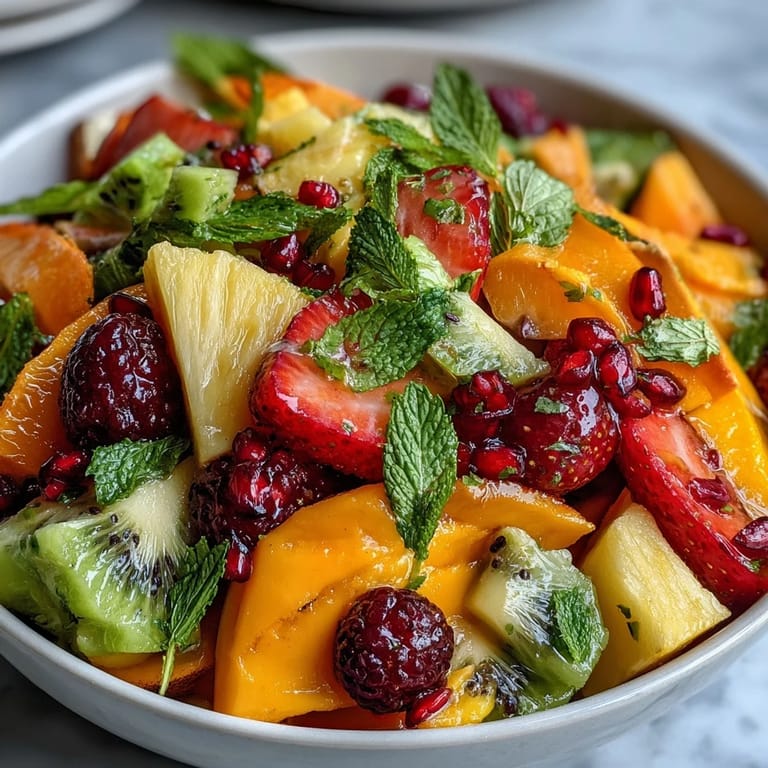
 My neighbor threw open her kitchen doors one sweltering July afternoon and asked me to bring something that wouldn't wilt in the heat. I showed up with a tiered platter of tropical fruits arranged like a sunset, and watching her face light up as she caught the scent of fresh mint and lime made me realize this wasn't just food—it was a moment. That display became the talk of her garden party, and I've been making it ever since whenever I need to feel like I've brought a little paradise to the table.
I learned the power of this platter when my daughter's friend came over nervous about trying new foods. She picked through the mango and pineapple first, then slowly moved to the dragon fruit, and by the end she was mixing berries like she was making her own little flavor combinations. Sometimes the most important thing a recipe can do is make someone curious instead of cautious.
Ingredients
- Ripe mangoes (2): Choose ones that yield slightly to pressure and smell fragrant at the stem—that's your sign they're at peak sweetness and ready to shine.
- Large pineapple (1): A good pineapple should have golden-yellow skin and smell sweet at the base; the leaves should pull out with just a gentle tug.
- Kiwis (2): Their bright green color and jewel-like seeds add visual contrast and a pleasant tartness that balances richer fruits.
- Papaya (1): This creamy-textured fruit adds a subtle sweetness and beautiful coral-orange hue that ties everything together.
- Dragon fruit (1): Its shocking pink exterior and black-speckled white or pink flesh feel glamorous on any platter, though the flavor is delicate and mild.
- Seedless red grapes (1 cup): These little orbs of sweetness nestle into gaps and add pops of color without any fuss.
- Fresh strawberries (1 cup), hulled and halved: Strawberries bridge the gap between tropical and familiar, and their natural sweetness appeals to everyone.
- Blueberries (1 cup): They roll around the platter like tiny jewels and provide bursts of tartness that wake up your palate between sweeter fruits.
- Fresh mint leaves (1/4 cup): Mint isn't just pretty—it releases aromatics that tell your brain this is fresh and summery before you even taste it.
- Lime (1), cut into wedges: A squeeze of lime juice brightens everything and prevents the softer fruits from browning too quickly.
- Vanilla Greek yogurt or coconut yogurt (1 cup): This creamy dipping sauce becomes an excuse to eat even more fruit, and it works for every diet preference.
- Honey or agave syrup (1 tablespoon): Just enough sweetness to balance the tanginess of yogurt without overwhelming the natural fruit flavors.
- Lime zest (from 1 lime): Those bright green flecks add pop and promise a zing of citrus in every spoonful of sauce.
Tired of Takeout? 🥡
Get 10 meals you can make faster than delivery arrives. Seriously.
One email. No spam. Unsubscribe anytime.
Instructions
- Prep Your Stage:
- Start by laying out your largest platter or tiered stand—this is your canvas, so choose something that makes you smile. Slice and arrange each fruit as you go, because prepped fruit tastes better fresh than it does sitting around waiting.
- Build Your Base:
- Fan your mango slices in the center or around the edges, overlapping them slightly like scales or petals. Arrange pineapple spears right alongside, creating a foundation of golden yellows and creamy peachs that anchor everything else visually.
- Layer with Intent:
- Place papaya, dragon fruit, and kiwis around the mango and pineapple, thinking about how their colors play off each other—the coral against the green, the white against the pink. Nestle your berries into any gaps, letting them tumble naturally as if they just fell into place.
- Finish with Flourish:
- Scatter mint leaves across the whole platter and tuck lime wedges around the edges. Step back and look at what you've made—does it feel abundant and inviting?
- Make Your Sauce:
- Stir together yogurt, honey, and lime zest in a small bowl until it's smooth and creamy, then taste it and adjust sweetness to your preference. Transfer to a small serving bowl and place it in the center of the platter or beside it, depending on your arrangement.
- Keep It Cool:
- Refrigerate the display until guests arrive, or until you can't resist eating a mango slice straight from the platter—that moment counts too.
 Pin it
 My mother-in-law once told me that fruit platters are the kindest thing you can make for someone on a difficult day. A few months later, I delivered one to neighbors after their loss, and she was right—somehow, the colors and the freshness said something words couldn't. That platter became part of their healing, and now I understand that this recipe is really about generosity disguised as simplicity.
Choosing Fruits That Are Actually Ripe
The difference between a mediocre fruit platter and an unforgettable one lives entirely in ripeness. I used to buy whatever looked pretty at the store and wonder why my display never tasted quite right. Now I squeeze gently, I smell, I ask the fruit vendor for recommendations based on when I'm serving it. A ripe mango should feel like a good handshake—firm but yielding, never mushy. The pineapple should smell sweet and have a golden undertone, not green or pale. Watch the color progression as your fruits ripen at home; sometimes waiting an extra day for that perfect shade of yellow makes all the difference.
The Art of Arrangement
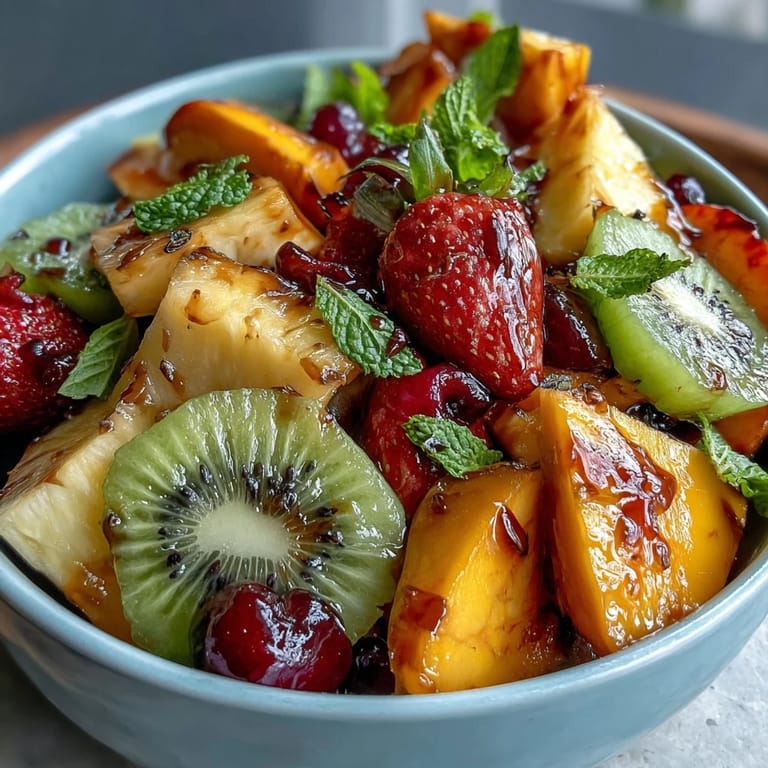
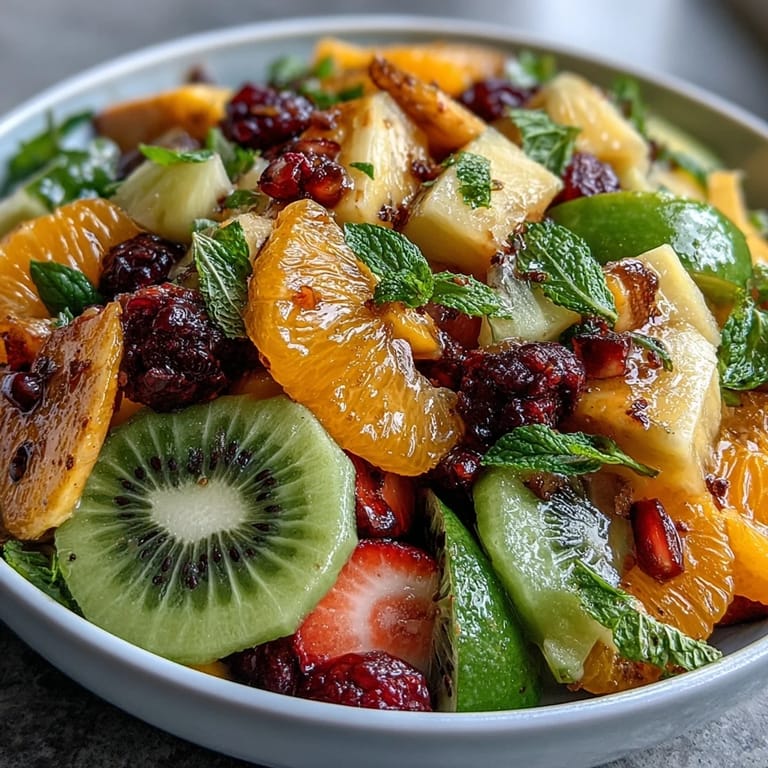
Arranging fruit is less about following rules and more about trusting your eye. I learned this when I stopped copying pictures from magazines and started looking at what was actually in front of me—the way certain colors sang next to each other, how the berries naturally wanted to cluster, where a mint leaf looked like punctuation. The most beautiful platters I've made came together when I relaxed and let the fruit tell me where it wanted to go. Alternate warm colors (mango, papaya, strawberries) with cool colors (kiwi, blueberries, dragon fruit), and remember that repetition of shape creates rhythm. Height variation keeps eyes moving around the platter, so don't arrange everything in one flat plane.
Making This Platter Your Own
This recipe is really just a foundation for whatever fruit makes you happy. In winter, I swap the tropical fruits for persimmons, pomegranate, and citrus because that's what tastes right in my kitchen. In spring, fresh strawberries and raspberries take center stage with whatever tropical fruit has traveled well. The dipping sauce can lean sweet or tangy depending on your mood—add a splash of vanilla extract, a pinch of cardamom, or even a tiny bit of coconut oil for richness.
- Add edible flowers like pansies or nasturtiums for an extra touch of whimsy and color.
- Toast some coconut flakes and scatter them across the platter for texture and a subtle nutty flavor.
- Drizzle the whole platter with a tiny amount of honey or lime juice just before serving to make everything glisten.
 Pin it
 Every time I make this platter, I'm reminded that the simplest dishes often bring the most joy. There's something honest about fruit—no pretense, no complications, just nature's candy arranged with a little love and a good eye.
Recipe FAQs
- → How should the tropical fruits be prepared for the display?
Peel, core, and slice fruits such as mangoes, pineapples, kiwis, papaya, and dragon fruit before arranging them attractively on a platter, alternating colors and shapes for visual appeal.
- → What garnishes enhance the fruit display?
Fresh mint leaves and lime wedges are used to add vibrant color and a refreshing aroma to the tropical arrangement.
- → Is a dipping sauce included and what are its main ingredients?
An optional creamy dip combines vanilla or coconut yogurt, honey or agave syrup, and lime zest for a sweet, tangy complement to the fruits.
- → Can the fruit selection be adjusted seasonally?
Yes, fruits like passion fruit, star fruit, or melon can replace or complement the fruits based on seasonality or preference.
- → What tools are helpful for creating this tropical display?
A sharp chef's knife and paring knife for precise slicing, a cutting board, a large platter or tiered cake stand for presentation, and serving tongs are recommended.