 Pin it
 The scent of roasted pumpkin and butter-toasted rice hit me one October evening when I was trying to recreate the risotto I'd eaten at a tiny trattoria outside Florence, only this time without the cream. I had a hunch that stirring patience and a hot ladle could coax the rice into silk all on its own. By the time the sage crackled in the pan, filling the kitchen with that earthy, almost peppery aroma, I knew this dish didn't need dairy to feel like a hug. It became my go-to whenever the air turned crisp and I craved something both indulgent and clean.
I made this for a small dinner party where half the guests were vegan and the other half skeptical that plant-based could mean satisfying. Watching them scrape their bowls clean and ask for seconds felt like a quiet victory. One friend even admitted she forgot to miss the parmesan. That night taught me that texture and timing matter more than tradition when you're after real comfort.
Ingredients
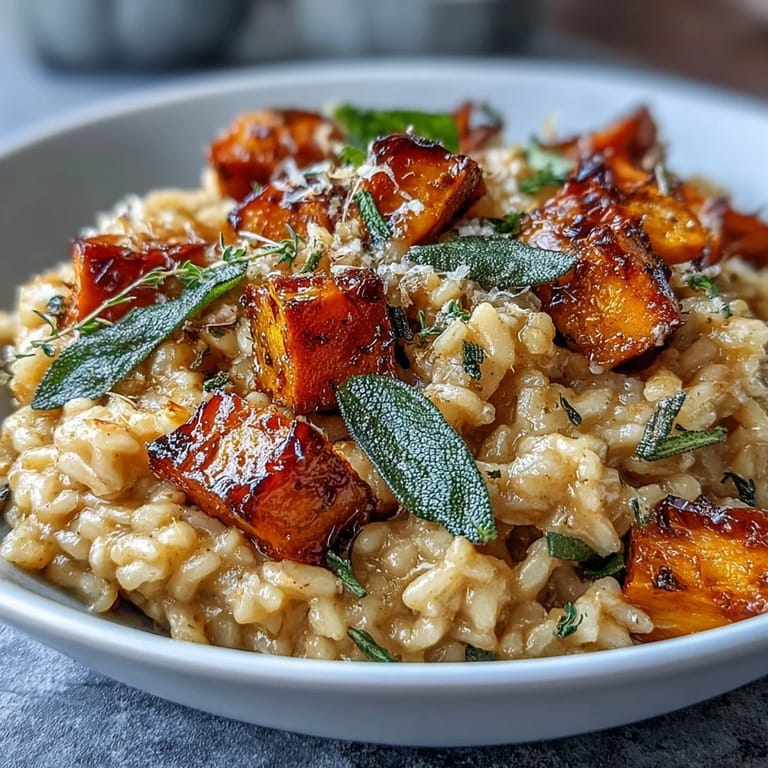
- Pumpkin: Roasting it separately locks in sweetness and prevents the risotto from turning mushy, giving you tender golden cubes that hold their shape.
- Arborio rice: The high starch content is what creates that signature creaminess, so don't swap it for long grain or you'll lose the magic.
- Vegetable broth: Keep it simmering on a back burner so every ladleful warms the rice gently and coaxes out the starch without shocking the grains.
- Dry white wine: It adds brightness and a subtle acidity that balances the sweetness of the pumpkin, but you can skip it if you prefer.
- Olive oil: Use a good one since it's your base for flavor and the vehicle for crisping those sage leaves into something almost magical.
- Fresh sage leaves: Frying them transforms their flavor from grassy to nutty and makes them shatter like savory glass over the finished dish.
- Nutmeg: Just half a teaspoon adds warmth without announcing itself, it should whisper autumn rather than shout.
- Nutritional yeast: This is your secret weapon for a cheesy, umami depth that makes people wonder what you snuck in there.
- Lemon zest: A final bright note that cuts through the richness and wakes up every other flavor on the plate.
Tired of Takeout? 🥡
Get 10 meals you can make faster than delivery arrives. Seriously.
One email. No spam. Unsubscribe anytime.
Instructions
- Roast the pumpkin:
- Spread the cubes in a single layer so they caramelize instead of steam, and don't skip the salt and pepper now because it seasons them from the inside out. Pull them when the edges turn golden and a fork slides through easily.
- Soften the aromatics:
- Let the onion cook slowly until it's translucent and sweet, then add the garlic just long enough to bloom its fragrance without browning. This base is where your flavor starts.
- Toast the rice:
- Stir the grains in the oil until they smell nutty and turn slightly translucent at the edges. This step seals each grain and helps it absorb liquid evenly later.
- Deglaze with wine:
- Pour it in and scrape up any stuck bits from the pan, stirring until the alcohol cooks off and leaves only brightness behind.
- Add broth gradually:
- Ladle in just enough to cover the rice, stirring frequently as it bubbles and absorbs. Repeat this ritual until the rice is tender but still has a slight bite, creamy but not soupy.
- Crisp the sage:
- Heat the oil until it shimmers, then drop in the leaves and watch them sizzle and curl. Pull them the moment they darken or they'll turn bitter.
- Fold in pumpkin and seasonings:
- Gently stir in the roasted cubes, nutmeg, and nutritional yeast, letting the warmth meld everything together. Taste and adjust salt and pepper now while you still can.
- Plate and garnish:
- Spoon the risotto into warm bowls, then crown each with crispy sage and a whisper of lemon zest for that final bright note.
 Pin it
 One rainy Sunday, I made this while my partner read aloud from the couch, and the rhythm of stirring became almost meditative. The windows fogged up, the sage crackled, and by the time we sat down to eat, the whole apartment smelled like a cabin in the woods. It's funny how a pot of rice can turn an ordinary afternoon into something you remember.
Making It Extra Creamy
After roasting the pumpkin, I sometimes blend half of it with a splash of broth until silky, then stir that puree into the rice along with the whole cubes. It thickens the risotto naturally and gives you two textures at once: velvety and tender. This trick also helps if your pumpkin was a little watery or bland, concentrating its flavor into every spoonful.
Choosing Your Squash
Pumpkin works beautifully, but butternut squash is just as good and often easier to peel and dice. I've also used kabocha when I wanted something denser and sweeter, and it held up even better in the risotto. Whatever you choose, aim for a variety that roasts well and doesn't turn to mush, because you want distinct bites of sweetness scattered throughout.
Serving and Storing
Risotto is best eaten fresh while it's still creamy and loose, but leftovers can be gently reheated with a splash of broth to bring back the texture. I've also shaped cold risotto into patties, pan fried them until crispy, and served them as a completely different meal the next day. If you're making this for guests, plate it immediately and let everyone admire the crispy sage before it softens.
- Top with toasted pumpkin seeds for extra crunch and a nutty finish.
- Drizzle with a little truffle oil if you want to make it feel fancy without much effort.
- Pair it with a simple arugula salad dressed in lemon to cut through the richness.
 Pin it
 This risotto has a way of turning a regular weeknight into something special without asking much of you beyond patience and a wooden spoon. I hope it fills your kitchen with the same warmth it's brought to mine.
Recipe FAQs
- → Can I use a different type of squash instead of pumpkin?
Yes, butternut squash works beautifully as a substitute. It has a similar sweetness and texture when roasted. You can also try kabocha squash for a nuttier flavor profile.
- → How do I make the risotto extra creamy without dairy?
Blend half of the roasted pumpkin until smooth before folding it into the risotto. The nutritional yeast also adds a creamy, cheesy richness. Stirring frequently while adding broth helps release the rice's natural starches for maximum creaminess.
- → What can I use instead of white wine?
Simply omit the wine and add an extra ladleful of vegetable broth instead. You can also use a splash of white wine vinegar or lemon juice diluted in broth for acidity without alcohol.
- → How do I prevent the sage from burning when frying?
Use medium-high heat and watch carefully. The sage leaves should turn crispy in 30-60 seconds. Remove them immediately when they darken slightly and place on a paper towel to prevent overcooking from residual heat.
- → Can I prepare any components ahead of time?
Yes, roast the pumpkin up to 2 days in advance and store it refrigerated. You can also fry the sage leaves a few hours ahead. However, risotto is best cooked fresh as it doesn't reheat well and loses its creamy texture.
- → What type of pumpkin works best for this dish?
Small sugar pumpkins or pie pumpkins are ideal as they're sweeter and less watery than carving pumpkins. Look for dense, firm pumpkins that weigh heavy for their size.