 Pin it
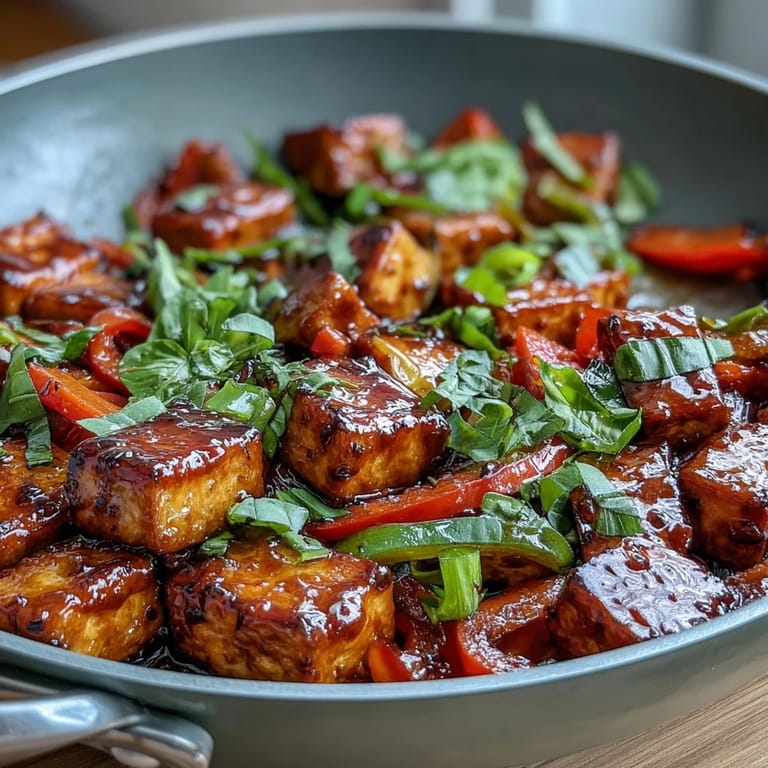
 My kitchen filled with smoke one weeknight when I realized I'd been standing at the stove for only ten minutes and somehow had a complete, restaurant-worthy dinner ready to plate. That's the magic of this Thai basil tofu stir-fry—it moves fast, tastes impossibly vibrant, and makes you feel like you've unlocked some secret that fancy restaurants have been hoarding. The moment the fresh basil hits the hot pan and releases that intoxicating aroma, you know you're onto something special. This dish became my go-to proof that vegan cooking doesn't mean sacrificing bold flavor or that satisfying sizzle.
I made this for a friend who'd just gone vegan and was worried about becoming bored with food. Watching her take that first bite, eyes widening at how the sauce clung to every piece of tofu and vegetable, how the basil made everything taste like a Thai street market—that's when I understood this recipe was about more than nutrition. It became proof that plant-based cooking could be generous, exciting, and absolutely craveable.
Ingredients
- Firm tofu, pressed and cubed: Pressing matters more than you'd think; it removes water so the edges get properly crispy and golden instead of steaming themselves sad.
- Red and yellow bell peppers, sliced: The mix of colors isn't just pretty—each adds slightly different sweetness and crunch to the party.
- Carrot, julienned: Cut thin so it cooks through in the stir-fry time and keeps that pleasant bite.
- Red onion, sliced: Raw red onion brings a gentle sharpness that plays beautifully against the sweet-savory sauce.
- Snap peas, trimmed: These stay crisp even when everything else around them softens, giving you textural contrast in every forkful.
- Garlic and red chili: Garlic builds the savory foundation while chili adds heat only if you want it—total control.
- Soy sauce and dark soy sauce: Regular soy brings saltiness, dark soy adds depth and color that makes the whole dish look more intentional.
- Maple syrup or coconut sugar: A touch of sweetness rounds out the salt and acid so nothing tastes one-dimensional.
- Rice vinegar: This adds brightness and lift, cutting through richness so the sauce feels fresh instead of heavy.
- Vegetable oil: High heat oil that won't smoke and upset your kitchen—I learned this lesson the loud way.
- Fresh Thai basil leaves: This is the non-negotiable hero; regular basil tastes green and garden-y by comparison, while Thai basil tastes like anise, clove, and pure aromatic magic.
Tired of Takeout? 🥡
Get 10 meals you can make faster than delivery arrives. Seriously.
One email. No spam. Unsubscribe anytime.
Instructions
- Make the sauce first:
- Whisk together soy sauce, dark soy sauce, maple syrup, rice vinegar, pepper, and water in a small bowl and set aside so the flavors can get acquainted before they hit the hot pan.
- Press and sear the tofu:
- Heat oil in your wok or large skillet over medium-high heat until it shimmers, then add tofu cubes and resist the urge to touch them constantly—let them sit for a minute or two per side so they develop that golden, slightly crispy exterior everyone dreams about.
- Build the aromatics:
- Remove tofu to a plate, add remaining oil, then immediately add minced garlic, red onion, and chili, letting them sizzle for just thirty seconds until the smell hits you—you'll know when it's right because your kitchen will suddenly smell like Thailand.
- Cook the vegetables:
- Toss in bell peppers, carrot, and snap peas, stirring constantly for three to four minutes until they're tender enough to eat but still have a satisfying crunch when you bite them.
- Bring it together:
- Return the tofu to the pan, pour in the sauce, and toss everything continuously for a couple minutes so the sauce coats every piece evenly and begins to caramelize slightly on the vegetables.
- Finish with basil:
- Remove from heat and gently fold in the fresh Thai basil just until it wilts slightly—the residual heat is enough, and adding it at the end preserves all that bright, aromatic character.
 Pin it
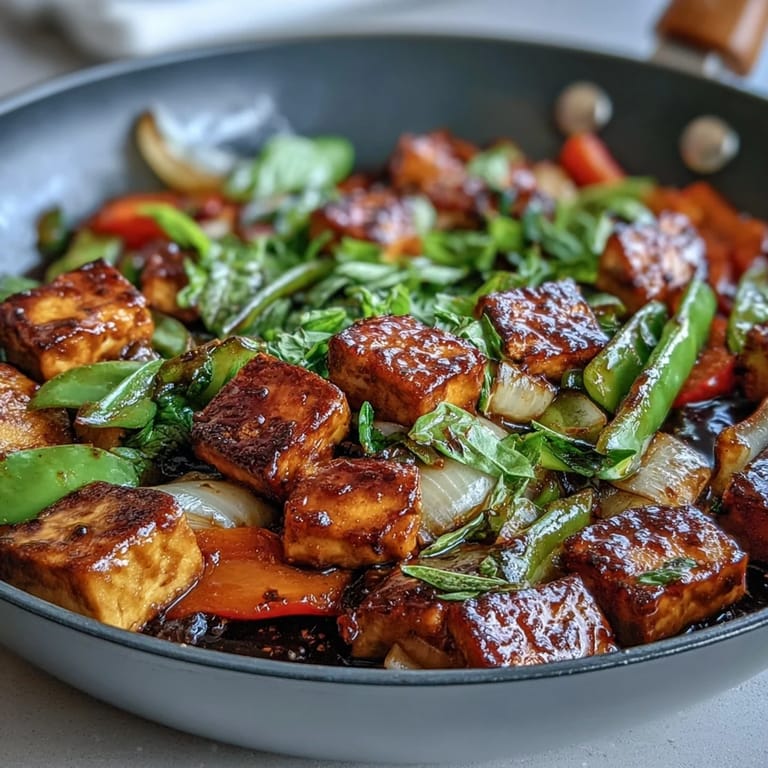
 There's a moment during the last stir-fry when the sauce reduces slightly and takes on a glossy sheen, when the basil releases its impossible fragrance, when you suddenly remember why you love cooking. This dish does that consistently. It reminds you that good food doesn't require complicated techniques or mysterious ingredients, just thoughtful combinations and confidence.
Why Fresh Thai Basil Changes Everything
Regular basil is green and herbaceous, but Thai basil tastes like a completely different plant—there's anise and clove underneath, hints of licorice and spice that make people stop mid-bite and ask what just happened to their mouth. If you can only find regular basil, use it, and the stir-fry will still be delicious, but you'll be missing the magical top note that makes this dish memorable. Thai basil appears at better supermarkets and Asian markets, and it's worth seeking out because one bunch transforms this from good to unforgettable.
The Secret to Crispy Tofu
Everyone wants their tofu to be crispy rather than soft, and the technique is simpler than you'd expect: press it thoroughly, pat it dry with paper towels so there's no moisture clinging to the surface, and then give it space in the hot oil without crowding. The first batch sears while you're starting the second, and by the time you've got all the tofu golden, you've built actual flavor instead of steamed disappointment. The oil should be hot enough that it immediately sizzles when tofu touches the pan—if it just slides around silently, wait another thirty seconds for the oil to come fully up to temperature.
Building Flavor Without Stress
This sauce balances sweet, salty, sour, and spicy in proportions that just work—nothing tastes aggressively dominant, and nothing disappears into the background. The trick is building the sauce before you even turn on heat so you taste the balance cold, adjust if needed, then let the hot pan finish the job. Some nights I make extra sauce because it's genuinely good enough to drizzle over rice by itself, and the understanding that sauce is just as important as vegetables or tofu completely changed how I approach stir-frying.
- Taste the sauce from a spoon before it hits the pan and adjust seasoning now, not after cooking: Cold sauce never lies about salt or sweetness the way hot sauce does.
- If your sauce tastes too salty, add a splash more water or maple syrup; too sweet, add vinegar or soy: Small adjustments prevent catastrophe.
- Keep everything prepped before you start cooking because once the heat is on, you're moving quickly: Stir-frying waits for no one.
 Pin it
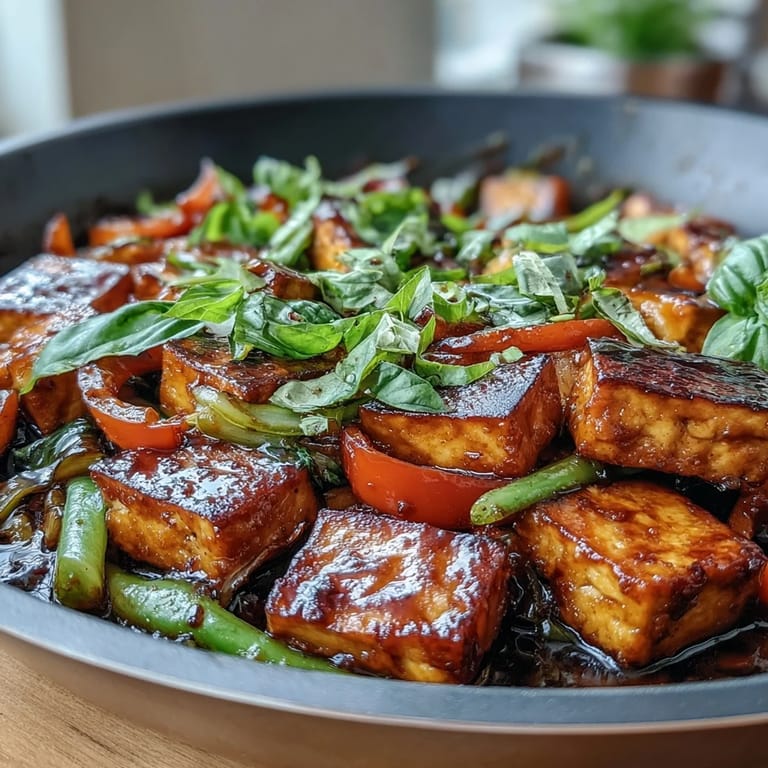
 This stir-fry taught me that vegan cooking doesn't mean eating less flavorfully—it means cooking smarter and tasting everything as you go. Serve it over jasmine rice, with lime wedges on the side, and watch people forget they were ever worried about what they were eating.
Recipe FAQs
- → How do I prevent tofu from sticking while cooking?
Pressing tofu well and using a hot nonstick skillet with enough oil helps form a crispy surface and prevents sticking.
- → Can I substitute vegetables in this dish?
Yes, broccoli, baby corn, or zucchini are great alternatives to the listed veggies and work well with the sauce.
- → How to make this dish spicier?
Adding extra fresh chili slices or a pinch of chili flakes will enhance the heat without overpowering the flavors.
- → What type of basil is best for this dish?
Fresh Thai basil leaves provide a unique aromatic flavor that’s essential to the dish’s authentic taste.
- → Can I prepare the sauce in advance?
Yes, mixing the sauce ingredients ahead of time lets flavors meld and speeds up cooking.