 Pin it
 The kitchen filled with that deep, savory aroma that makes winter afternoons feel like a hug. I had been experimenting with pot roast for years, always coming back to this version when the weather turned cold and comfort became a priority. My grandmother used to say a good pot roast was about patience, but she also knew the secret was in the browning.
Last February, during a snowstorm that trapped us indoors for three days, this pot roast saved dinner completely. My neighbor came over with a bottle of red wine, and we ended up letting it cook while we played board games and waited. The house smelled incredible, and by the time we sat down to eat, the beef was falling apart at the mere suggestion of a fork.
Ingredients
- 3 to 3.5 lb beef chuck roast: Chuck roast has the perfect marbling for slow cooking, becoming meltingly tender while staying juicy
- 1 and a half tsp kosher salt: Kosher salt sticks to meat better than table salt and seasons more evenly throughout the long cook
- 1 tsp freshly ground black pepper: Freshly cracked pepper adds a gentle warmth that permeates the entire dish
- 2 tbsp all purpose flour: This creates a beautiful crust when searing and helps thicken the final gravy naturally
- 3 tbsp olive oil or vegetable oil: A high smoke point oil is essential for getting that deep brown crust on the beef
- 1 tbsp unsalted butter: Butter adds richness to the sear and helps the onions caramelize beautifully
- 1 large yellow onion: Thick wedges hold their shape during braising and become sweet and silky
- 4 cloves garlic: Smashed garlic releases its oils more readily, infusing the braising liquid
- 4 medium carrots: Carrots cut into large chunks absorb all the savory flavors and become incredibly sweet
- 3 ribs celery: Celery adds a subtle aromatic backbone that balances the richness
- 1 and a half lb baby potatoes: Small potatoes cook evenly and soak up the braising liquid like little sponges
- 2 tbsp tomato paste: Tomato paste concentrates and deepens the flavor of the braising liquid
- 1 cup dry red wine: The wine adds acidity and complexity, cutting through the rich beef
- 2 and a half cups low sodium beef broth: Low sodium broth lets you control the salt level for perfect seasoning
- 1 tsp Worcestershire sauce: This umami bomb adds depth and a subtle savory complexity
- 2 sprigs fresh rosemary: Rosemary has a piney aroma that pairs perfectly with beef
- 3 sprigs fresh thyme: Thyme adds an earthy, floral note that rounds out the flavor profile
- 2 bay leaves: Bay leaves release their subtle flavor slowly during the long braise
- 1 and a half tbsp cornstarch: The cornstarch slurry gives you control over the final gravy thickness
Tired of Takeout? 🥡
Get 10 meals you can make faster than delivery arrives. Seriously.
One email. No spam. Unsubscribe anytime.
Instructions
- Get your oven ready:
- Preheat to 300 degrees F if you are using the oven method, which gives the most consistent results
- Season the beef generously:
- Pat the roast completely dry with paper towels, then season all sides with salt and pepper
- Dust with flour:
- Lightly coat the roast with flour, shaking off any excess so you do not end up with a pasty coating
- Sear to perfection:
- Heat 2 tablespoons oil and butter in a heavy Dutch oven over medium high heat, then brown the roast for 4 to 5 minutes per side until deeply caramelized
- Sauté the aromatics:
- Reduce heat to medium and cook onion wedges for 3 to 4 minutes until golden, then add garlic for 30 seconds until fragrant
- Build the base:
- Stir in tomato paste and cook for 1 to 2 minutes until it darkens and smells toasted
- Deglaze the pot:
- Pour in red wine while scraping up all those browned bits from the bottom, then simmer for 2 to 3 minutes
- Add the liquids:
- Pour in beef broth and Worcestershire sauce, stirring to combine everything into a rich braising liquid
- Add the herbs:
- Tuck in rosemary, thyme, and bay leaves, then return the roast to the pot with all its juices
- Start the braise:
- Bring to a gentle simmer, cover tightly, and cook for 1 and a half hours until the meat starts to soften
- Add the vegetables:
- Turn the roast over and arrange carrots, celery, and potatoes around it, submerging them in the liquid
- Finish cooking:
- Cover and cook for another 1 and a half to 2 hours until the beef is fork tender and vegetables are soft
- Rest the meat:
- Transfer the roast and vegetables to a platter and tent with foil while you skim excess fat from the liquid
- Make the gravy:
- Bring the liquid to a simmer, stir in the cornstarch mixture, and cook for 2 to 3 minutes until thickened
- Finish and serve:
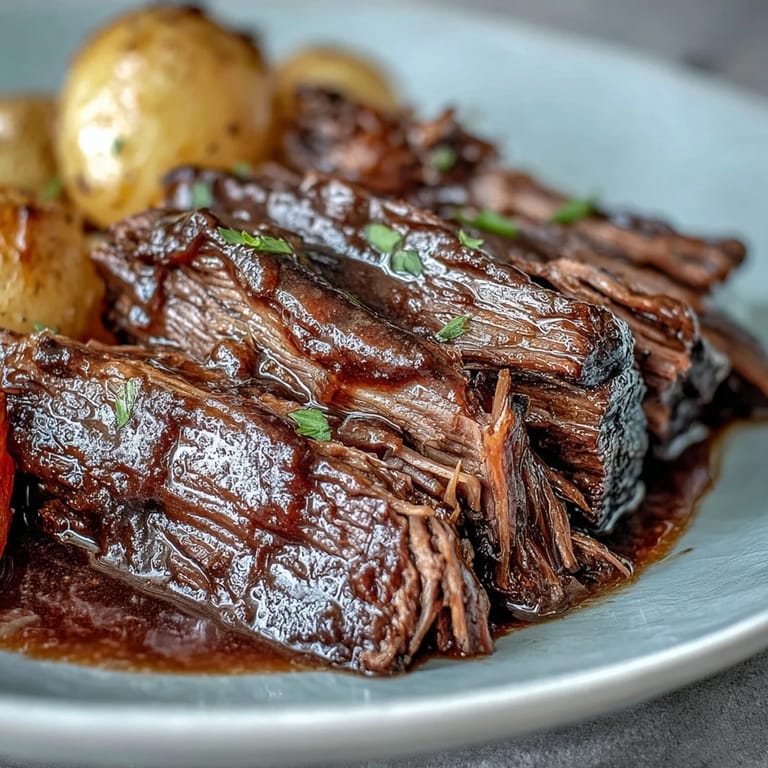
- Discard the herb stems, shred or slice the beef, and arrange everything with spoonfuls of gravy over the top
 Pin it
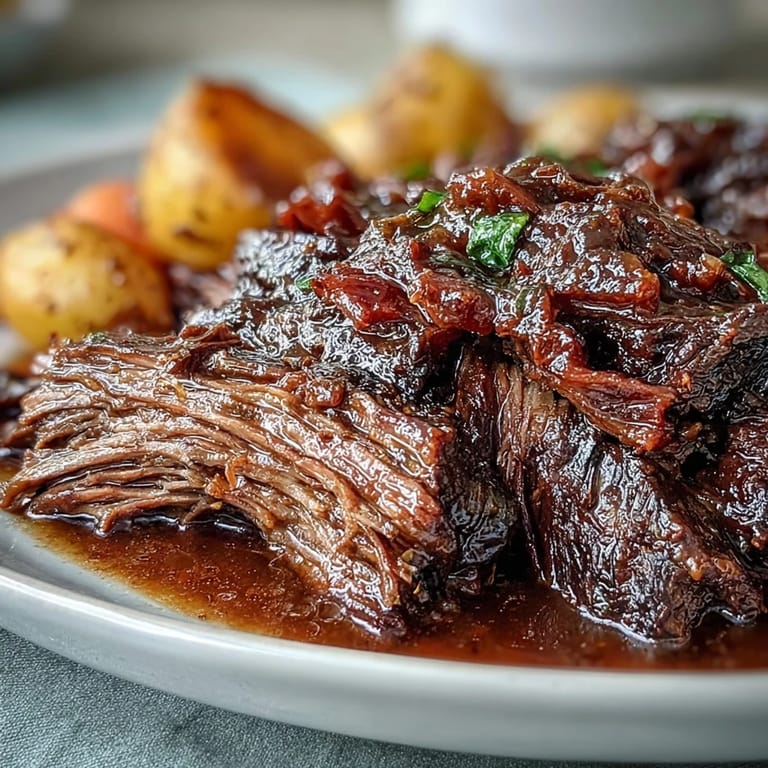
 This recipe became my go to for Sunday dinners after my first attempt ended up being so tender that my husband literally asked if I had bought it from a restaurant. Now it is the meal I make when I want to feed people something that feels like love on a plate.
Choosing The Right Cut
Chuck roast is ideal because it has plenty of connective tissue that breaks down during long cooking, transforming into gelatin that keeps the meat incredibly moist. Blade roast works beautifully too, but avoid leaner cuts like round roast which will turn tough and dry.
The Slow Cooker Method
After searing the meat and sautéing the aromatics, transfer everything to your slow cooker and cook on low for 8 to 10 hours. Add the vegetables during the last 3 to 4 hours so they do not become mushy.
Serving Suggestions
Crusty bread is essential for soaking up every drop of that incredible gravy, though buttered egg noodles or mashed potatoes work just as well. A simple green salad with a bright vinaigrette helps cut through the richness.
- Creamy horseradish sauce on the side adds a perfect kick
- A glass of the same red wine you used in the braise ties everything together
- Leftover gravy freezes beautifully for future quick meals
 Pin it
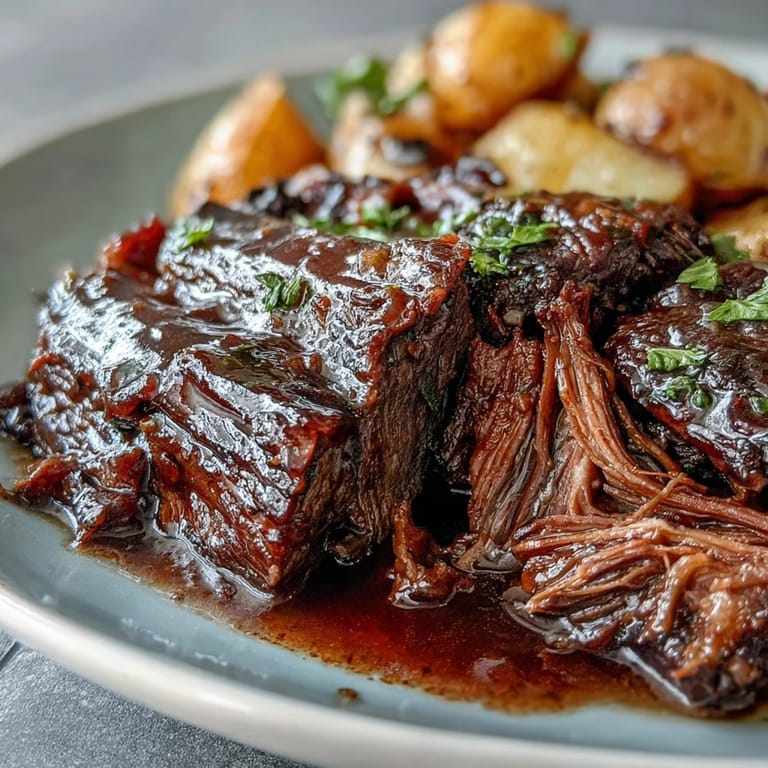
 There is something deeply satisfying about a dish that rewards patience so generously. Enjoy every bite of this comfort food classic.
Recipe FAQs
- → What cut of beef works best?
Chuck roast or blade roast are ideal choices because they contain plenty of marbling and connective tissue. During slow braising, these tissues break down and baste the meat from within, creating exceptional tenderness and flavor that leaner cuts cannot achieve.
- → Can I make this in a slow cooker?
Absolutely. After searing the beef and aromatics on the stovetop, transfer everything to your slow cooker. Cook on low for 8–10 hours or high for 5–6 hours. Add vegetables during the final 2–3 hours to prevent them from becoming too soft.
- → How do I get the best flavor?
Proper searing creates the foundation of flavor—take time to brown all surfaces deeply. Deglazing with red wine releases those caramelized bits from the pot. Using homemade beef stock and fresh herbs elevates the sauce significantly compared to dried alternatives.
- → What sides complement this dish?
Crusty bread for sopping up gravy, buttered egg noodles, or creamy mashed potatoes are classic pairings. A simple green salad with vinaigrette balances the richness. For wine, the same varietal used in cooking creates a harmonious pairing.
- → How should I store and reheat leftovers?
Cool completely and refrigerate in an airtight container for up to 4 days, or freeze for 3 months. The flavors actually improve overnight. Reheat gently in a covered dish at 300°F (150°C) until warmed through, adding a splash of broth if the sauce has thickened too much.