 Pin it
 I discovered this salad at a rooftop lunch in the middle of summer when someone's friend casually assembled it while we were all just standing around hungry and impatient. The way the lemon hit the crisp lettuce, how the feta didn't melt but somehow softened everything it touched—it felt both effortless and intentional. That afternoon taught me that the best meals aren't the complicated ones. This salad has been my answer ever since to those moments when you need something that tastes like sunshine and doesn't ask for much in return.
I made this for a friend who'd just moved to the city and didn't know how to cook yet, and watching her taste it, watching her shoulders relax—that's when I realized a salad could be a small act of kindness. She asked for the recipe the next day, and now it's in her regular rotation too.
Ingredients
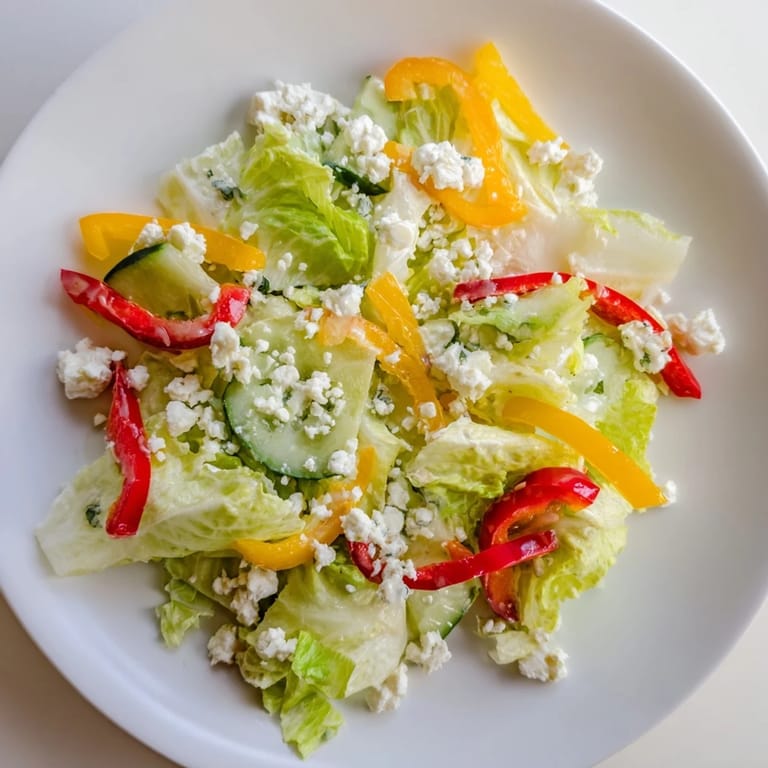
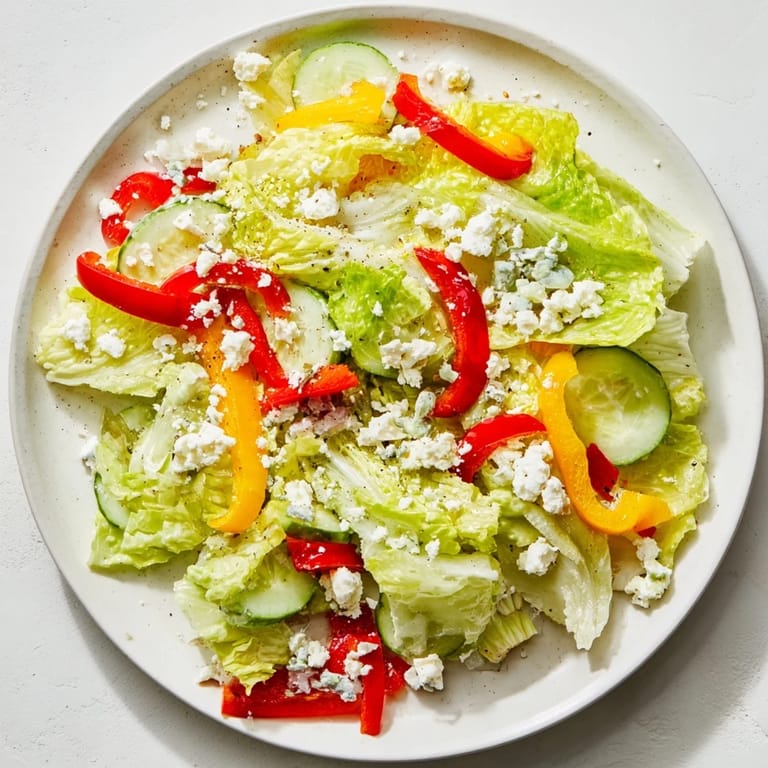
- Romaine lettuce: The sturdy kind that doesn't wilt under dressing, chopped into pieces that feel natural in your mouth, not too small.
- Cucumber: A medium one, sliced thin enough to let the dressing soak in but thick enough to keep its snap.
- Bell pepper: Red or yellow for sweetness, sliced into ribbons that catch the light on your plate.
- Feta cheese: Crumbled by hand if you can, which is messier but somehow tastes better.
- Extra-virgin olive oil: The kind you don't use for cooking, the one with flavor that matters.
- Fresh lemon juice: Never bottled, never from concentrate—squeeze it yourself and you'll taste the difference.
- Dijon mustard: Just enough to make the dressing emulsify and taste like it knows what it's doing.
- Honey: Optional but worth the tablespoon for a whisper of sweetness that balances the sharp lemon.
- Sea salt and black pepper: The finishing touches that actually change everything.
Tired of Takeout? 🥡
Get 10 meals you can make faster than delivery arrives. Seriously.
One email. No spam. Unsubscribe anytime.
Instructions
- Make the dressing first:
- Pour the olive oil into a small bowl and add lemon juice, mustard, honey if you're using it. Whisk it together until it looks like it's starting to come together, then add salt and pepper—you'll know it's right when it smells sharp and alive.
- Build the salad:
- Chop your lettuce into pieces that feel good to eat, slice your cucumber and pepper however feels right to you. Toss everything into a large bowl like you're being gentle with something you care about.
- Bring it together:
- Drizzle the dressing over the vegetables, and toss—this is the moment where everything learns to taste like one thing instead of separate things. The edges of the lettuce will glisten and the colors will look somehow more vibrant.
- Finish with feta:
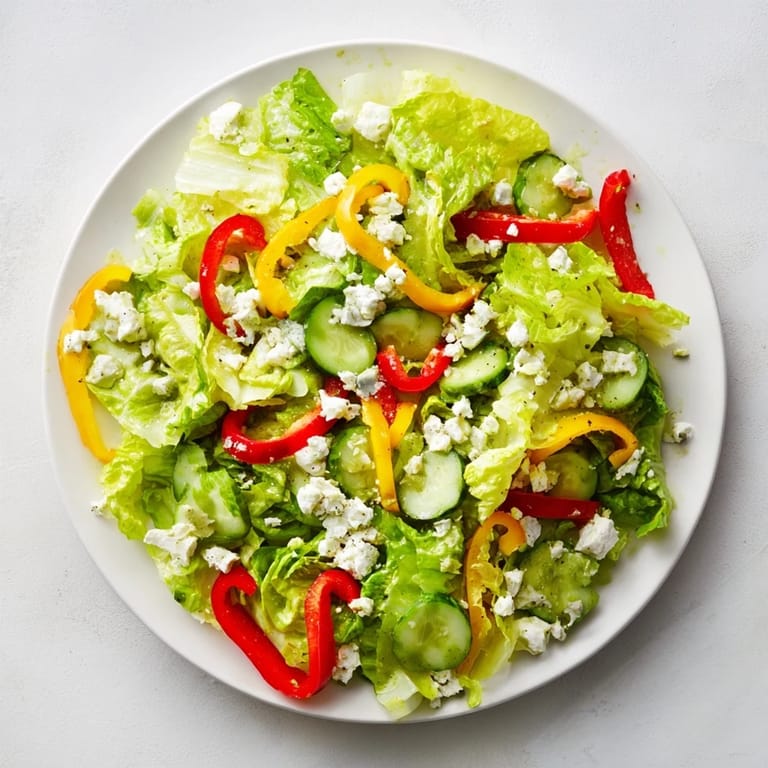
- Scatter the crumbled feta across the top right before you serve it, so it stays intact and visible. This isn't just ingredient placement, it's the salad saying hello.
 Pin it
 There's a Tuesday evening in my memory where I made this for someone I was trying to impress, and they ate it slowly, really tasting it, and then asked if I'd made it or if it came from somewhere else. That's the moment I stopped being afraid of simple things.
Why This Salad Works
Mediterranean food has always been about letting ingredients speak for themselves, and that's exactly what happens here. There's no elaborate technique or complicated flavor building—just fresh things that taste good together, arranged so they taste even better. The acidity from the lemon brightens everything, the creaminess of feta softens the sharpness, and the vegetables bring texture that keeps every bite interesting. It's the kind of salad that makes you feel like you're eating something intentional, even though it took ten minutes.
Variations That Still Feel Right
Sometimes I add a handful of fresh mint or parsley because herbs make everything feel more alive. Other times I've sliced an avocado into it when I had one, and that green richness changes the whole mood without overwhelming it. A friend of mine adds toasted almonds for crunch, and now I understand why—there's something about the way the nuts add depth without changing what the salad fundamentally is. Goat cheese works if you don't have feta or if you want something tangier, and honestly, the salad is generous enough to welcome these small changes.
Serving and Storage
This salad is best eaten immediately, when everything is still cold and crisp and the dressing hasn't had time to make the lettuce think about surrendering. If you have leftovers—and you might if you're making it for one person—eat them within an hour or the whole thing will lose its personality. Some people try to separate the components and dress it later, which works if you're practical, but it never quite tastes the same as eating it fresh.
- Keep the dressing in a separate jar if you're meal prepping, and dress the salad just before you eat it.
- Wash your lettuce and dry it completely, because water is the enemy of crunch and flavor both.
- If you must store it, keep the feta separate—it doesn't need dressing, and it stays fresher that way.
 Pin it
 This salad is a small thing that reminds me why I cook at all—not to impress, but to take care of people with something fresh and honest. Make it when you're hungry, make it when someone you love is hungry, make it when you need to remember that the best things are often the simplest ones.
Recipe FAQs
- → What type of lettuce is best for this salad?
Romaine lettuce works perfectly due to its crisp texture and mild flavor that complements the fresh vegetables and creamy feta.
- → Can I substitute feta cheese with another option?
Yes, goat cheese makes a good alternative for a similar tangy creaminess, or omit cheese entirely for a dairy-free variation.
- → How is the dressing prepared?
The dressing combines extra-virgin olive oil, fresh lemon juice, Dijon mustard, honey, salt, and pepper whisked together for a bright and zesty flavor.
- → What enhances the salad’s flavor further?
Adding fresh herbs such as parsley or mint brings an additional fragrant note, while avocado or toasted nuts introduce extra texture and richness.
- → How should the salad be served for best results?
Serve immediately after tossing to preserve the crispness of the vegetables and the freshness of the dressing.