 Pin it
 My hands were covered in panko crumbs when my neighbor knocked on the door. I had just started breading a tray of asparagus for a potluck that evening, and the golden, cheese-flecked coating was everywhere: countertop, cutting board, somehow even my apron pocket. She took one look at the assembly line of bowls and laughed, then stayed to help me finish. By the time we slid the tray into the oven, the kitchen smelled like toasted garlic and Asiago, and we both knew these spears wouldn't last five minutes at the party.
The first time I made these, I served them at a spring dinner with lemon wedges and a bowl of garlicky aioli. My brother-in-law, who claims he doesn't like vegetables, ate seven spears standing up by the stove. He didn't say a word, just kept reaching for more, and I knew I had something good. Now every time asparagus goes on sale, I make a double batch and freeze half before baking.
Ingredients
- Asparagus: Look for medium to thick spears with tight, compact tips; they hold the coating better and stay tender without turning mushy during baking.
- All-purpose flour: This first layer helps the egg wash stick and creates a dry base so the panko doesn't slide off halfway through breading.
- Egg and milk: Whisking them together makes a smooth, sticky binder that clings to every ridge of the asparagus and locks in the crispy coating.
- Panko breadcrumbs: These Japanese-style crumbs are coarser and airier than regular breadcrumbs, which means they crisp up beautifully in the oven without any sogginess.
- Asiago cheese: Finely grated Asiago adds a nutty, slightly sharp flavor that melts into the crust and creates those irresistible golden edges.
- Parmesan cheese: Optional but worth it for an extra hit of umami and a deeper, saltier finish to the crust.
- Garlic powder, onion powder, smoked paprika: This trio builds layers of savory warmth and a hint of smokiness that makes the coating taste complex, not flat.
- Olive oil: A light drizzle before baking encourages browning and gives the panko that restaurant-quality crunch.
- Lemon wedges: A squeeze of bright, acidic lemon juice cuts through the richness and makes every bite feel lighter and fresher.
- Fresh parsley or chives: A sprinkle of green herbs at the end adds color, a pop of freshness, and a little something fancy.
Tired of Takeout? 🥡
Get 10 meals you can make faster than delivery arrives. Seriously.
One email. No spam. Unsubscribe anytime.
Instructions
- Preheat and Prep Your Pan:
- Set your oven to 425°F and line a baking sheet with parchment paper, then drizzle or spray it lightly with olive oil. This keeps the spears from sticking and helps the bottoms crisp up just as much as the tops.
- Trim the Asparagus:
- Rinse the spears under cold water, pat them completely dry with paper towels, then snap or cut off the woody ends where they naturally break. Wet asparagus won't hold the coating, so make sure they're truly dry.
- Set Up Your Breading Station:
- Arrange three shallow bowls in a row: flour in the first, whisked egg and milk in the second, and the panko-cheese-spice mixture in the third. Having everything lined up makes the process fast and keeps your hands from turning into a sticky, floury mess.
- Coat the Spears:
- Roll each asparagus spear in the flour, shake off the excess, dip it into the egg wash, then press it firmly into the panko mixture until every side is covered. Use one hand for wet ingredients and one for dry to keep the breading from clumping on your fingers.
- Arrange on the Baking Sheet:
- Lay the coated spears in a single layer with a little space between each one so air can circulate. Crowding them will steam the coating instead of crisping it.
- Drizzle with Oil:
- Lightly drizzle or spray the tops with the remaining olive oil, then gently roll each spear so all sides get a thin coat. This step is the secret to that deep golden crunch.
- Bake and Turn:
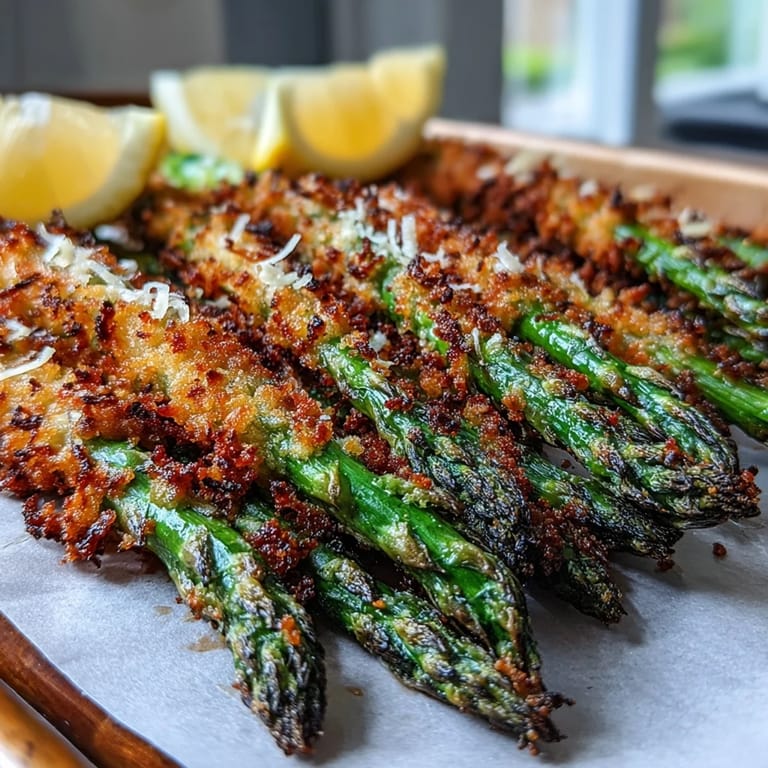
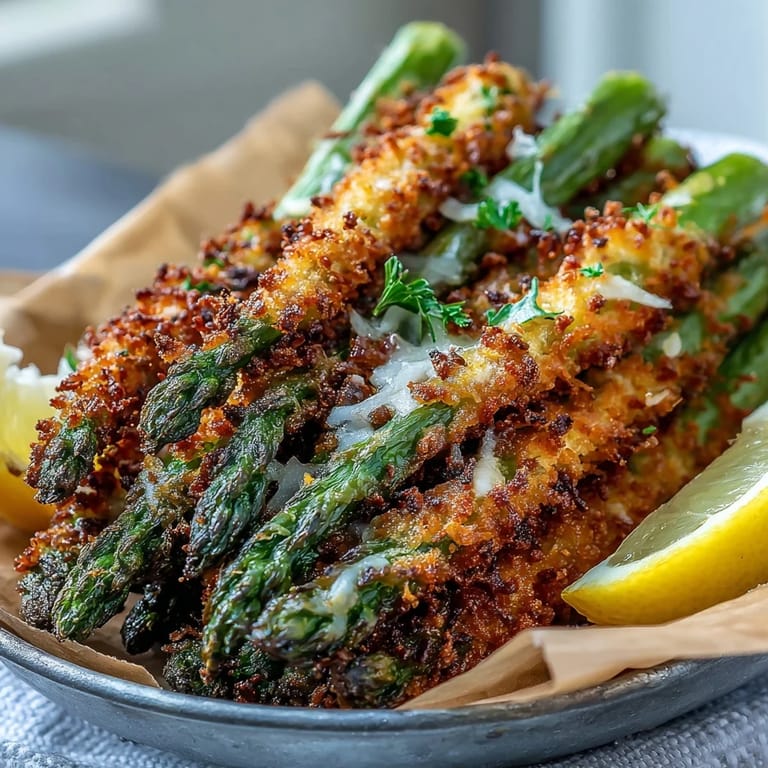
- Slide the tray onto the middle oven rack and bake for 10 to 14 minutes, flipping the spears halfway through so both sides brown evenly. Watch for a golden, crispy crust and tender stalks that still have a little snap.
- Optional Broil:
- If you want an extra-crispy, deeply browned finish, turn on the broiler for the last 1 to 2 minutes. Stay close and watch carefully so they don't burn.
- Finish and Serve:
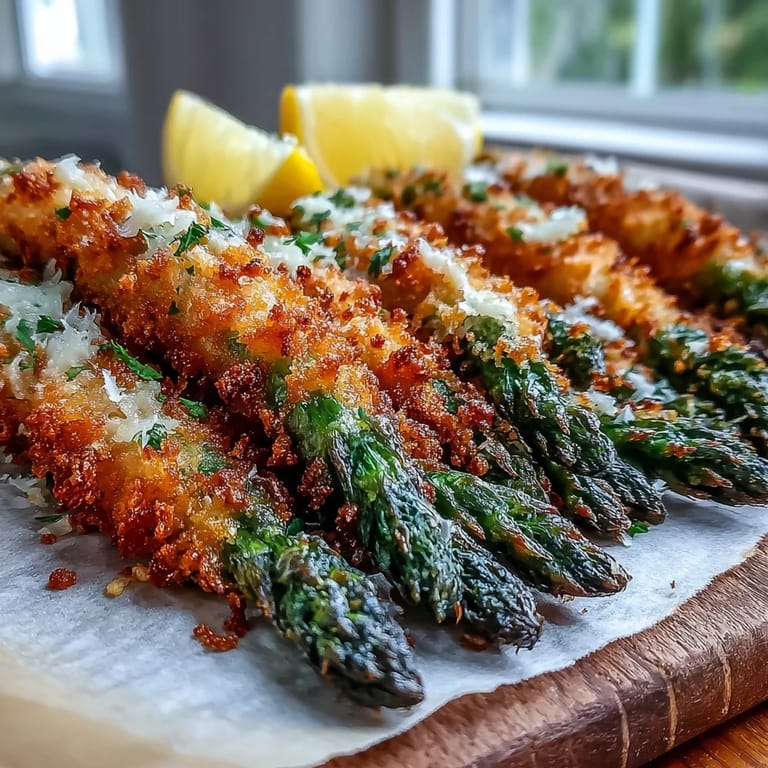
- Pull the tray from the oven and immediately sprinkle the hot spears with the reserved Asiago, a pinch of salt, and fresh herbs if you like. Serve them right away with lemon wedges and your favorite dipping sauce while they're still crackling.
 Pin it
 One evening, I brought a platter of these to a backyard dinner, still warm from the oven and piled high with lemon wedges. My friend's six-year-old, who usually hides vegetables under his napkin, grabbed two spears and declared them better than chicken nuggets. His mom looked at me like I'd performed magic, and I just smiled and passed her the recipe.
Choosing the Right Asparagus
I used to grab whatever asparagus was on sale, but I learned the hard way that pencil-thin spears turn rubbery and thick ones stay perfectly tender with a little bite. Look for spears that are about as thick as your pinky finger, with tight, closed tips and smooth, firm stalks. If the ends look dry or woody, that's fine; you'll snap those off anyway. Fresh asparagus should smell grassy and clean, not sour or musty, and the stalks should snap with a crisp sound, not bend.
Make-Ahead and Storage Tips
I've coated a full tray of these in the afternoon, covered them loosely with plastic wrap, and refrigerated them for up to four hours before baking. The breading stays put and the flavor doesn't change, which is perfect when you're hosting and need one less thing to worry about at the last minute. If you have leftovers, store them in an airtight container in the fridge for up to two days, then reheat in a 400°F oven for five minutes to bring back some of that crunch. They won't be quite as crispy as fresh, but they're still tasty enough to snack on cold straight from the fridge.
Serving Suggestions and Dipping Sauces
These spears are fantastic on their own with just a squeeze of lemon, but I love serving them with a bowl of garlicky aioli, tangy lemon-yogurt sauce, or even warm marinara for dipping. They make a great appetizer for dinner parties, a fancy side dish next to roast chicken or grilled steak, or a vegetarian main when you pile them on a plate with a big salad and some crusty bread. I've also tucked them into grain bowls, served them alongside pasta, and once brought them to a picnic where they disappeared before the sandwiches.
- Try adding a teaspoon of finely grated lemon zest to the panko mixture for a bright, citrusy twist.
- For a spicy kick, toss a pinch of cayenne or red pepper flakes into the breading or sprinkle them on top right before serving.
- If you're using an air fryer, cook them at 390°F for 7 to 10 minutes, shaking the basket halfway through for even crisping.
 Pin it
 There's something deeply satisfying about pulling a tray of golden, crackling asparagus spears from the oven and watching them disappear in minutes. Make them once, and I promise they'll become your go-to whenever you want vegetables that feel like a treat.
Recipe FAQs
- → What type of asparagus works best?
Thicker asparagus spears hold up best for this preparation. They maintain their structure during baking and provide a substantial texture that pairs perfectly with the crispy coating. Medium to thick spears (about 1 lb/450 g for 24 pieces) yield the best results.
- → Can I make these ahead of time?
Yes, you can coat the asparagus spears up to 4 hours in advance. Arrange them on the prepared baking sheet, cover tightly, and refrigerate. Bake just before serving for the crispiest results. The coating adheres well and maintains texture even after refrigeration.
- → What dipping sauces pair well?
Lemon wedges are essential for brightness. Beyond that, try creamy aioli, lemon-garlic yogurt sauce, or classic marinara. The tangy, acidic elements balance the rich, cheesy coating beautifully.
- → Can I use an air fryer instead?
Absolutely. Cook at 390°F (200°C) for 7-10 minutes, turning halfway through. The air fryer produces excellent crispiness and may even reduce cooking time slightly. Work in batches if needed to maintain proper air circulation.
- → What can I substitute for Asiago cheese?
Pecorino Romano, aged Gruyère, or extra Parmesan work well as substitutes. The key is using a hard, flavorful cheese that grates finely and provides strong umami notes to the coating.
- → How do I get maximum crispiness?
Press the breadcrumb mixture firmly onto each spear to ensure good adhesion. Drizzle with olive oil and turn gently to coat all sides before baking. For extra crunch, finish under the broiler for 1-2 minutes, watching closely to prevent burning.