 Pin it
 My neighbor Maria showed up one afternoon with a jar of homemade guava marmalade and a knowing smile, insisting I had to try it baked into cheesecake. I was skeptical at first—guava seemed too bold, too fruity for something so refined—but the moment that tropical tanginess hit against the creamy richness, I understood why she'd been so insistent. Now whenever I make this, the kitchen fills with this incredible aroma that somehow smells both sophisticated and summery at once.
I made this for my partner's birthday last year, and watching their face when they tasted that first bite—the way they paused and then went quiet—told me everything. We ended up eating half of it that night, which probably wasn't the plan, but some desserts are just too good to show restraint around.
Ingredients
- Maria cookies (200 g): These are lighter and more delicate than digestive biscuits, giving you a crust that's crisp without being heavy—if you can't find them, digestives work fine, though the texture shifts slightly.
- Unsalted butter (80 g, melted): Use good butter; it's the foundation of your crust's flavor, and melting it first ensures everything binds perfectly.
- Granulated sugar for crust (2 tbsp): Just enough to add subtle sweetness without competing with the guava's tartness later on.
- Cream cheese (600 g, softened): This is non-negotiable—let it sit on the counter for at least an hour so you don't end up with lumps no matter how much you beat it.
- Granulated sugar for filling (200 g): The amount sounds like a lot, but it balances the tang of the sour cream beautifully.
- Sour cream (200 ml): This is what gives the cheesecake that authentic New York density while keeping it from being one-note sweet.
- Large eggs (3): Room temperature is genuinely important here—cold eggs won't incorporate as smoothly and can introduce air bubbles that cause cracking.
- Pure vanilla extract (1 tsp): Don't skip this; it bridges the gap between the cream cheese and the guava perfectly.
- Lime zest (from 1 lime, optional): If you add it, you get this subtle citrus undertone that makes people guess what's different about your cheesecake without being able to pinpoint it.
- Guava marmalade or paste (200 g): If you use paste instead of marmalade, you'll need to thin it slightly—the texture matters more than you'd think for that swirl.
- Water (2 tbsp): Used to loosen the guava if it's too thick; some marmalades need it, some don't.
Tired of Takeout? 🥡
Get 10 meals you can make faster than delivery arrives. Seriously.
One email. No spam. Unsubscribe anytime.
Instructions
- Prepare your pan and preheat:
- Line your springform pan with parchment paper on the bottom and grease the sides lightly—this prevents any chance of sticking and makes cleanup almost effortless. Get your oven to 160°C so it's ready when you need it.
- Make the crust:
- Pulse those Maria cookies in a food processor until they're fine crumbs, not powder—you want texture. Mix them with melted butter and sugar until it looks like wet sand, then press firmly and evenly into the pan, going up the sides just slightly, and bake for 10 minutes until it starts to smell toasty and golden.
- Prepare the filling:
- Beat softened cream cheese and sugar for a full minute until it's smooth and pale, then add sour cream and mix until no streaks remain. Add eggs one at a time, beating gently after each addition—overbeating here introduces air and can cause cracks.
- Flavor your filling:
- Stir in vanilla and lime zest if using, mixing just until combined. Pour this over your cooled crust and smooth the top with a spatula.
- Create the guava swirl:
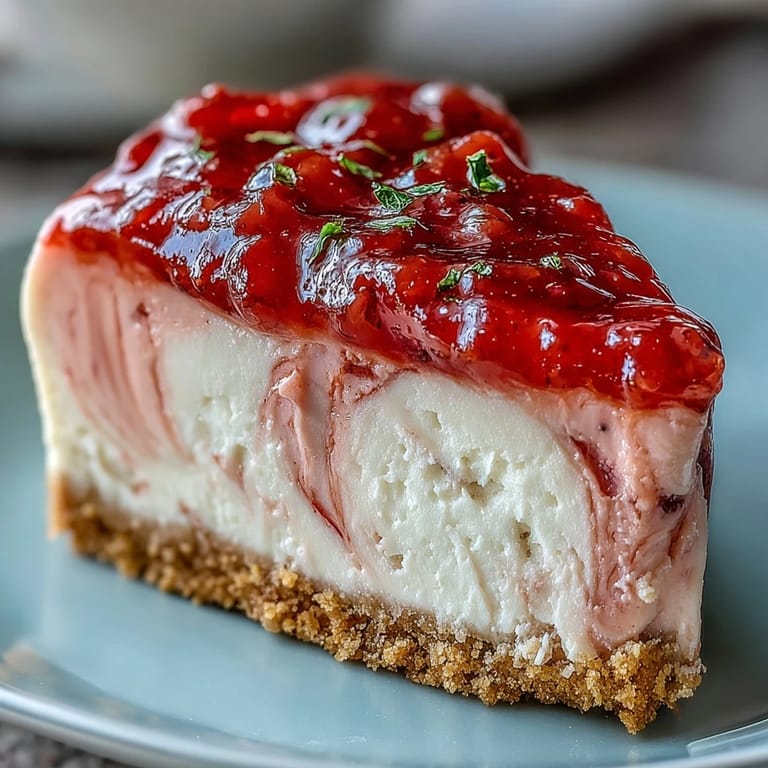
- Warm the guava marmalade gently in a small saucepan with a splash of water if it's too thick—it should be pourable but still rich. Drop spoonfuls across the top of the cheesecake, then use a knife or skewer to cut through and drag it in swooping motions, creating that beautiful marbled effect.
- Bake with care:
- Bake for 50–55 minutes—the edges should be set and barely jiggly when you give the pan a gentle shake, but the very center should still have the slightest wobble. This is the secret to a creamy interior that doesn't crack.
- Cool slowly and patiently:
- Turn off the oven, crack the door open about 4 inches, and let it sit there for a full hour while it cools gradually. This temperature shift prevents the dreaded cracks that happen when cheesecake cools too quickly.
- Chill thoroughly:
- Once it's completely cool, refrigerate for at least 3 hours or overnight—this isn't just about temperature, it's about giving the flavors time to settle and blend.
 Pin it
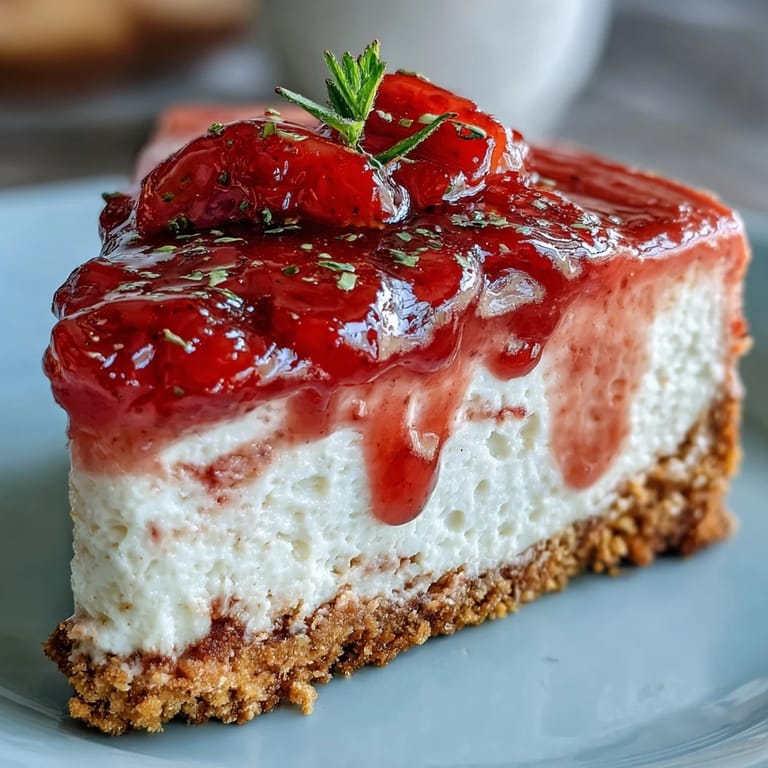
 There's something about pulling a perfectly baked cheesecake from the oven—that moment when you see those golden edges and the guava swirl catching the light—that makes you feel like you've actually accomplished something real in the kitchen. It's not just dessert; it's proof that you can create something genuinely beautiful and delicious at home.
The Maria Cookie Advantage
Most people reach for graham crackers out of habit, but Maria cookies have this subtle sweetness and a finer crumb structure that creates a crust with completely different character. They're more common in Latin American and European baking, which makes sense given this recipe's tropical inspiration. The first time I switched to them, I realized I'd been making crusts with slightly grainy texture my whole life without knowing there was a better option.
Mastering the Guava Swirl
The guava swirl isn't just decoration—it's actually three distinct layers of flavor working together: the tartness of the fruit, the sweetness of the marmalade, and how it interrupts the creaminess of the cheesecake. If your guava paste is too thick, warming it with water is the key; if it's already runny, you can use it straight. The swirling technique matters more than you'd think—gentle motions create those elegant patterns, while aggressive swirling just blends everything into a muddy mix.
Serving and Pairing
A hot knife dipped in water between each slice makes cutting through this cheesecake almost meditative. Serve it slightly chilled rather than ice cold, and the creaminess really shines through. The tartness of the guava pairs beautifully with sparkling rosé or even a light Moscato, if you're in the mood to turn dessert into a proper experience.
- Dip your knife in hot water and wipe it clean between each cut for clean, beautiful slices every time.
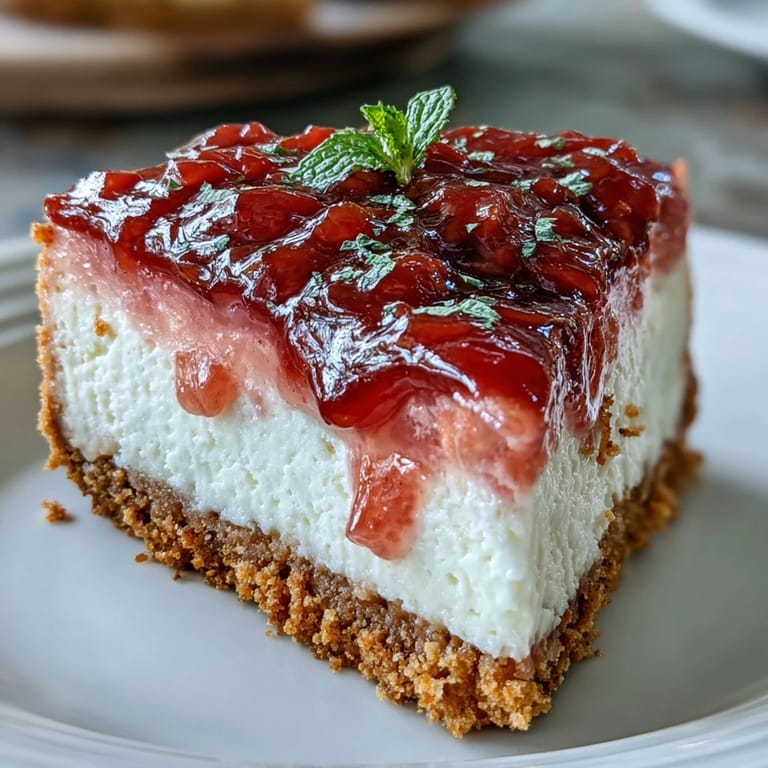
- Garnish with fresh guava slices or a few mint leaves right before serving for an elegant finish that tastes as good as it looks.
- Store covered in the fridge for up to five days, though it rarely lasts that long in my kitchen.
 Pin it
 This cheesecake has become my go-to when I want to impress someone without spending all day in the kitchen. It's the kind of dessert that makes people think you've been secretly trained as a pastry chef.
Recipe FAQs
- → Why does my cheesecake crack?
Cracking typically occurs from overmixing the batter (which incorporates too much air), overbaking, or cooling too rapidly. The technique of cooling in the oven with the door cracked helps prevent this by allowing gradual temperature change.
- → Can I use fresh guava instead of marmalade?
Fresh guava would need to be cooked down with sugar to create a thick, spreadable consistency similar to marmalade. This process takes about 20-30 minutes of simmering to achieve the right texture for swirling.
- → What's the purpose of cooling in the oven?
Gradual cooling prevents sudden temperature changes that cause structural damage. Leaving the cheesecake in the turned-off oven with the door slightly open allows it to cool slowly and evenly, resulting in a smooth, crack-free surface.
- → How long should I chill before serving?
For optimal texture, refrigerate for at least 3 hours, though overnight chilling is ideal. This allows the flavors to meld and the filling to set completely, making clean slices easier to achieve.
- → Can I make this ahead of time?
Absolutely. This cheesecake actually improves with a day or two of refrigeration as the flavors develop. Store it tightly covered in the springform pan, or transfer to an airtight container after the initial chilling period.
- → Why add lime zest?
Lime zest provides bright citrus notes that complement the tropical guava while cutting through the richness of the cream cheese filling. It's optional but adds a lovely layer of complexity.