 Pin it
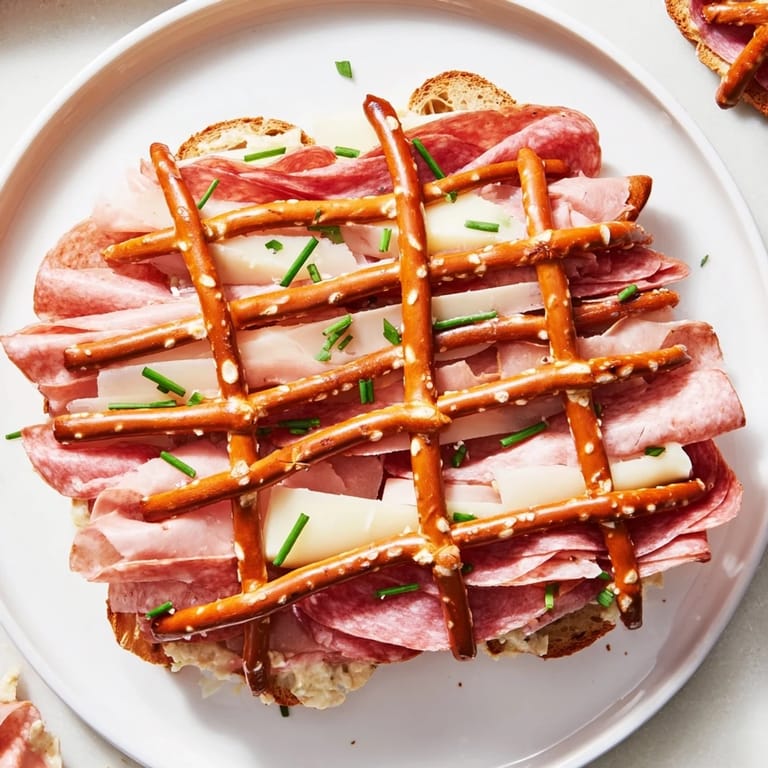
 The first time I made this was for a dinner party where I wanted to impress without spending hours in the kitchen. I'd been staring at my charcuterie board supplies for weeks, feeling like they needed something more dramatic, something with actual structure. That's when I thought: what if I built something? The pretzel lattice came to me while arranging crackers, and suddenly this casual appetizer became this beautiful, almost architectural thing that guests would have to actively break through to discover the treasures underneath.
I remember my neighbor leaning over the platter, honestly skeptical at first, then her face lighting up when she realized the pretzels were edible, not just decoration. That moment made me realize this wasn't just about flavor—it was about creating an experience, a little edible puzzle that made people slow down and pay attention.
Ingredients
- Prosciutto: Paper-thin slices create delicate layers that don't overpower the cheese; it's worth buying from the deli counter rather than pre-packaged if you want it to drape properly.
- Salami: The peppered varieties work beautifully, adding a subtle spice that balances the richness of the cheese.
- Swiss cheese: Its mild, slightly nutty flavor lets other ingredients shine; the holes actually help the mustard seep through.
- Sharp cheddar: This is your flavor anchor—don't skimp on quality here, as it's what people remember.
- Baguette slices: Thin rounds (about 1/4 inch) give you a sturdy base without being starchy; slightly stale bread actually holds toppings better than fresh.
- Whole grain mustard: A thin spread is enough; it's the moisture that matters, and the seeds add texture.
- Fresh chives: Chopped just before serving so they don't wilt, they bring a bright, oniony finish.
- Pretzel sticks: Regular length, unbroken ones are crucial; they need to span your platter to create that visual impact.
Tired of Takeout? 🥡
Get 10 meals you can make faster than delivery arrives. Seriously.
One email. No spam. Unsubscribe anytime.
Instructions
- Create your base:
- Lay baguette slices in a single layer on your platter, arranging them so they're close but not touching. This is easier if you think of it like building a floor rather than filling empty space.
- Add the mustard foundation:
- Spread a thin layer of whole grain mustard on each slice—you want just enough to flavor and bind, not so much that it pools.
- Layer the meats and cheeses:
- Start with prosciutto, then salami, then both cheeses, slightly overlapping each piece so they create that rustic abundance. The overlapping also helps everything stay put when people start breaking into it.
- Build the lattice:
- Lay horizontal pretzel sticks across first, spacing them about 1 cm apart. Then weave vertical sticks over and under, creating a checkerboard pattern—it's meditative work, almost like a puzzle.
- Finish and serve:
- Sprinkle chives over the lattice for color and freshness, then serve immediately so the pretzels stay crisp.
 Pin it
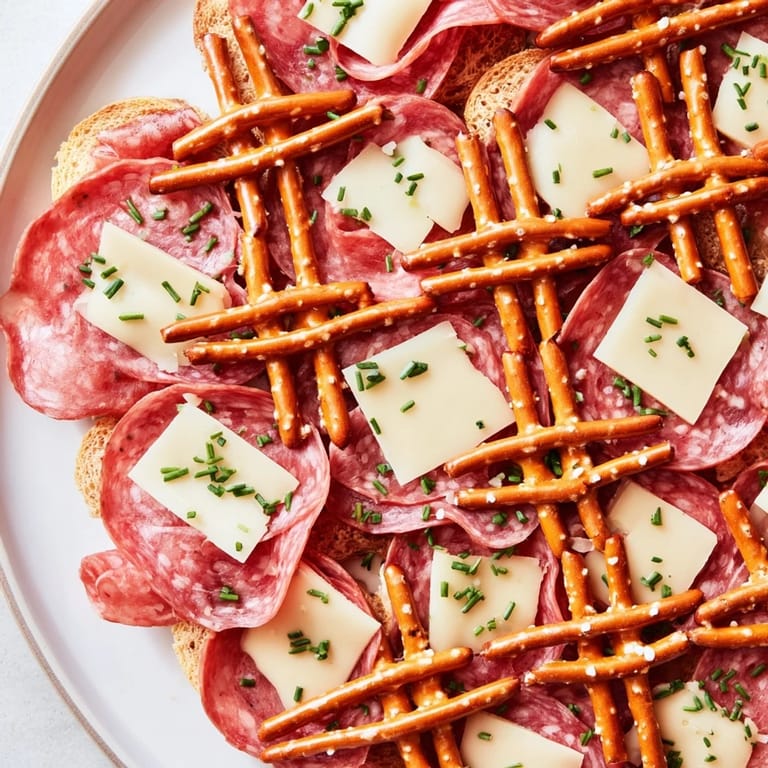
 There's something almost ceremonial about watching someone experience this for the first time. They study it for a second, smile at the cleverness, then break through the pretzel weaving to discover the layers. It's turned a simple appetizer into a moment.
Why Texture Matters Here
This appetizer is honestly all about contrast. The moment your teeth hit a crispy pretzel and then sink into soft, salty cured meat and creamy cheese, something clicks. I've learned that texture is what makes people reach for another piece. The bread provides structure, the pretzels give crunch, the cheese creates creaminess, and the chives add a fresh snap. Without that pretzel lattice, it's just an open-faced sandwich; with it, it becomes something you want to interact with.
Customizing Without Losing the Magic
The beautiful thing about this recipe is that it's a framework, not a rigid rulebook. I've made vegetarian versions by stacking roasted red peppers, marinated artichokes, and an extra layer of Swiss or gouda. I've swapped out the cheddar for smoked gouda or pepper jack when I wanted more personality. The key is respecting the balance—you need something savory as your anchor, something creamy to bind, something crisp to finish. As long as those three elements are there, you can play around.
Serving and Pairing Ideas
This works best as a hands-on appetizer where people can pick it up and eat it standing—it's more elegant than a dip, more casual than a plated course. I've served it before wine tastings, at casual dinner parties, even as part of a brunch spread. The pretzel lattice is sturdy enough to eat with your fingers, and the flavors are bold enough to stand up to whatever's in your glass.
- A crisp white wine like a sauvignon blanc or pinot grigio echoes the freshness of the chives.
- A light lager or pilsner actually complements the salty, savory elements beautifully.
- Even a sparkling cider works if you want to keep things non-alcoholic and festive.
 Pin it
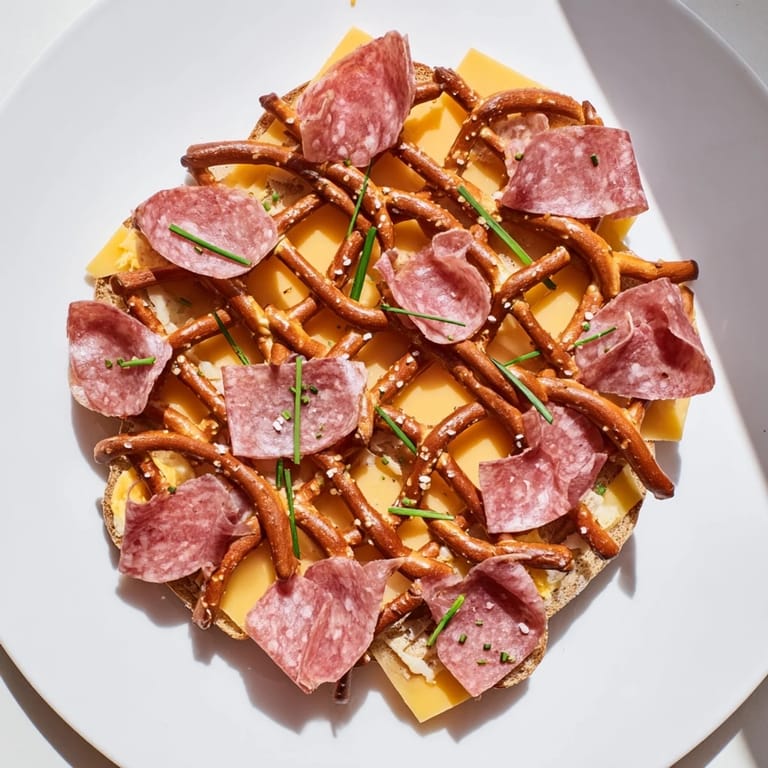
 This recipe turned out to be one of those things I make again and again because it delivers every single time. It's the kind of appetizer that makes you look like you spent way more effort than you actually did.
Recipe FAQs
- → What is the best way to create the pretzel lattice?
Lay pretzel sticks horizontally first, spaced about 1 cm apart, then weave vertical sticks over and under to form a neat lattice.
- → Can I substitute the meats with vegetarian options?
Yes, you can replace the prosciutto and salami with extra cheeses, roasted vegetables, or marinated artichokes for a vegetarian version.
- → Which cheeses work well with this appetizer?
Swiss and sharp cheddar are classic choices, though gouda or pepper jack provide interesting flavor variations.
- → What bread should I use as a base for layering?
Thin rounds of a small baguette create a sturdy yet delicate base perfect for layering meats and cheeses.
- → How should I garnish the finished dish?
Sprinkle chopped fresh chives over the pretzel lattice to add color and a subtle fresh note.