 Pin it
 There's something about the smell of butternut squash roasting that makes a kitchen feel like home, even if you've only just moved in. I stumbled onto this soup one October when I was trying to use up what seemed like half a farmers market haul, and honestly, I wasn't expecting much beyond comfort food. But when the miso paste dissolved into that silky, golden puree, something clicked—umami depth I didn't know a vegetable soup could hold. Now it's the first thing I make when the weather turns and I need something that feels both nourishing and a little bit special.
I made this for my sister after she mentioned feeling run down, and I remember her sitting at my kitchen counter with a spoon, just quietly eating bowl after bowl while we talked about nothing important. That's when I knew this recipe had staying power—it's the kind of soup that feels like someone's actually taking care of you.
Ingredients
- Butternut squash (about 2 lbs, peeled and cubed): The star of the show; roasting it first brings out natural sweetness and creates those caramelized edges that make a real difference in the final flavor.
- Yellow onion (1 medium, diced): Your aromatic base; make sure it's soft and translucent before moving forward, as this builds the foundational flavor.
- Fresh garlic and ginger (2 cloves and 1-inch piece): These two together create a subtle warmth that balances the squash's sweetness without overpowering the miso.
- Low-sodium vegetable broth (4 cups): The liquid that lets everything talk to each other; I learned to use low-sodium so the miso paste can shine without competing with salt.
- White miso paste (2 tablespoons): This is non-negotiable for the right flavor profile; white miso stays smooth and subtle, while darker varieties can turn bitter if not handled carefully.
- Olive oil (1 tablespoon total): Just enough to coax out flavors without making the soup heavy or greasy.
- Salt and pepper: Taste as you go because the miso adds its own salty notes, and it's easy to oversalt if you're not paying attention.
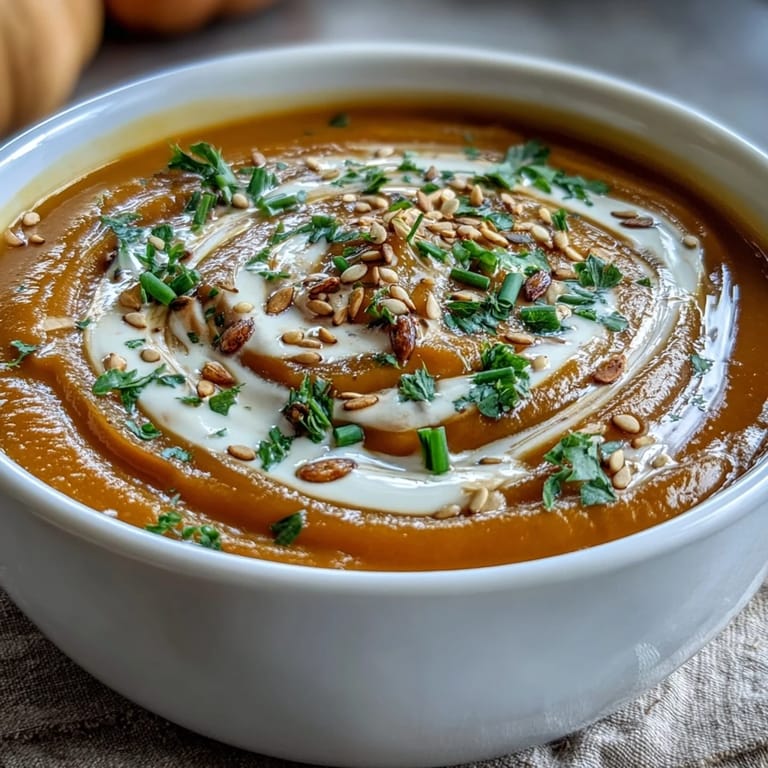
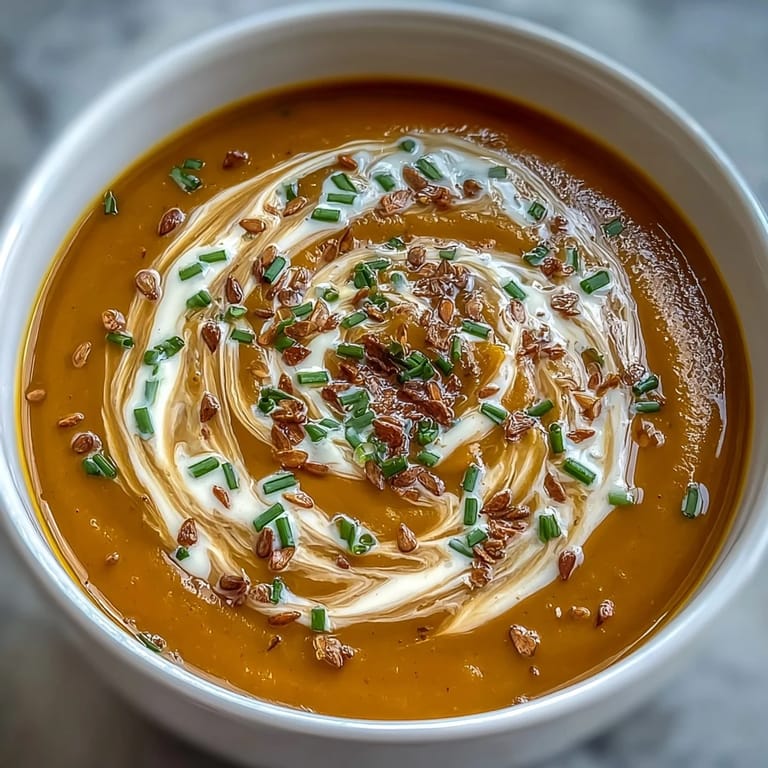
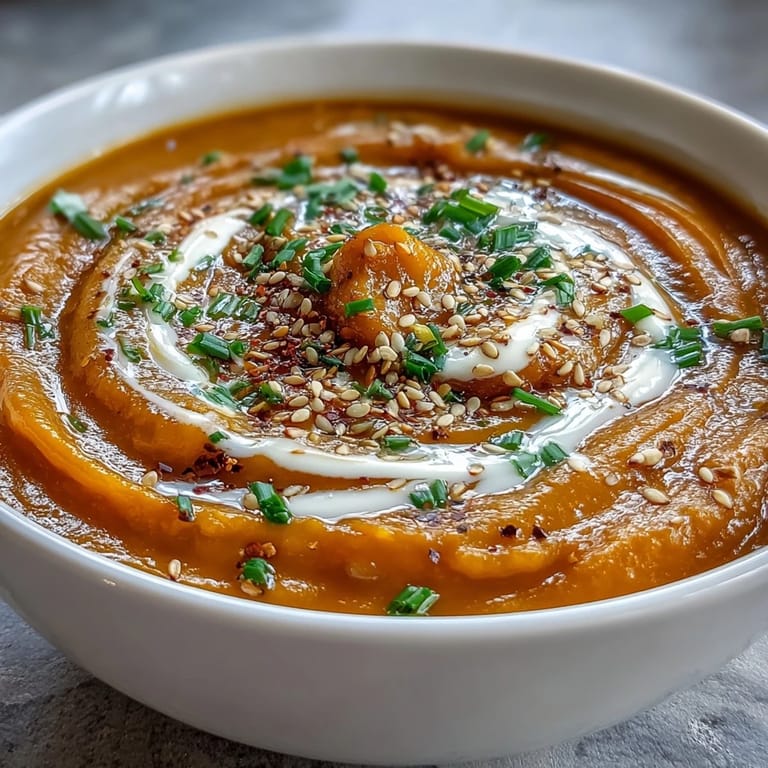
- Coconut cream, chives, and sesame seeds (for garnish): These finish the dish with texture and visual interest; they're optional but absolutely worth the extra minute.
Tired of Takeout? 🥡
Get 10 meals you can make faster than delivery arrives. Seriously.
One email. No spam. Unsubscribe anytime.
Instructions
- Preheat and prep your squash:
- Get your oven to 400°F and line a baking sheet with parchment paper so cleanup is painless. Toss your cubed squash with half the olive oil, a pinch of salt, and pepper, then spread it out in a single layer.
- Roast until caramelized:
- This takes about 30 to 35 minutes, and you'll want to shake the pan halfway through so every piece gets golden and tender. You'll know it's ready when a fork slides through easily and the edges are slightly browned.
- Build your aromatics:
- While the squash roasts, heat the remaining oil in a large pot over medium heat and add your diced onion, minced garlic, and grated ginger. Let these cook together for about 4 to 5 minutes until the onion softens and the kitchen smells incredible.
- Combine and simmer:
- Add the roasted squash to the pot and pour in the vegetable broth, then bring everything to a gentle simmer for about 5 minutes. This short simmer lets the flavors marry before blending.
- Blend until silky:
- Remove from heat and blend the soup using an immersion blender (easier and less mess) or working in batches with a regular blender until completely smooth and creamy. Take your time here because a fully blended soup is what makes this feel special.
- Temper and incorporate miso:
- In a small bowl, whisk the miso paste with a ladle of hot soup liquid until it's completely smooth and lump-free, then stir this mixture back into the pot. Never add miso directly to boiling liquid or it loses its probiotic benefits and flavor complexity.
- Taste and adjust:
- Give it a taste and add more salt or pepper if you need it, then gently reheat if the pot has cooled. Remember not to let it boil after the miso goes in.
- Serve with intention:
- Ladle into bowls and top with a drizzle of coconut cream, a scatter of chives, and a pinch of toasted sesame seeds if you have them.
 Pin it
 I once made this soup for myself after a long day when I'd forgotten to eat lunch, and I remember sitting with a mug of it, my hands warming against the ceramic, feeling like I'd actually taken care of myself for once. That's the gift of this recipe—it's nourishing in ways that go beyond nutrition.
Why Roasting Makes All the Difference
The impulse is to skip roasting and just simmer everything together, but that shortcut costs you real flavor. When you roast the squash, the heat concentrates its natural sugars and creates that subtle caramelization that adds depth to the finished soup. I made it both ways to test, and the roasted version won by a landslide.
The Miso Magic Explained
White miso paste is traditionally used in delicate Japanese soups, and there's a reason for that—it's sweet, smooth, and adds savory umami without the aggressive saltiness of darker varieties. The enzymes in miso are also beneficial for digestion, which is why you want to avoid boiling it after it's been added. Think of miso as the final whisper of flavor rather than a shout, and the entire soup becomes more sophisticated.
Make It Your Own
Once you understand the basic formula, this soup becomes endlessly adaptable to what you have on hand and what you're craving. The roasted squash is the foundation, the miso is the soul, and everything else is flexible. Try adding a splash of coconut milk before blending for extra richness, swap in kabocha or pumpkin if butternut is hard to find, or serve it alongside crusty bread to make it more of a meal.
- A spoonful of tahini stirred in at the end adds creaminess and another layer of nutty flavor that plays beautifully with the miso.
- If you're serving this to someone avoiding soy, chickpea miso exists and works surprisingly well as a substitute.
- Leftover soup keeps in the fridge for four days and freezes perfectly for up to three months, so make a double batch when you have the energy.
 Pin it
 This soup has become my go-to for those moments when life feels chaotic and I need to remind myself that something warm and thoughtfully made can shift the whole day. Make it, taste it, and then make it again for someone who needs it.
Recipe FAQs
- → What type of miso works best?
White or yellow miso paste is ideal for a subtle, sweet umami that complements the roasted squash without overpowering it.
- → Can other squash varieties be used?
Kabocha or pumpkin are excellent alternatives, offering a similar texture and sweetness when roasted.
- → How can I achieve a smooth texture?
Use an immersion blender or countertop blender to puree the soup completely until creamy and silky.
- → What garnishes enhance the flavor?
Coconut cream, chopped chives, and toasted sesame seeds add richness, freshness, and a subtle crunch.
- → Can this be made vegan and gluten-free?
Yes, using certified gluten-free miso and broth keeps it gluten-free, while coconut cream and plant-based ingredients maintain vegan-friendly qualities.