 Pin it
 Last December, I found myself staring at my kitchen window during the shortest day of year, watching the light drain away by four in the afternoon. It struck me that I wanted to create something on the table that matched that moment—a board that captured the duality of the season itself, with deep, dark flavors on one side and bright, hopeful ones on the other. The Winter Solstice Board was born from that quiet observation, a way of saying winter isn't just about darkness, but about balance.
I made this for the first time when friends dropped by unexpectedly on a gray December evening. I had good cheese, some olives, a honeycomb I'd been saving. Instead of scrambling to cook something, I arranged them on a board with intention, and suddenly we had this beautiful conversation piece that felt both effortless and intentional. That's when I realized a board like this isn't just food—it's an excuse to slow down and sit together.
Ingredients
- Kalamata olives: The dark, briny anchor of the moody side—pitted ones save you and your guests the awkwardness of pits mid-bite.
- Oil-cured black olives: Deeper and more concentrated than Kalamata, these add complexity and a whisper of richness.
- Dried mission figs: Halve them so they're easier to eat and reveal their gorgeous interior, then watch people gravitate toward them like they're precious.
- Fig jam: A small spoonful in a ramekin becomes an anchor point for the dark side—let people discover it rather than spreading it everywhere.
- Dark chocolate: Broken into irregular pieces, not shaved—it feels more intentional and melts in unexpected moments.
- Roasted almonds: The textural contrast against soft figs and creamy chocolate is what keeps people reaching back.
- Fresh rosemary: Use it both as a garnish and as a visual divider—it smells incredible and signals that you've thought about every detail.
- Ripe Brie: Choose a wheel if you can; it's more dramatic than a wedge and people love peeling back the rind as they eat.
- Pears: Slice them just before serving or toss the slices in a tiny bit of lemon juice to prevent browning—their delicate sweetness balances the brie's earthiness perfectly.
- Honeycomb: If you can find it, it's worth the splurge; if not, good honey drizzled over everything is just as lovely and somehow more generous-feeling.
- Toasted walnuts: Toast them yourself if you have time; the smell alone will make your kitchen feel warm.
- Green grapes: Their brightness cuts through the richness like a small, crisp reminder that spring is coming.
- Fresh thyme: Smaller and more delicate than rosemary, it's the light side's gentle touch.
- Baguette slices: Toast them lightly if you want them to hold up better, or leave them soft if you prefer them as edible napkins.
- Assorted crackers: Mix textures—some thin and crispy, some with seeds—because variety keeps it interesting.
Tired of Takeout? 🥡
Get 10 meals you can make faster than delivery arrives. Seriously.
One email. No spam. Unsubscribe anytime.
Instructions
- Divide your canvas in half:
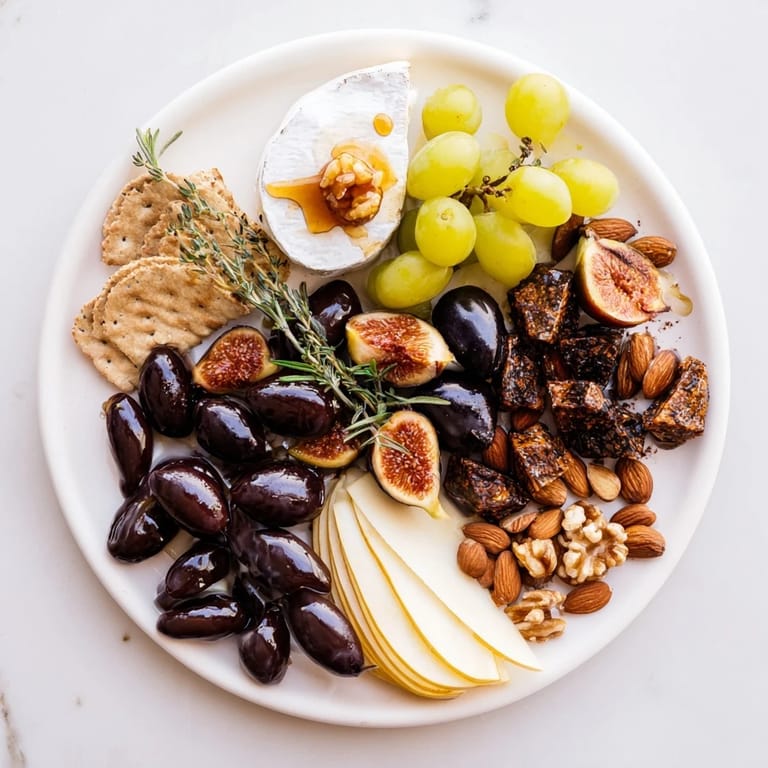
- Use a line of fresh rosemary sprigs or a neat row of crackers down the center of your board to create a clear boundary. This visual division is what makes the whole board read as intentional and balanced.
- Build the dark side:
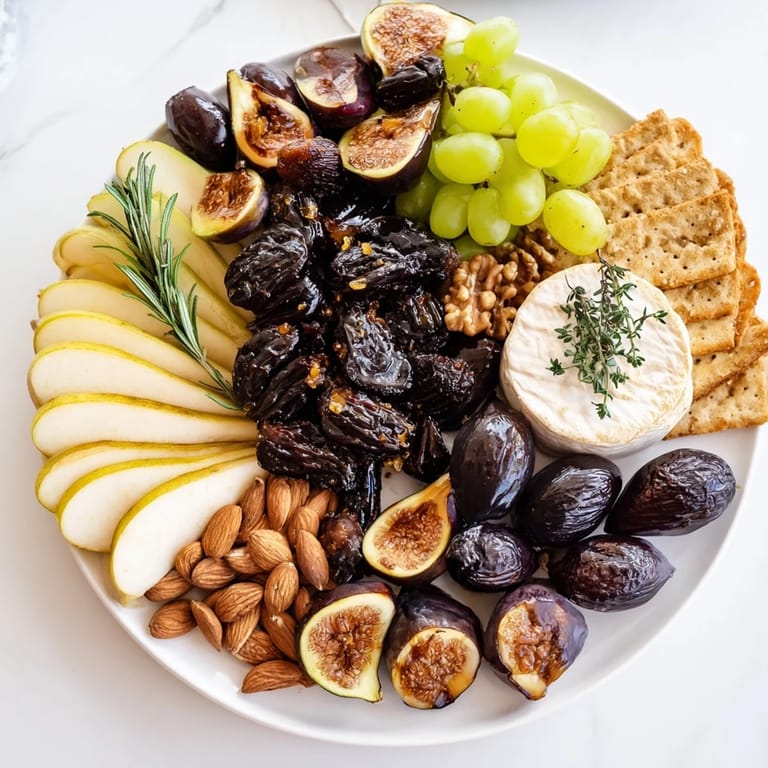
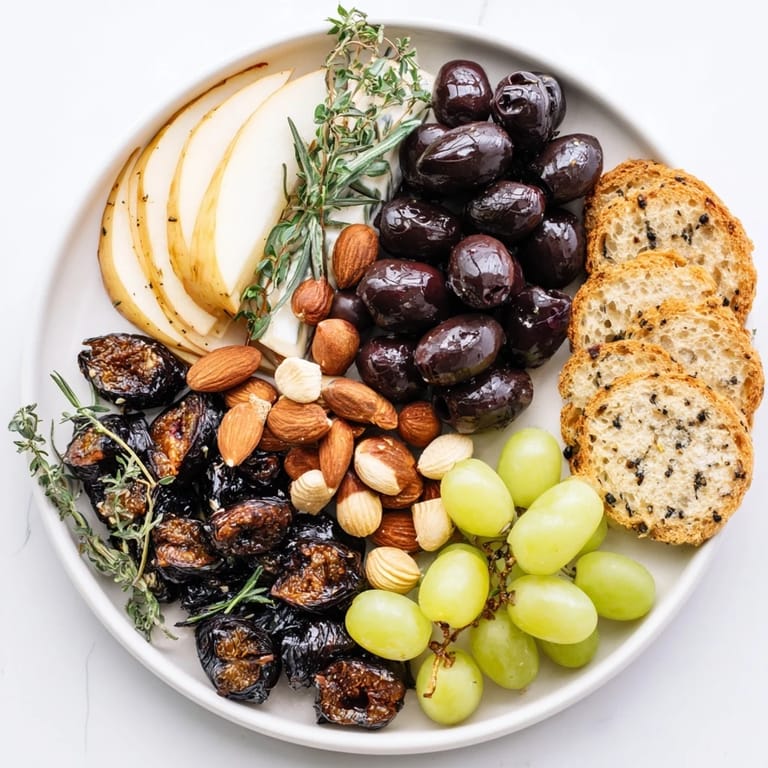
- Cluster the Kalamata olives in one corner, then arrange the halved figs nearby so their color plays off the deep olives. Scatter the roasted almonds in the gaps, place a small ramekin of fig jam where it catches light, and scatter the dark chocolate pieces like you're being generous but not careless. Finish with a rosemary sprig laid across the top.
- Bring light to the other half:
- Arrange Brie as your anchor, then fan the pear slices in a loose arc nearby—they should look effortless, not fussy. Pile the toasted walnuts in a little cluster, scatter the green grapes for color, and add the honeycomb (or drizzle honey over a small section) so it glistens. Lay thyme sprigs as a final touch.
- Add the supporting players:
- Arrange baguette slices and crackers along the center line or on the side so they're easy to reach without disrupting your composition. Everything at this point is about access and balance.
- Step back and breathe:
- Take a moment to look at what you've made before people arrive. The contrast should feel alive—one side moody and dramatic, the other bright and inviting.
 Pin it
 What surprised me most about this board was how it changed the entire mood of the gathering. People naturally split into two camps—some gravitating toward the dark, complex side, others drawn to the bright and floral. The board itself became a conversation about what moves us, what comforts us, what we crave in the darkest part of year. That was worth more than any perfectly plated dish.
The Art of the Cheese Board
A great cheese board is less about following rules and more about creating rhythm and contrast. The Winter Solstice Board works because it's built on a clear concept—the dark and light of the season—which gives you permission to be intentional about everything else. Once you commit to that idea, every ingredient choice becomes easier. You're not just throwing things on a board; you're telling a story with food.
Wine and Drink Pairings
A dry sparkling wine cuts through the richness of the Brie while complementing the briny olives beautifully, almost like a palate cleanser between bites. If sparkling isn't your thing, a light-bodied red—something bright and not too tannic—pairs surprisingly well with both the dark chocolate and the honeyed sweetness on the other side.
Variations and Swaps
The skeleton of this board is flexible enough to adapt to what's in season or what you have on hand. Roquefort brings a blue-cheese sharpness that's more assertive than Brie, while Camembert is creamier and slightly earthier. On the fruit side, crisp apple slices work just as well as pears, and dried apricots can stand in for figs if that's what you've got. The principle stays the same: dark and moody on one side, bright and generous on the other.
- Add prosciutto to either side for a savory richness that straddles both worlds.
- Include a small bowl of marcona almonds instead of roasted for a buttery, almost sweet note.
- Finish with a sprinkle of fleur de sel on the cheese to make it taste even more like itself.
 Pin it
 Every time I make this board, I remember why I started it in the first place: to mark the turning of the year with something that tastes like hope. It's as much ritual as it is recipe.
Recipe FAQs
- → What ingredients create the dark side of the board?
The dark side features Kalamata and oil-cured black olives, dried mission figs, fig jam, dark chocolate pieces, roasted almonds, and a sprig of rosemary for garnish.
- → How is the board divided?
A line of fresh rosemary sprigs or a row of crackers is used to split the serving board exactly in half, separating the dark and light elements.
- → What can be served alongside the board?
Sliced baguette and assorted crackers are placed centrally or on separate plates to complement the cheese and fruit selection.
- → Are substitutions suggested for the cheeses or fruits?
Yes, Roquefort or Camembert may replace Brie, and pears can be swapped for apples while dried apricots can substitute for figs to suit tastes.
- → What additional pairings enhance this board?
A dry sparkling wine or a light-bodied red wine pairs beautifully with the rich and fresh elements of the board.
- → Is this spread suitable for vegetarians?
Yes, it’s vegetarian-friendly but prosciutto can be added optionally for those who eat meat.