 Pin it
 There's a particular afternoon I can't quite forget, when my neighbor dropped off a basket of tomatoes from her garden that had somehow ripened all at once. I stood at my counter staring at them, a little overwhelmed, when she casually mentioned that roasting them whole changes everything. That evening, as the kitchen filled with this deep, caramelized sweetness, I understood what she meant. This soup became the thing I made whenever I wanted to turn simple vegetables into something that felt like comfort in a bowl.
I remember serving this to friends on a chilly October evening when everyone arrived looking tired and cold. By the second bowl, the whole mood shifted. There's something about cream swirled into bright red soup that makes people slow down and actually taste what they're eating instead of just eating. That's when I realized this recipe wasn't really about the ingredients at all.
Ingredients
- Ripe tomatoes (1.5 lbs): The whole magic lives here, so pick tomatoes that actually smell like tomatoes. If you can't find great ones, canned San Marzano tomatoes work beautifully and honestly might be more reliable.
- Garlic bulb (1 whole): Roasting transforms garlic from sharp and peppery into sweet, almost nutty, and mellow. One bulb looks like a lot until you taste how it melts into the soup.
- Yellow onion (1 large): Wedges caramelize better than chunks and become part of the smooth base rather than something you have to blend twice.
- Olive oil (2 tbsp): Use it generously on the vegetables before roasting, not sparingly. This is how they actually caramelize instead of just roast.
- Heavy cream (1/2 cup): Stir it in at the end off the heat so it stays silky. Overheating cream can make it separate, and nobody wants that.
- Vegetable broth (2 cups): Low-sodium broth lets you control the salt yourself and tastes less canned in the final soup.
- Salt and black pepper: Taste as you go because roasted vegetables are forgiving about seasoning.
- Smoked paprika (optional): Just a pinch adds a whisper of depth without announcing itself.
Tired of Takeout? 🥡
Get 10 meals you can make faster than delivery arrives. Seriously.
One email. No spam. Unsubscribe anytime.
Instructions
- Preheat and prep:
- Heat your oven to 400°F and arrange tomato halves cut-side up on a baking sheet with onion wedges. For the garlic, slice off just the very top of the bulb to expose the cloves, then drizzle a tiny bit of olive oil on top and wrap the whole thing loosely in foil so it steams gently while roasting.
- Season generously:
- Coat the tomatoes and onions with olive oil, salt, and pepper. Don't be shy here, this is where flavor actually comes from. The oil helps them caramelize instead of just drying out.
- Roast until golden:
- Let everything sit in the oven for 35 to 40 minutes until the tomatoes are blistered and collapsing at the edges and the kitchen smells absolutely incredible. The garlic bulb should feel soft when you give it a gentle squeeze through the foil.
- Cool and squeeze:
- Once cool enough to handle, the roasted garlic cloves slip right out of their papery skins like they were waiting to. This is oddly satisfying and one of those small moments that makes cooking feel less like a chore.
- Blend smooth:
- Dump the roasted tomatoes, onions, and squeezed garlic into a blender with the vegetable broth and blend until completely silky. If your blender feels crowded, work in two batches because hot soup splattering everywhere is not the vibe.
- Simmer and cream:
- Pour everything into a pot and warm it over medium-low heat. Stir in the heavy cream and smoked paprika if you're using it, then let it simmer gently for about 10 minutes without boiling. Taste it and adjust salt or add just a pinch of sugar if the tomato tang feels sharp to you.
- Serve with intention:
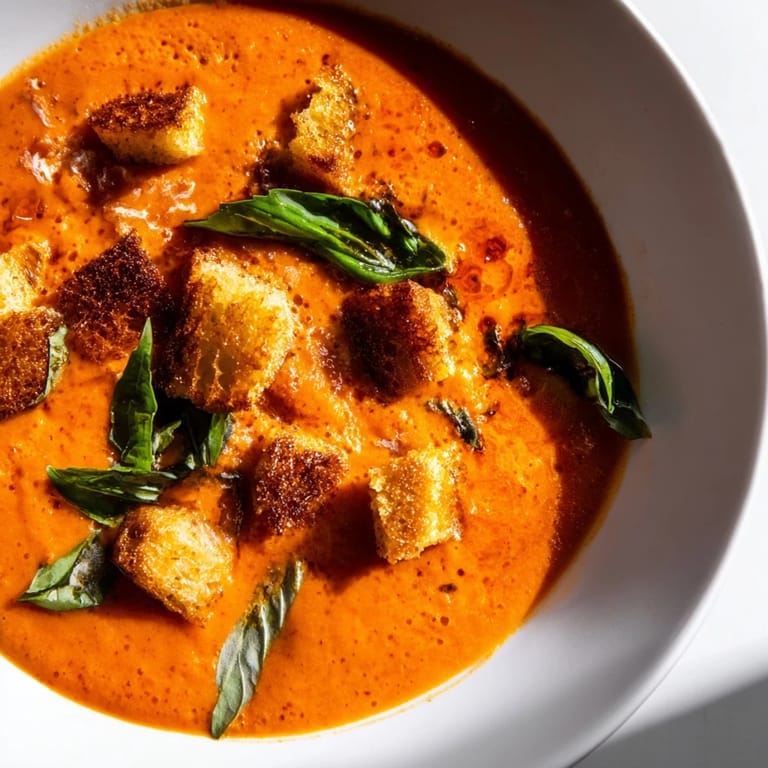
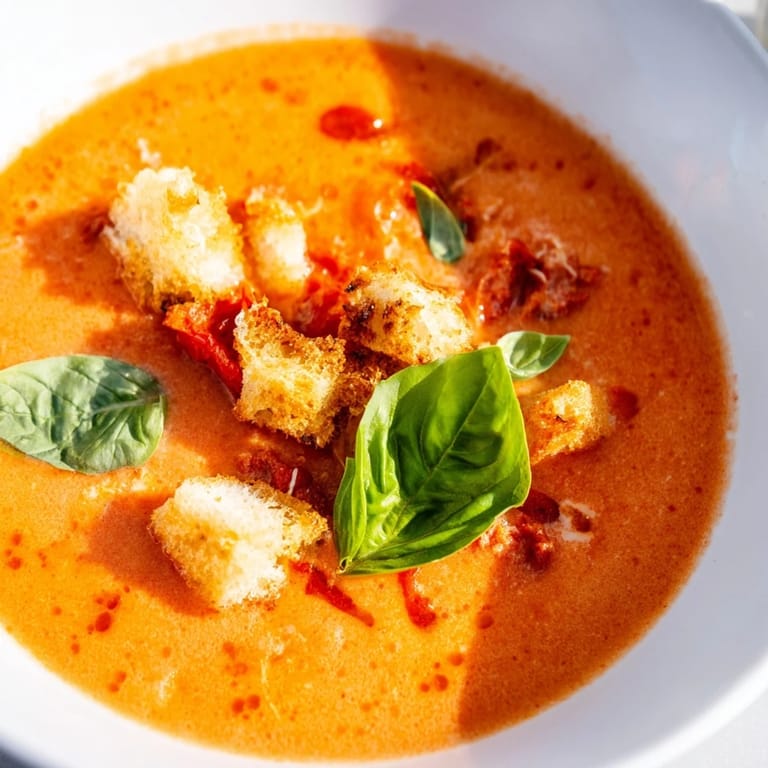
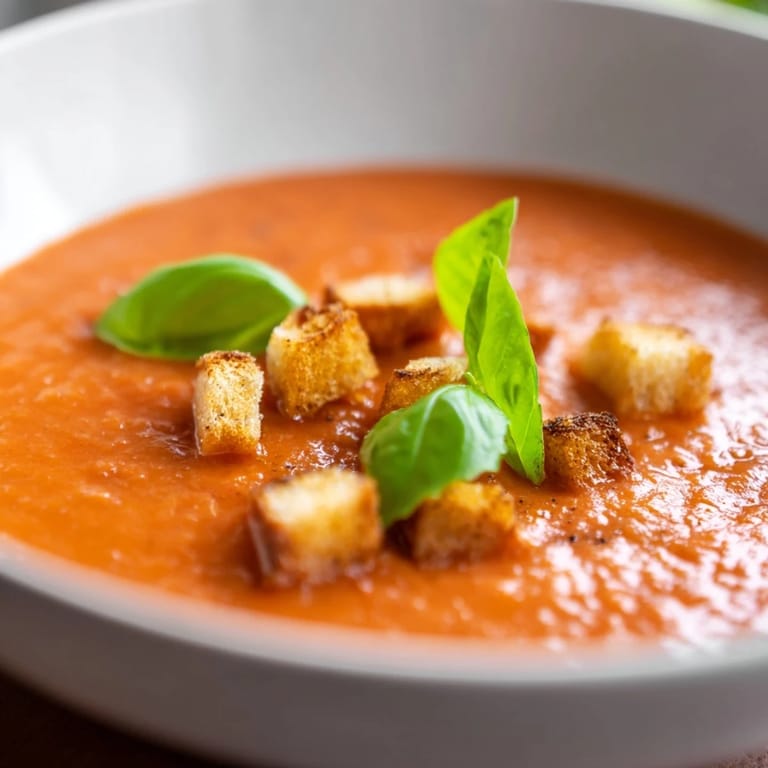
- Ladle into bowls and top with fresh basil leaves and croutons if you have them. Even plain, it's beautiful and complete.
 Pin it
 There was a moment last winter when my kid asked if we could make this soup again, not because they were hungry but because they wanted the kitchen to smell that way. That's when I knew this recipe had become something bigger than dinner.
Why Roasting Changes Everything
Roasting vegetables at high heat triggers something called the Maillard reaction, which is just fancy kitchen talk for how sugars and proteins break down and create deeper, more complex flavors. With tomatoes especially, roasting concentrates their sweetness while caramelizing the edges, so you end up with something that tastes less like raw tomato and more like tomato's best possible version. The garlic softens so much that you forget garlic can even be aggressive or harsh.
The Cream Question
Cream is optional in the sense that you can skip it, but the soup really does transform when you add it. It rounds out the acidity of the tomatoes and creates this silky mouthfeel that makes you want to linger over each spoonful instead of rushing through. If you're avoiding dairy, cashew cream or good coconut cream (the thick kind from a can, not the light stuff) works beautifully and honestly tastes less obviously different than you'd think.
Ways to Make It Your Own
This soup is a blank canvas for whatever direction your mood is pointing. Some days I add a pinch of chili flakes and suddenly it feels spicy and alive. Other times I stir in fresh herbs like oregano or thyme during the last minute of simmering. You could even add a splash of balsamic vinegar or a squeeze of fresh lemon juice right before serving if you want brightness cutting through the richness.
- Fresh basil stirred in off heat tastes cleaner and more vibrant than basil that's been simmered to death.
- Croutons or crispy toasted bread scattered on top add texture that makes every bite more interesting.
- A drizzle of really good olive oil on the finished bowl is never wasted and always feels slightly fancy.
 Pin it
 This soup has become the thing I make when I want to remind myself why I cook in the first place. It's simple, generous, and tastes like taking care of the people around you.
Recipe FAQs
- → How do I roast the garlic for best flavor?
Slice the top off the garlic bulb, drizzle with olive oil, wrap in foil, and roast until soft and caramelized, about 35-40 minutes at 400°F.
- → Can I substitute heavy cream with dairy-free options?
Yes, plant-based creams like coconut or cashew cream work well to maintain the dish's creamy texture.
- → What enhances the soup’s flavor depth?
Slow-roasting tomatoes and garlic caramelizes their natural sugars, boosting richness and complexity.
- → How can I add a spicy touch?
A pinch of chili flakes stirred in during simmering adds a subtle and warming heat.
- → What garnishes complement this dish?
Fresh basil leaves and crunchy croutons or toasted bread add freshness and texture contrast.