 Pin it
 My first schnitzel moment happened in a Vienna apartment kitchen where my friend Maria was visiting from Hamburg. She'd brought her grandmother's meat mallet from Germany, and watching her pound those chicken breasts with such practiced rhythm made me realize how much technique matters in seemingly simple food. The sound of the meat flattening under the mallet, the way she'd check the thickness with her fingertip between strikes—it felt like watching someone speak a language I needed to learn. That afternoon taught me that schnitzel isn't about complexity; it's about respecting the process and timing everything just right.
Years later, I made schnitzel for a dinner party when a colleague mentioned missing home-cooked German food. I was nervous—would it taste authentic enough?—but the moment the hot oil hit the pan and that buttery, golden aroma filled the kitchen, I felt oddly confident. Everyone crowded around the stove just to watch them fry. It was one of those meals where the act of cooking became as memorable as eating.
Ingredients
- Pork chops or chicken breasts (4, about 150 g each): Boneless cuts give you control, and pounding them to 1/4-inch transforms them into tender, evenly cooking canvases that crisp beautifully.
- All-purpose flour (100 g): This is your first foundation layer; it helps the egg mixture grip the meat and keeps moisture away from the breadcrumbs.
- Eggs (2 large) and milk (2 tbsp): The binding agent that makes breadcrumbs stick like glue without creating a soggy layer—the milk loosens the egg slightly so it coats evenly.
- Fine dry breadcrumbs (150 g): Panko or regular fine crumbs both work, but finer crumbs create a more delicate, shatteringly crisp crust than chunky varieties.
- Vegetable oil or clarified butter (120 ml): Clarified butter is the traditional German choice and adds a subtle nuttiness, but neutral oil works perfectly if that's what you have on hand.
- Salt and freshly ground black pepper: Season generously at each stage—the flour layer needs seasoning too, not just the meat.
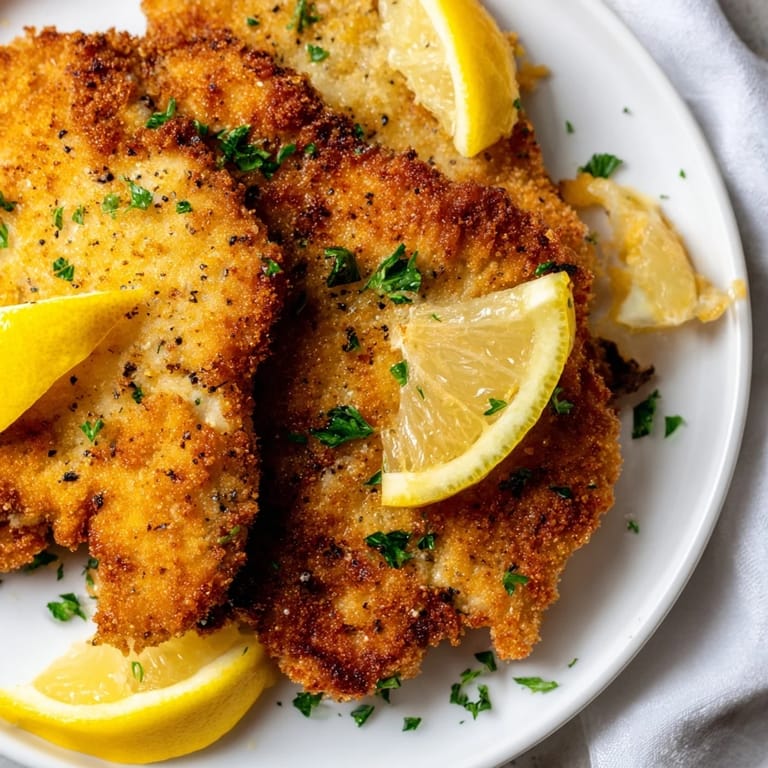
- Lemon wedges and fresh parsley (for serving): The acid cuts through richness, and parsley adds a fresh, herbaceous note that balances the richness of the fried coating.
Tired of Takeout? 🥡
Get 10 meals you can make faster than delivery arrives. Seriously.
One email. No spam. Unsubscribe anytime.
Instructions
- Pound the meat thin and even:
- Place each cutlet between two sheets of plastic wrap and pound steadily with a meat mallet until it reaches 1/4-inch thickness. This isn't aggression—use even strokes and check thickness as you go. Thin, uniform pieces are the secret to schnitzels that cook through in minutes without overcooking the edges.
- Season simply and thoroughly:
- Sprinkle both sides with salt and freshly ground pepper, letting the seasoning settle into the meat. Don't be shy; you want to taste the seasoning throughout, not just on the crust.
- Set up your breading station:
- Arrange three shallow plates in order: flour in the first, beaten eggs mixed with milk in the second, breadcrumbs in the third. This assembly-line setup keeps everything moving smoothly and prevents your fingers from getting too sticky.
- Bread with a gentle touch:
- Dredge the seasoned cutlet in flour, tap off excess, dip into the egg mixture until evenly coated, then press gently into breadcrumbs. The key here is light pressure—you want breadcrumbs to stick, not compress into a dense shell that blocks crisping.
- Fry until golden and cooked through:
- Heat your oil or clarified butter over medium-high heat until shimmering and fragrant, then carefully add the breaded cutlets. Fry for 2–3 minutes per side until the coating turns deep golden brown and the meat is cooked through—you'll hear a gentle sizzle that gradually quiets as the outside seals.
- Drain and serve immediately:
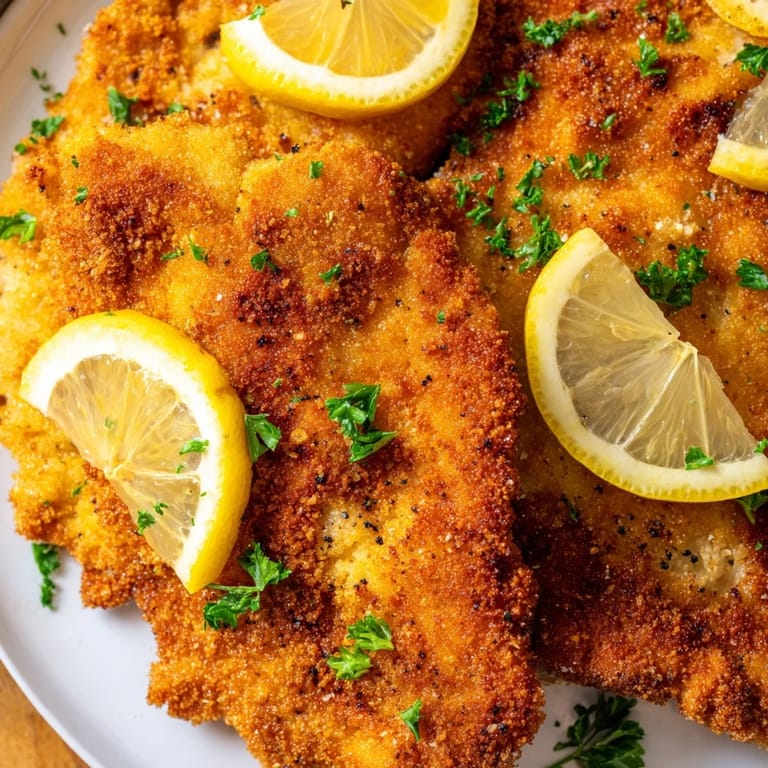
- Transfer to a paper towel-lined plate for just a minute to shed excess oil, then plate right away while the crust is still crackling. Serve with lemon wedges and a pinch of fresh parsley.
 Pin it
 There's a moment in cooking schnitzel, right after you plate it, where someone inevitably cuts into that crust and you hear the crack. That sound—quiet but satisfying—tells you everything worked. It's the kind of small victory that makes you feel like a real cook.
The Breading Technique That Matters
The difference between a schnitzel that impresses and one that disappoints lives entirely in how you bread it. I learned this the hard way when I tried to speed up the process by pressing breadcrumbs on with conviction—I ended up with a dense, heavy coating that fried unevenly and never crisped properly. The lesson: breadcrumbs should adhere from the egg mixture doing its job, not from you forcing them on. Light fingers, patient layering, and respecting the process turns ordinary chicken into something worth talking about.
Oil Temperature and the Perfect Golden Color
The oil temperature is the invisible hand guiding whether your schnitzel will be crispy, golden perfection or a greasy disappointment. I test it by dropping a tiny breadcrumb into the pan—if it sizzles immediately and browns in a few seconds, the temperature is right. If it sits and slowly browns, the oil needs more heat, and your cutlets will soak up fat instead of frying. If it blackens instantly, you've gone too hot and the outside will burn before the inside cooks through. This single adjustment, learned through trial and error, changed every schnitzel I've made since.
Serving and Pairing Like a German
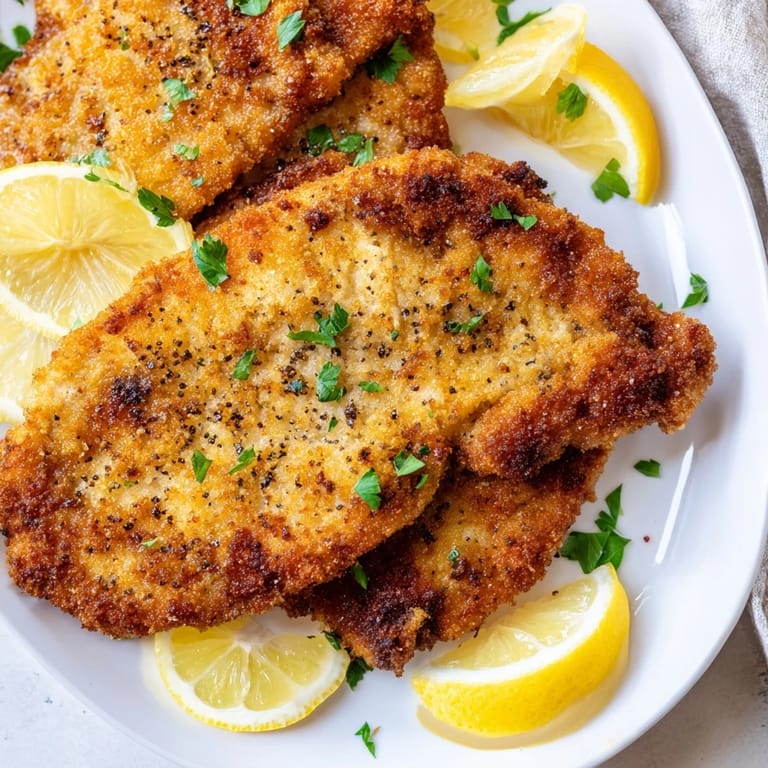
Schnitzel is fundamentally humble food, meant to be served simply so nothing competes with that incredible crust. Lemon wedges and parsley are traditional because they're bright enough to cut through the richness without overwhelming the delicate meat.
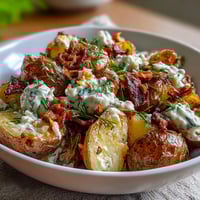
- Serve with a classic potato salad or crispy fried potatoes to echo that golden, fried theme on the plate.
- A cool, tangy cucumber salad alongside provides the perfect acidic counterpoint and aids digestion after all that richness.
- A dry German Riesling or crisp pilsner beer is the traditional pairing, and honestly, there's a reason tradition exists here.
 Pin it
 Schnitzel is the kind of recipe that rewards patience and respects precision, yet asks nothing complicated of you in return. Once you nail it, you'll understand why it's been feeding people for generations.
Recipe FAQs
- → What type of meat is best for schnitzel?
Boneless pork chops or chicken breasts are ideal, pounded thin to ensure quick, even cooking and a tender texture.
- → How can I achieve a crispy coating?
Use fine dry breadcrumbs and avoid pressing them too firmly onto the meat before frying in hot oil or clarified butter.
- → Why is pounding the meat important?
Pounding thins the meat to about 1/4-inch thickness, enabling even cooking and a tender bite beneath the crunchy crust.
- → What oil is recommended for frying?
Vegetable oil or clarified butter (Butterschmalz) works well to achieve a golden, crispy exterior without burning.
- → What are typical sides to serve with this dish?
Traditional accompaniments include potato salad, cucumber salad, french fries, and a wedge of lemon for brightness.
- → Can this be made with veal?
Yes, veal is a traditional choice for a Wiener schnitzel, providing a delicate flavor and tender texture.